

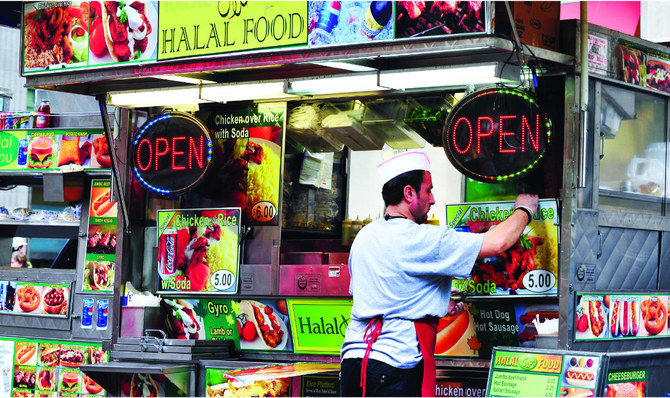

RIYADH: The growth of halal medicines, cosmetics and even sportswear is fueling an economic boom that is reaching far beyond Saudi Arabia, and the wider Middle East.
Global product launches with halal claims jumped by 19 percent from 2018 to 2020, from over 16,000 products to more than 20,000.
Some 63 percent of these products have been reported to be coming from Asia, followed by Africa and the Middle East.
FASTFACT
$4.96 trillion According to American marketing research company Frost and Sullivan, the global halal economy is one of the fastest-growing in the world and has the potential to reach $4.96 trillion by 2030.
All this shows that those who still think of “halal” as just a set of Islamic rules regarding meat are missing out on a sector that still has a huge growth potential.
What constitutes halal?
Halal is an Arabic word that means “permissible” or “lawful.”
According to Islamic law and stated in the Holy Quran, the term refers to both goods and services that are acceptable to Muslims.
Halal products are typically known as being pork free, for their specific method of slaughter — whereby an animal must be killed by a cut to its throat and the procedure must be performed by a Muslim, and alcohol free.
The opposite of halal is haram, which means “forbidden.” There are now governing bodies that issue certificates to businesses certifying that their goods are indeed made according to halal procedures.
The halal industry was “valued at $1.27 trillion in 2021 and is projected to reach $1.67 trillion in 2025,” , the acting chief product and partnership officer of the Islamic Development Bank told Arab News, adding that the food sector is largest part of that.
According to American marketing research company Frost and Sullivan, the global halal economy is one of the fastest-growing in the world and has the potential to reach $4.96 trillion by 2030.
This would represent a sizeable increase from 2020, when the value of the global halal economy reached $2.30 trillion.
With a worldwide presence of 2.2 billion people or approximately 26 percent of the world’s population, Muslim consumers are a fast-growing segment.
Saudi Arabia, the birthplace of Islam, is currently undergoing rapid social and economic transformation and witnessing a boom in the halal economy.
“Halal economy is expanding,” Hussein Shobokshi, Saudi businessman and columnist told Arab News. “It used to be only for poultry and beef and for general food items and now involves cosmetics, cleaning, and household items.”
He added: “There is now also an argument to be made for products that are sustainable, made responsibly and green that should also fall under halal.
“Saudi Arabia is now championing the halal industry because it is the largest consumer of halal products in the Middle East.”
There is a huge market potential for the halal economy stresses Shobokshi, however, he emphasizes that with the increase in potential and desire by companies to take advantage of the growing scope of the industry, “the challenge now is to clarify and define what constitutes halal.”
The businessman added: “We are talking about relatively a very juicy, attractive, and serious market potential.
“That's why a lot of the major players such as Procter and Gamble, Unilever and the Nestle and all the major food, cosmetics and clothing producers are targeting this market to be qualified as halal producers as well.”
Saudi Arabia, continues Shobokshi, plays a big role in the growth of the halal industry “because it wants to redefine the definition of halal products and create a global reference point for halal certification, halal inspection, halal qualification to become more global in its standards and remove any gray areas that would leave the consumers in a confusing area.”
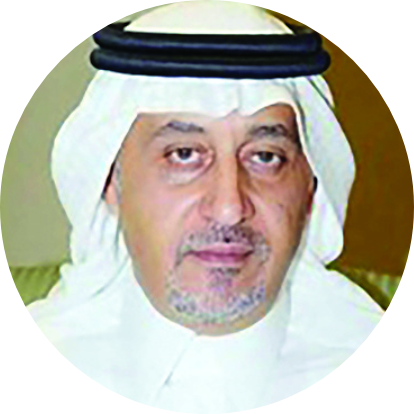
Hussein Shobokshi
To be at the forefront of the halal economy is a natural step for the Kingdom given its recent transformation and the fact that it is the center of the Islamic world.
“It is a natural extension of its position to strive to lead the growing halal economy,” he added.
In October 2022, Saudi Arabia’s Public Investment Fund announced the launch of the Halal Products Development Co.
The new company will invest in localizing the production of the halal industry in Saudi Arabia and increase the efficiency of the ecosystem locally, including plans to export to global markets.
HPDC aims to enable small and medium-sized enterprises to grow and expand across global halal markets in partnership with key local and international players.
“Saudi Arabia has a unique and important role to play, not only among Muslim countries but all the over the world when it comes to both Fiqh Al-Muamalat (civic matters) as well as Fiqh Al-Ibaadaat (religious matters),” Waheed Qaiser, a British-Pakistani Islamic banker and entrepreneur told Arab News.
Qaiser states that since the set-up of the first Islamic bank in 1975 in Dubai, “the focus on thalal economy and its products has brought a wake-up call among Muslims and the demand has intensified.”
He further notes how due to an increase in the health-conscious consumer, which includes Muslims, the market for natural and organic food items has grown.
“This trend has led to increased utilization of halal food products as overall they offer better hygiene and sanitation which is good for the human body and prevents various diseases,” he claimed, adding: “This is why today you see halal concessions/dedicated areas for halal products in all western-style supermarkets all over the western world.”
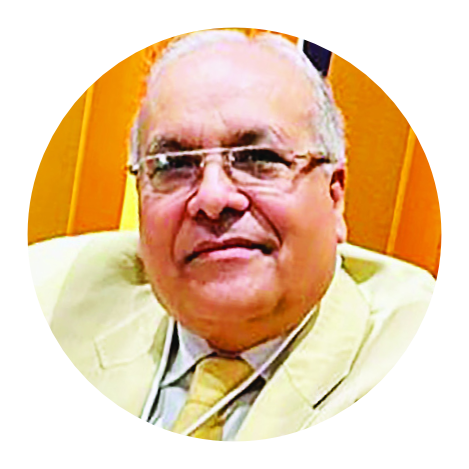
Waheed Qaiser
Qaiser recalled how he was once told by a major supermarket that by introducing a halal counter their overall sales had gone up significantly.
Buying halal products is also seen to reinforce a sense of Muslim pride and identity and this extends from Saudi Arabia to the greater Gulf, Asia, Africa and beyond.
Many Islamic Development Bank member countries are making conscious efforts to develop their halal economies and capture the potential of the market.
Additionally, between 2020 and 2026, economies of the Organization for Islamic Cooperation are forecasted to experience a growth rate of over 7 percent, with Malaysia, the UAE, Saudi Arabia, Qatar, and Turkey having clear visions of becoming hubs for the global halal trade.
Even non-majority Muslim countries like Thailand, Japan, and South Korea aim to position themselves as key players in the halal market. Australia and Brazil, meanwhile, are among the top halal meat and poultry suppliers to countries in the Middle East.
One Gulf Cooperation Council country that is perceived as a major player and has been witnessing massive growth when it comes to the halal economy is Qatar.
The nation has been encouraging core sectors with high growth potential to develop products and services prescribed by Islamic law, according to resereach by the Investment Promotion Agency of Qatar.
The study shows the country recorded market assets worth $156.4 billion in financial markets in 2021, followed by $1 billion in Islamic insurance, also known as takaful, $14.2 billion in Islamic tourism, $5.1 billion in healthcare and $849 million in Islamic fintech.
The research also highlighted Qatar’s role in developing the global and national halal accreditation ecosystem by establishing the Organization of Islamic Cooperation Halal Accreditation Center and the evolution of the Ministry of Public Health’s guidance on importing halal food products.
There is no doubt about the boom of the halal market both within in the GCC, wider Middle East and globally. There seems to be no limit to the quantity and variety of halal products now being produced.
However, the challenge that remains is clarifying the definition of halal.
Bukvic agrees: “There is a need to address two important challenges facing the halal economy, namely financing the halal industry and effective management of the halal supply chain.”


