

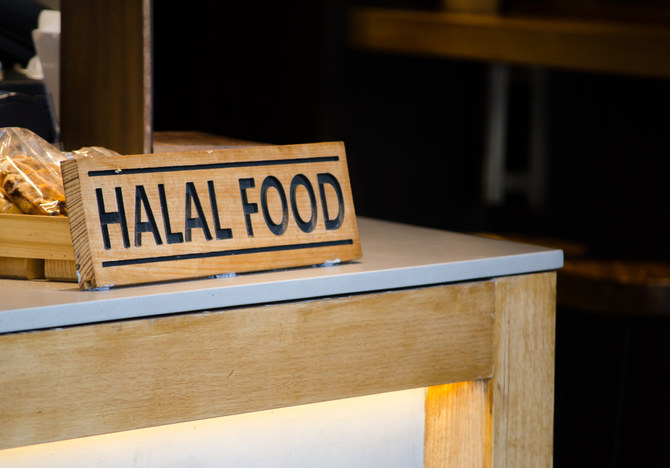

JEDDAH: The growing demand for halal products and services will create more opportunities for investment in the halal industry as well as avenues for the export and intra-trade of halal products among member countries and Muslim communities, said Amer Bukvic, the acting chief product and partnership officer of the Islamic Development Bank.
“Valued at $1.27 trillion in 2021 and projected to reach $1.67 trillion in 2025, the food sector is the largest component of spending on halal food by Muslims,” said Bukvic on the sidelines of the IsDB annual meetings in Jeddah.
“The development of a sustainable halal industry in IsDB member countries requires the adoption of enabling ecosystem(s) at the national level, including long-term strategies supporting policies for qualified human capital, the institutional framework for standardization, certification, accreditation, and awareness program(s) for the various stakeholders and consumers, as well as the use of new technology in order to increase efficiency in (the) halal manufacturing and distribution process and (to) improve visibility, and consumer trust.”
Bukvic added: “There is a need to address two important challenges facing the halal economy, namely financing the halal industry and effective management of the halal supply chain.”
Many IsDB member countries are making conscious efforts to develop their halal economies and capture the potential of the market.
Malaysia, the UAE, Saudi Arabia and Turkey are among the most active nations and have clear visions of becoming hubs for the global halal trade.
Even non-majority Muslim countries like Thailand, Japan, and South Korea aim to position themselves as key players in the halal market. Australia and Brazil, meanwhile, are among the top halal meat and poultry suppliers to countries in the Middle East.
Fahad Al-Nuhait, CEO of the PIF-funded Halal Products Development Co., said that domestically the HPDC aims to invest in all stages of the halal aquatic sector, capitalizing on opportunities to achieve sustainable integration across Saudi Arabia and the supply chain.
“From a global perspective, we strive to position the Kingdom as a center of the halal products industry, which contributes to multilateral growth in target markets. With HPDC participation in the private sector forum, we seek to build partnerships with key stakeholders in the health sector within and outside Saudi Arabia,” he said.
“This partnership is not only a demonstration of the HPDC initiative to strengthen the halal sector, but it’s also a purposeful measure that will improve and enhance the halal poultry sector in the Kingdom.”
Hairol Ariffein Sahari, CEO of Halal Development Corp. Malaysia said: “The global halal market size is projected to be at $5 trillion by 2030. By any means, this is a clear reflection of the need to harness collaborative efforts among the halal stakeholders and IsDB member countries in working towards a common cause, namely, to participate towards the growth of the global halal economy.”
HDC and IsDB took the task to develop an economic cursory assessment of halal ecosystems to identify the manufacturing and production readiness of the IsDB countries in order to become self-reliant, especially in the production of their own industry, including but not limited to food, beverages, pharmaceuticals, and personal care.
On the sidelines of the IsDB annual meetings, an event entitled “Unlocking IsDB Member Countries’ Potential to Tap into the Vast and Expanding Global Halal Industry” was organized as a component of the private sector forum to highlight the importance of halal business, in fostering the social and economic development of the IsDB member countries and the Muslim communities in non-member countries.
Two panel discussions entitled “How to Promote the Halal Industry Through Investment,” and “Innovations in the Halal Industry” were also held.
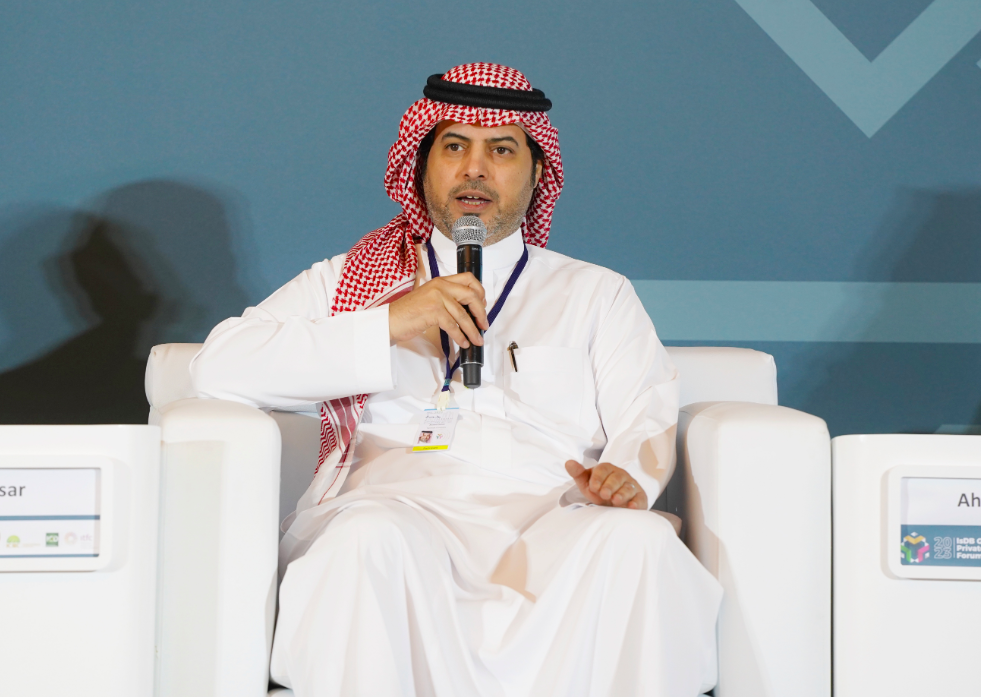
Ahmed Osilan, Saudi executive board member and managing director of Tanmiah Company, while speaking in a panel discussion entitled, “How to promote the Halal industry through investment and intrareader” on the sideline of IsDB annual meetings. (AN)
Ahmed Osilan, executive board member and managing director of Tanmiah, said during the first discussion that Saudi Arabia is the heart of the Islamic world, with investment capabilities and geographic proximity to more than 500 million consumers in neighboring markets.
“Eighty percent of the halal market products are produced in not necessarily halal countries, which gives an opportunity for us to work together as halal market players to provide quality products to the Islamic bloc — and not only the Islamic bloc, because halal products are also good for non-Muslims,” he said.
A memorandum of understanding was signed between the IsDB and the HPDC at the end of the event to showcase opportunities within Saudi Arabia’s halal sector and the halal industries of the IsDB’s member countries, with three main objectives identified including localization of the halal products industry in Saudi Arabia, enhancing the capabilities of the sector at the regional level, and providing opportunities for exporting halal products from the Kingdom to the world.


