Libya’s oil minister says closure of oilfields cost 340,000 barrels

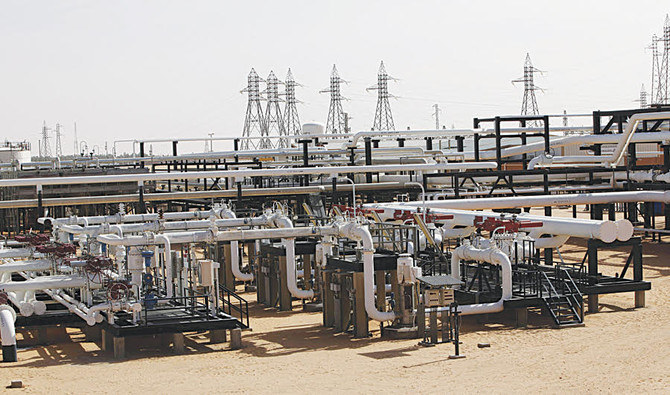
The ongoing closure of several oilfields in Libya has cost the North African country the production of 340,000 oil barrels. (Reuters/File)
Short Url
Updated 15 July 2023
Follow

Libya’s oil minister says closure of oilfields cost 340,000 barrels

  • Production at the El Feel, Sharara and 108 oilfields was shut on Thursday in a protest by the Al-Zawi tribe
  • Before the closures, Libya was producing about 1,2 million barrels per day

DUBAI: The ongoing closure of several oilfields in Libya has cost the North African country the production of 340,000 oil barrels, oil minister Mohamed Aoun told Dubai-based Asharq TV.
Production at the El Feel, Sharara and 108 oilfields was shut on Thursday in a protest by the Al-Zawi tribe against the abduction of former finance minister Faraj Bumatari, according to a tribal leader.
Before the closures, Libya was producing about 1,2 million barrels per day (bpd).
In a statement released early on Saturday, the oil ministry said the closure of the three Libyan oil fields could lead to the declaration of force majeure.
“The loss of confidence in the continuity of Libyan oil supply to the global market will result in a loss of market share for Libyan oil and decreased demand for it,” the ministry said.
It added that the oilfield closures could lead to an “irreversible loss of importers” due to concerns about supply instability.
The Sharara field is one of Libya’s largest production areas, with a capacity of 300,000 bpd. It has been a frequent target of political strife.
Zawi tribe leader Al-Senussi Al-Ahlaiq told Reuters that the closure of El Feel was aimed at pressuring authorities in Tripoli to release Bumatari, who was kidnapped after arriving at Mitiga airport on Tuesday.
Bumatari is a candidate for central bank governor, which “makes him vulnerable to danger and kidnapping,” the tribe said in a statement.


Egypt–Saudi power link set to boost regional energy integration, minister says 

Updated 22 February 2026
Follow

Egypt–Saudi power link set to boost regional energy integration, minister says 

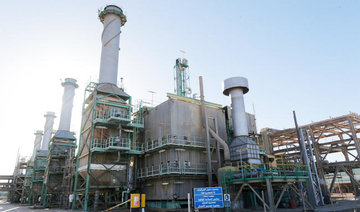
RIYADH: Electricity interconnection projects between Egypt and Saudi Arabia will strengthen regional energy cooperation and economic integration, Egypt’s minister of electricity and renewable energy said during a visit to a key cross-border power facility. 

Mahmoud Esmat made the remarks while inspecting the Egypt–Saudi electricity interconnection station linking the two countries’ power grids, where he reviewed construction progress and equipment testing ahead of trial operations expected in the coming weeks, according to a statement from the Egyptian State Information Service. 

The project is described as the first of its kind in the Middle East in terms of scale, manufacturing technology, operation, and application in grid interconnection lines. 

The initiative supports the state’s broader vision to implement sustainable solutions aimed at ensuring the stability of the national unified grid and enhancing the reliability and quality of electricity supply. 

It also aligns with Egypt’s allocation of 136.3 billion Egyptian pounds ($2.8 billion) to the electricity and renewable energy sector in its 2025–26 development plan, nearly double the 72.6 billion pounds set aside the previous year. 

The plan focuses on diversifying energy sources, expanding renewable capacity, and strengthening the national grid to meet rising demand. 

The statement said: “The minister toured the station’s departments and control and operation center, following up on the completion of testing for all equipment and components in preparation for launching operations and synchronizing the project with the unified power grids of Egypt and Saudi Arabia in the coming weeks.” 

It added: “Esmat reviewed the implementation rate of the project and testing works, as well as the project’s timeline. He highlighted finalization of operational tests at the Badr transformer station and the Sakakin Taba 2 station, as well as the 500 kilovolts overhead transmission line extending approximately 320 km.”  

The minister said the project forms part of broader efforts to build an integrated power network connecting the two countries, facilitating efficient and flexible electricity exchange and laying the groundwork for a unified Arab electricity market. 

He added that the initiative reflects a clear vision and comprehensive strategy to strengthen the efficiency of the energy system while delivering both immediate and long-term solutions to safeguard grid stability and enhance service quality.