Pakistan’s power regulator jacks up electricity prices after IMF deal 

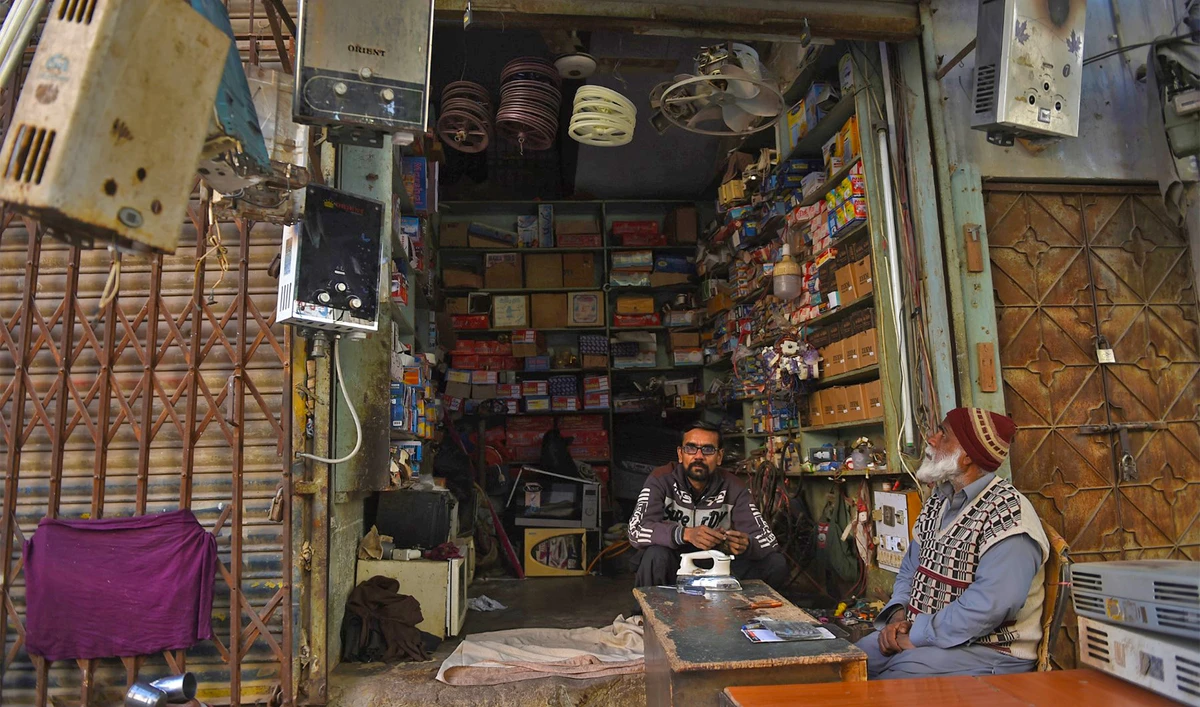
A shopkeeper sits inside his electronic repairing shop in Karachi, Pakistan, on January 10, 2021. (AFP/File)
Short Url
Updated 15 July 2023
Follow

Pakistan’s power regulator jacks up electricity prices after IMF deal 

  • The National Electric Power Regulatory Authority increases the power tariff by Rs4.96 per unit for FY2023-24 
  • The regulator says price has been increased due to rupee devaluation, high inflation and exorbitant interest rates 

ISLAMABAD: Pakistan’s power regulator has jacked up the electricity tariff by Rs4.96 per unit for the ongoing fiscal year (FY24) in line with the conditions of the International Monetary Fund (IMF), a statement from the body said on Friday. 

Pakistan’s National Electric Power Regulatory Authority (NEPRA) determines different consumer-end tariffs for each of the power distribution companies in the country. The companies have different revenue requirements and are allowed to have separate levels of transmission and distribution losses. 

Once determined, NEPRA sends the tariffs to the federal government to incorporate subsidies or surcharges, after which a uniform application of the tariff is filed to be charged to consumers. 

“The revised National Average tariff for the FY 2023-24 has been determined as Rs.29.78/kWh, which is Rs.4.96/kWh higher than the previously determined national average tariff of Rs. 24.82/kWh,” NEPRA said in a statement. 

“The increase of Rs.4.96/kWh is mainly due to overall low sales growth, rupee devaluation, high inflation, exorbitant interest rates, and addition of new capacities.” 

The development comes after the IMF approved a $3 billion bailout fund for Pakistan last month to save the cash-strapped South Asian country from a looming default. 

To release the funds, the lender had imposed a set of conditions on Pakistan, which included an increase in electricity prices as the country’s electricity economics were unsustainable, with circular debt ballooning to Rs2.6 trillion. 

NEPRA said the country’s total revenue requirement of power distribution companies was projected at Rs3,281 billion and a projected sales of 110,165 GWh for the FY 2023-24. 

“Any relief of a decrease in tariff will be directly transferred to the consumers in the future, in case of appreciation of PKR, decrease in inflation and interest rates, among others,” the regulator added. 

KSrelief completes first phase of livestock project for vulnerable families, benefitting 1,000 Pakistani households

Updated 6 sec ago
Follow

KSrelief completes first phase of livestock project for vulnerable families, benefitting 1,000 Pakistani households

  • Saudi agency provides two vaccinated goats, four bags of silage and training to vulnerable families in four Khyber Pakhtunkhwa districts
  • KSrelief says is planning to implement phase two and three of same livestock project in KP’s Swat, Swabi, Haripur and Mansehra cities

ISLAMABAD: Saudi Arabia’s King Salman Humanitarian Aid and Relief Center (KSrelief) announced on Tuesday that it has completed the first phase of a livestock program it launched earlier to empower vulnerable families in Pakistan, saying the package has benefitted 1,000 households. 

KSrelief launched the program, titled: ‘Economic Empowerment of Vulnerable Households in Pakistan through Livestock Provision Project’ last month. The Saudi agency aims to reduce poverty and promote self-reliance among Pakistani families affected by economic hardship and natural disasters by providing livestock, poultry and practical training in animal care and small-scale income generation.

The first phase of the program was implemented by the Peach and Development Organization in collaboration with the Relief, Rehabilitation and Settlement Department (RRSD) of the provincial disaster management authority across four districts of the northwestern Khyber Pakhtunkhwa (KP) province. KSrelief said around 7,250 individuals benefited from the first phase. 

“Under this phase, 1,000 beneficiary households from Lower Chitral, Upper Chitral, Lower Dir and Upper Dir received a livelihood support package consisting of two vaccinated goats, four bags of silage and training provided by the Livestock Department to enable sustainable livestock-based income generation,” KSrelief said in a press release. 

KSrelief said it is planning the second and third phase of the project, which would focus on supporting vulnerable households in KP’s Swat, Swabi, Haripur and Mansehra cities. 

These households will be given 25 poultry birds per family, along with a complete poultry kit and training on poultry management and income generation. 

“Additionally, families in Charsadda, Mardan, and Nowshera will be assisted with cattle, silage and hands-on training in animal care and dairy production to strengthen their livelihood opportunities,” the Saudi agency added. 

KSrelief said its livestock project continues to promote self-reliance, improved nutrition and long-term economic stability among vulnerable communities in Pakistan. 

Saudi Arabia, through KSrelief, has been one of Pakistan’s largest humanitarian partners, contributing to flood recovery, health, education and livelihood programs across the country. The livestock project expands that cooperation by helping rural households in KP, a province frequently affected by floods and displacement, to rebuild economic stability and reduce dependence on aid.