


ISLAMABAD: Pakistani Climate Change Minister Sherry Rehman said on Friday funding of $77.8 million, the largest such investment to date, for the Recharge Pakistan Project would help reduce flood risks and enhance water recharge in targeted catchments of the Indus Basin, bolstering the resilience of over seven million people and safeguarding vulnerable ecosystems by 2030.
The Recharge Pakistan project aims to enhance Pakistan’s resilience to climate change by reducing flood and drought risks in the Indus Basin, the largest basin in Asia drained by the Indus river and its tributaries. The project is set to be implemented over a period of seven years, focusing on bolstering the country’s ability to withstand climate challenges. Funding of $77.8 million for the project includes a $ 66 million grant from the Green Climate Fund, $5 million from USAID, $5 million from the Coca-Cola Foundation, and $2 million from the World Wide Fund for Nature (WWF) Pakistan.
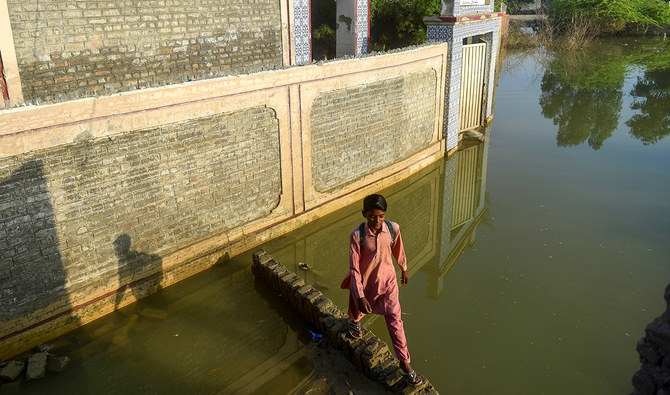
“This transformative initiative, spanning over the next 7 years, has received funding of a total $77.8 million,” Rehman told Arab News, saying the initiative would fortify Pakistan’s resilience against climate change impacts, particularly in regions severely affected by the devastating floods of 2022, which claimed 1,700 lives, affected 33 million individuals, and caused damages worth $30 billion to the economy, according to government estimates.
“As the largest investment at the national level to date in ecosystem-based approaches to flood and water resources management, the project will accelerate climate innovation in Pakistan through green infrastructure interventions and water recharge in the target catchments of the Indus basin for flood and drought risks reduction and sustainable development,” Rehman said.
Deborah Hong, an official from GCF’s communication team, said the project would “catalyze transformational change” in Pakistan by investing in ecosystem-based and green infrastructure interventions at four project sites in the Indus Basin.
“It will reduce the impacts of increasingly severe floods and droughts on vulnerable communities and ecosystems,” Hong told Arab News in a statement, adding that the project would directly benefit a total of 687,336 people and indirectly benefit 7,024,361 people living around Pakistan’s Indus Basin.
“The project aims to restore 14,215 hectares of degraded watersheds in Dera Ismail Khan, 34 kilometers of flow paths, as well as desilting and restoring channels in Ramak Watershed and Manchar Lake,” she said.
An additional 127 green infrastructure interventions, including recharge basins and retention areas, would be implemented at specific locations in D.I. Khan, Ramak, Manchar, and Chakar Lehri to maximize the flood reduction benefits to vulnerable communities.
“The project is strongly aligned with GCF’s priorities of creating enabling environments for climate action, accelerating climate innovation, and funding scalable and replicable adaptation interventions,” Hong added.
Hammad Naqi Khan, the CEO of WWF Pakistan, an implementation agency for the project in Pakistan, said a majority of activities, especially those conducted in the field, would be carried out by the provincial irrigation, forest, and wildlife departments.
“That is the reason that when we were developing the project, we had a very good partnership with the federal and provincial flood commissions, provincial irrigation departments, especially in the selection of the sites,” he told Arab News.
To ensure smooth implementation, a project steering committee was established under the ministry of climate change, which included members from the ministry of water resources and other relevant departments and would approve budgets and activities. The seven-year-long project would begin to show effects after two years, Khan added.


