

Pakistan offers to share batting, bowling expertise amid rise in cricket popularity in Saudi Arabia

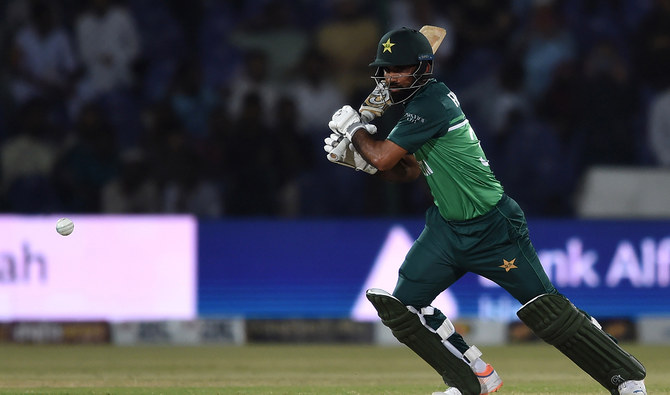
Pakistan's Fakhar Zaman plays a shot during the fifth and final one-day international (ODI) cricket match between Pakistan and New Zealand at the National Stadium in Karachi on May 7, 2023. (AFP/File)
Short Url
Updated 12 July 2023
Follow

Pakistan offers to share batting, bowling expertise amid rise in cricket popularity in Saudi Arabia

  • Cricket matches have been organized in Saudi Arabia since the 1960s when the game was introduced by expatriates
  • Game’s real boom in the Kingdom began only recently with the establishment of Saudi Arabian Cricket Federation in 2020

ISLAMABAD: Ehsan ur Rehman Mazari, who heads the ministry for inter-provincial coordination which oversees the Pakistan Cricket Board, said on Tuesday Pakistan would share its batting and bowling expertise with Saudi Arabia and help strengthen the Kingdom’s national squad amid a rise in popularity of the game in the Middle Eastern country. 

Cricket matches have been organized in Saudi Arabia since the 1960s, when the game was introduced by expatriates from Pakistan and India, after which local clubs began to form. The Kingdom became an affiliate member of the International Cricket Council in 2003 and was promoted to associate membership in 2016.

But the game’s real boom in the Kingdom came only in 2020 with the establishment of the Saudi Arabian Cricket Federation, which has since lined up a series of programs to promote the sport at home and prepare national teams to compete with the world’s best in the future.

“I’ve heard that cricket is coming up big time in Saudi Arabia and we will definitely, if they need our help, since it’s a brotherly country, we will definitely help them in coaching, in bowling coaching, batting coaching, whatever they want,” Mazari told Arab News in an interview in Islamabad.

In March, the Saudi national cricket team won the Asian Cricket Council’s Men’s Challenger Cup 2023 in Bangkok after trouncing Bahrain in the final.

Pakistani legendary fast bowler and former captain, Wasim Akram, also visited Riyadh in February to discuss the future of cricket in the kingdom with SACF Chairman Prince Saud bin Mishal and help the Kingdom launch a cricket league.

“It [cricket] is coming up big time in Saudi Arabia and more youngsters are going into cricket so we will definitely help our brotherly country,” Mazari added.

Pakistan has a rich cricketing history and has won almost all major ICC trophies in the sport. Some of the best cricketers in history have emerged from Pakistan, including the all-rounder and former prime minister Imran Khan, who led the country to the 1992 World Cup victory, legendary fast bowler Wasim Akram, Shahid Afridi, one of the greatest ODI all-rounders of all time, and Babar Azam, Pakistan’s current all-format captain and the only cricketer to feature in the top five rankings across all formats.

Many top Afghan players were trained by Pakistani coaches, and the creation of the Afghanistan Cricket Federation in 1995 was also supported by Pakistan.


Challenges for millions pushed back to Afghanistan from Iran, Pakistan

Updated 14 sec ago
Follow

Challenges for millions pushed back to Afghanistan from Iran, Pakistan

  • Over five million Afghans returned home since September 2023 as Iran, Pakistan ramp up deportations
  • Those who returned face challenges in form of unemployment, lack of housing, shortage of electricity and water

KABUL: After decades hosting Afghans fleeing crises at home, Pakistan and Iran have ramped up deportations and forced millions back across the border to a country struggling to provide for them.

Whether arriving at the frontier surrounded by family or alone, Afghan returnees must establish a new life in a nation beset by poverty and environmental woes.

AFP takes a look at the people arriving in Afghanistan and the challenges they face.

FIVE MILLION

More than five million Afghans have returned home from Iran and Pakistan since September 2023, according to the International Organization for Migration (IOM).

The figure equates to 10 percent of the country’s population, according to the agency’s deputy head in Afghanistan, Mutya Izora Maskun.

Three million returnees crossed the borders just last year, some of whom have spent decades living abroad.

Such a huge influx of people would be hard for any country to manage, Maskun said.

INADEQUATE HOUSING 

Months after arriving in Afghanistan, 80 percent of people had no permanent home, according to an IOM survey of 1,339 migrants who returned between September 2023 and December 2024.

Instead, they had to live in temporary housing made from materials such as stone or mud.

More recently, the UN refugee agency (UNHCR) spoke to Afghans who arrived back between January and August last year about their living arrangements.

Three-quarters of tenants said they could not afford their rent, while the majority of families were sharing rooms with up to four people, according to the survey of 1,658 returnees.

DESPERATE SEARCH FOR WORK 

Just 11 percent of adults pushed back from Pakistan and Iran were fully employed, the IOM survey found.

For those who returned in the first few months of last year, the average monthly income was between $22 and $147, according to the UNHCR.

WATER, ELECTRICITY SHORTAGES

More than half the returnee households lack a stable electricity supply, according to the IOM.
The agency said that households headed by women faced “significantly higher vulnerabilities,” with around half of them struggling to access safe drinking water.

SPEEDING UP LAND DISTRIBUTION

More than 3,000 plots of land have been distributed to returnees nationwide, Hamdullah Fitrat, the Afghan government’s deputy spokesman, said in mid-January.

The process “was accelerated,” he said while recounting a special meeting with supreme leader Hibatullah Akhundzada.

On their arrival in Afghanistan, returnees usually receive help with transport, a SIM card and a small amount of money.