Top-level Saudi delegation to attend UN forum on SDGs in New York

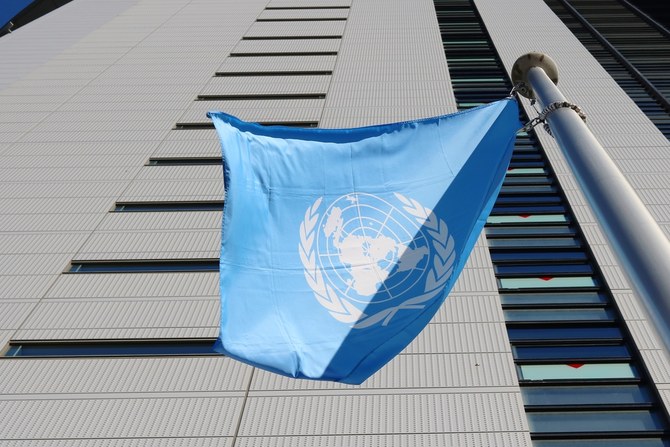
The forum will be held from July 10-19 and focus on accelerating the recovery from the coronavirus disease and fully implementing the 2030 Agenda for Sustainable Development. (Shutterstock)
Short Url
Updated 06 July 2023
Follow

Top-level Saudi delegation to attend UN forum on SDGs in New York

RIYADH: A Saudi delegation of top ministers, government officials and business leaders will take part at the UN High-level Political Forum next week as representatives from over 100 countries gather in New York to assess the progress of the Sustainable Development Goals.

The forum will be held from July 10-19 and focus on accelerating the recovery from the coronavirus disease and fully implementing the 2030 Agenda for Sustainable Development, aimed at ending poverty in all forms.

It will discuss the effective and inclusive recovery measures to address the impacts of the COVID-19 pandemic on the SDGs and explore actionable policy guidance for the full implementation of the 2030 agenda and the SDGs at all levels, according to its website.

Saudi Minister of Economy and Planning Faisal Alibrahim will lead the delegation, comprising representatives from 22 government entities, private sector companies and nonprofit organizations.

According to a press statement, Saudi Arabia will submit its second Voluntary National Review report on progress in its commitment to SDGs at the forum.

The VNR is a mechanism established by the UN for countries to voluntarily report on their progress in implementing the SDGs.

During the VNR, countries are expected to share their experiences, including successes, challenges and lessons learned, to accelerate the implementation of the 2030 Agenda.

The Saudi delegation will also include Minister of Energy Prince Abdulaziz bin Salman, Minister of Foreign Affairs Prince Faisal bin Farhan, Minister of Environment, Water and Agriculture Abdulrahman Al-Fadley and Minister of Tourism Ahmed Al-Khateeb. 

Launched in 2015, the event will host panel discussions and exhibitions of various Saudi entities, including the Public Investment Fund, the Saudi Arabian Oil Co., Saudi Basic Industries Corp. and NEOM.

The Kingdom has been participating in the event since 2018. It will share its experiences and achievements in sustainable development, including various efforts it takes to achieve its net-zero target of 2060. 

Achieving sustainability is a key agenda in Saudi Arabia’s Vision 2030 goals, as the Kingdom aims to increase its domestic generation capacity from renewable energy to 50 percent by the end of this decade.


GCC chambers plan Gulf Guarantee project to boost intra-regional trade

Updated 14 sec ago
Follow

GCC chambers plan Gulf Guarantee project to boost intra-regional trade

DAMMAM: The Federation of GCC Chambers, in cooperation with the Customs Union Authority, intends to launch the Gulf Guarantee Project to provide a unified mechanism for exports and trade transactions and to enhance the efficiency of intra-GCC trade, which reached about $146 billion by the end of 2024, Saleh Al-Sharqi, Secretary-General of the federation, told Al-Eqtisadiah.  

Al-Sharqi said, on the sidelines of his meeting with media representatives at the federation’s headquarters in Dammam, that the initiative represents a qualitative leap in supporting intra-GCC trade by facilitating transit movement through a single point, contributing to cost reduction, accelerating the flow of goods, and enhancing the reliability of trade operations among Gulf markets.   

Saleh Al-Sharqi, Secretary-General of the Federation of GCC Chambers. Al-Eqtisadiah

He explained that the federation recently launched a package of strategic initiatives, including the Tawasul initiative aimed at strengthening communication among Gulf business owners and supporting the building of trade and investment partnerships, in addition to the Gulf Business Facilitation initiative, which seeks to address challenges facing Gulf investors and traders, simplify procedures, and improve the business environment across member states.    

He noted that these initiatives fall within an integrated vision to address obstacles hindering investment and intra-regional trade flows by developing regulatory frameworks, activating communication channels between the public and private sectors, and supporting Gulf economic integration in line with the objectives of the Gulf Common Market.    

In a related context, the Secretary-General affirmed the direction of GCC countries to leverage artificial intelligence technologies to support trade and investment flows, stressing the importance of establishing a unified Gulf committee for artificial intelligence to coordinate efforts and exchange expertise among member states. He said the federation will support this direction in the coming phase, drawing on leading international experiences, particularly the Chinese experience in this field.    

Regarding the recently announced electric railway project between Riyadh and Doha, Al-Sharqi revealed that technical and advisory committees are working to complete the necessary studies for the project, confirming that it will positively impact passenger and freight movement between the two countries, enhance Gulf logistical integration, and support regional supply chains.  

On investment opportunities available to Gulf nationals in the Syrian market, he said the federation is coordinating with private sector representatives in Syria to overcome obstacles that may face the flow of Gulf investments, in addition to working to provide adequate guarantees to protect these investments and ensure a stable and attractive investment environment.  

In response to a question from Al-Eqtisadiah about the impact of tariffs imposed by the US on imports of iron, steel, and aluminum, he said that economic and technical committees in GCC countries are continuously monitoring the repercussions of these tariffs on the Gulf private sector, assessing their effects, and taking the necessary measures to protect it from any potential negative impacts.    

Al-Sharqi also pointed to the launch of two specialized committees in the transport and logistics sectors and in real estate activities, given their pivotal role and active contribution to Gulf gross domestic product, stressing that developing these two sectors is a fundamental pillar for enhancing economic diversification and increasing the competitiveness of GCC economies.    

He added that during the past year the federation held more than 40 meetings and official engagements with Gulf and international entities, participated in nine regional and international events to strengthen the presence of the Gulf private sector on the global stage, and signed 12 agreements and memoranda of understanding with Gulf, regional, and international entities to open new horizons for economic and investment cooperation.    

During the same year, the federation launched four digital platforms to support the Gulf private sector, bringing the total number of its digital platforms to eight serving the business community across member states.    

The Secretary-General affirmed that the federation will continue working with relevant economic entities to unify procedures and regulations, reduce non-tariff barriers, and accelerate mutual recognition of products and standard specifications, in a way that enhances the competitiveness of the Gulf economy and supports the growth of intra-GCC trade.