Meeting of Islamic leaders called after Qur’an burning in Sweden

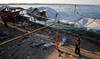
In this photo, taken on June 28, 2023, Salwan Momika protests outside a mosque in Stockholm, during the Eid al-Adha holiday. (AFP/File)
Short Url
Updated 01 July 2023
Follow

Meeting of Islamic leaders called after Qur’an burning in Sweden

  • OIC meeting in Jeddah next week to adopt 'collective position on the necessary course of action'
  • Muslim countries reacted angrily to an Iraqi refugee desecrating Holy Quran in Stockholm last week

JEDDAH: The Organization of Islamic Cooperation has called an emergency meeting of its executive committee in Jeddah next week to discuss the consequences of the burning of a copy of the Qur’an in Sweden this week.

The meeting will “discuss the measures to be taken against this heinous act and adopt a collective position on the necessary course of action,” a spokesman said.

There has been widespread outrage and condemnation in the Muslim and Arab world since Salwan Momika, 37, a refugee from Iraq, desecrated the Qur’an and set fire to its pages in front of Stockholm’s largest mosque on Wednesday.

Countries throughout the Middle East and beyond denounced the burning, some recalled their ambassadors, and foreign ministries summoned the Swedish ambassadors to their countries to hear official protests.

The anger continued on Friday. Thousands of supporters of populist Shiite cleric Moqtada Al-Sadr held a protest in front of the Swedish  Embassy in Baghdad to demand an end to diplomatic ties.

Protesters carried Iraqi flags and portraits of Al-Sadr and his father, also a prominent cleric, and chanted “Yes, yes to the Qur’an, Moqtada, Moqtada.”

The cleric had called for “mass angry protests against the Swedish Embassy in Baghdad” to demand the expulsion of the Swedish ambassador and the cutting of ties with Sweden.

Meanwhile, the man behind the row has threatened to do it again. “Within 10 days I will burn the Iraqi flag and the Qur’an in front of Iraq’s Embassy in Stockholm,” he said.

Momika said he knew his action would provoke reactions and that he had received “thousands of death threats.”

He denied that his actions constituted a “hate crime” or “agitation toward any group.”


AlUla Peregrina Season showcases local agriculture, traditional farming

Updated 3 sec ago
Follow

AlUla Peregrina Season showcases local agriculture, traditional farming

RIYADH: The second AlUla Peregrina Season, part of Khayrat AlUla, concluded on Saturday at the Al-Manshiyah Farmers Market, the Saudi Press Agency reported.

Organized by the Royal Commission for AlUla in partnership with AlUla Peregrina company, the two-day event “celebrated the region’s agricultural heritage and promoted a sustainable economy,” according to the SPA.

The season highlighted peregrina, one of AlUla’s rarest and finest agricultural products, “prized for its high quality and nutritional properties” and farmed using traditional methods.

The Peregrina tree is a centuries-old native desert resource renowned in Arabian culture for its cosmetic, nutritional, and therapeutic benefits.

The event featured local farmers and producers displaying fresh produce and locally made derivatives, as well as exhibitions focusing on the history, cultivation, and traditional harvesting of peregrina. It also included live cooking stations celebrating farm-to-table dishes, cultural performances, children’s activities, and workshops.

The AlUla Peregrina company “promoted the nutritional and economic value of peregrina, supporting agricultural value chains and empowering farmers,” the SPA added.

The Peregrina tree has been cultivated in AlUla for generations and continues to support the local economy. With its adaptability to desert environments and high-value oil, which is used in natural beauty products among other things, it represents a growing economic opportunity for the region.

Abobakar Alanazi, chairman and CEO of AlUla Peregrina, said: “Peregrina is an authentic expression of AlUla’s identity, reflecting the strong bond between the land and its people. Peregrina Season allows us to showcase the evolving potential of natural resources from the Arabian desert for the local and global cosmetics industry.”