




JEDDAH: Flames spewed from the wreckage of a vehicle on the outskirts of Saudi Arabia’s coastal city of Jeddah one evening in late December. Nearby lay the charred remains of Bandar Al-Qarhadi — a lifeless embodiment of the city’s drug problem.
Footage emerged on social media later that evening showing Al-Qarhadi’s final moments as he was engulfed in flames, having escaped from the back of the burning vehicle, doused in gasoline, his hands bound.
Al-Qarhadi was killed by his best friend, a crystal methamphetamine addict, who was handed the death penalty for his crime. The tragedy highlighted the nature of the problem facing law enforcement agencies and health professionals.
In Saudi Arabia, the street name for crystal meth is shabu. It is also variously known as ice, LA glass, stove top, quartz, crank, hiropon, and poor man’s cocaine, owing to its relatively low production cost.
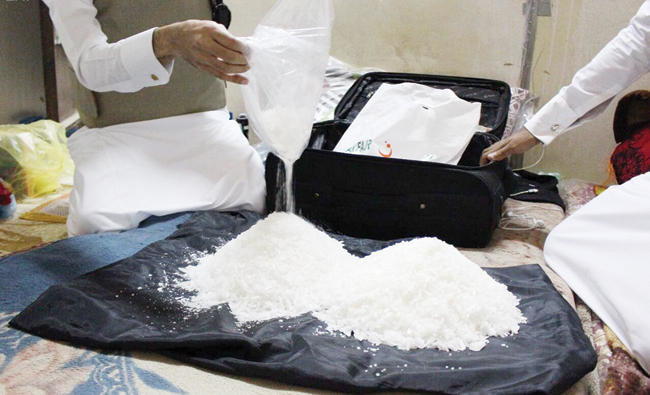
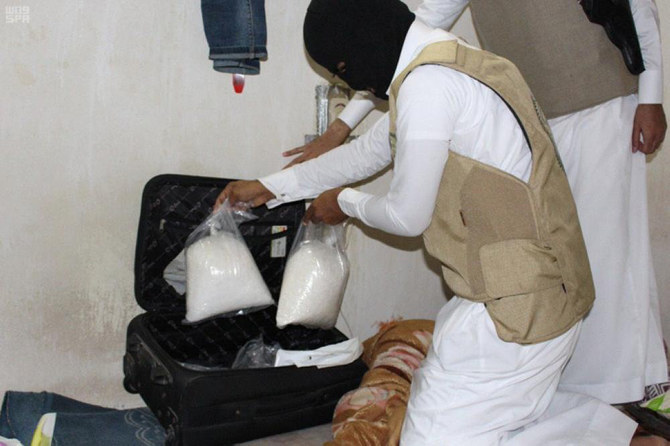
Crystal meth, a derivative of amphetamines. (SPA photo)
Popular as an underground party drug in the 1980s and 1990s, the drug soon spread across the globe, quickly becoming one of the most dangerous and highly addictive narcotic substances in the world.
The ease with which it can be produced, at relatively low cost, high profit, and without detection by law enforcement, was memorably depicted in the hit US television series “Breaking Bad.” But so too were its devastating consequences.
For drug traffickers, Saudi Arabia is a target market for amphetamines, particularly Captagon. Between 2019 and 2020, the Kingdom seized some 30 tons of illicit drugs, 99 percent of which were Captagon pills.
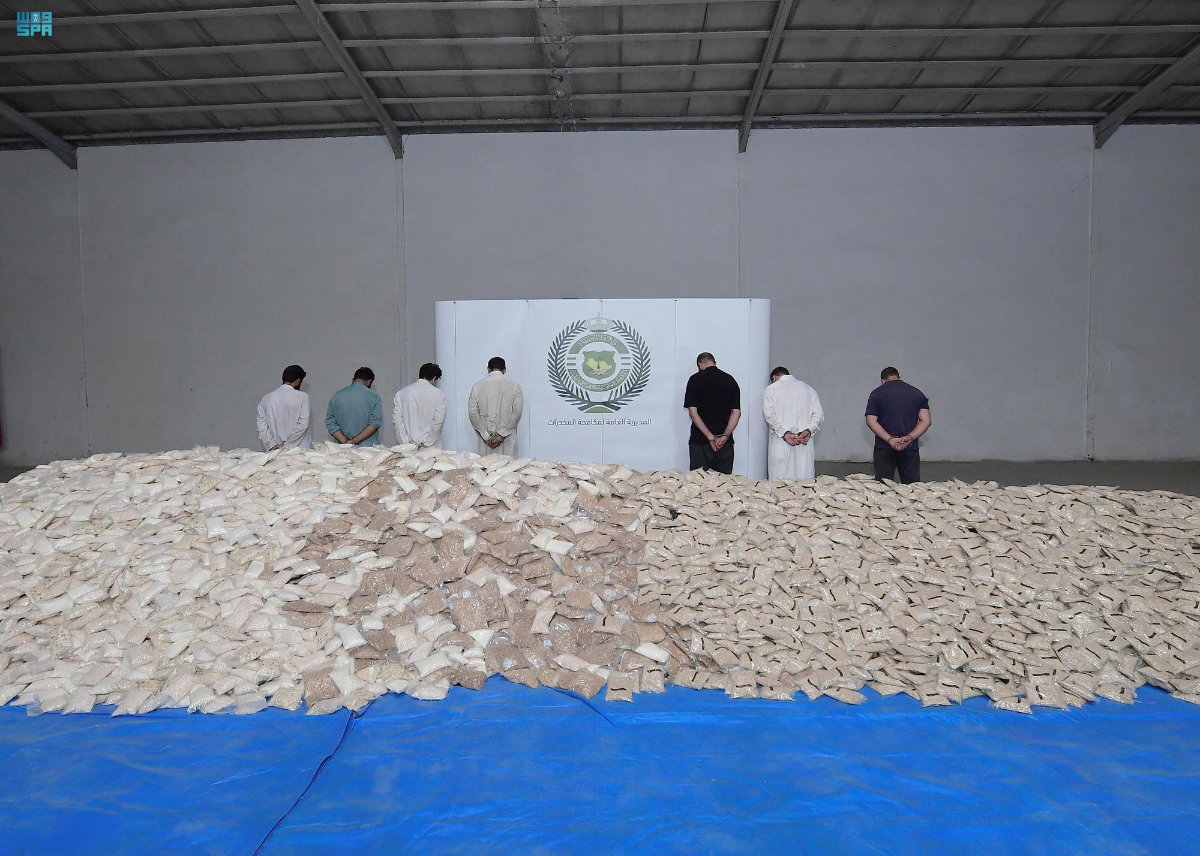
For drug traffickers, Saudi Arabia is a target market for amphetamines, particularly Captagon. (SPA photo)
However, authorities and health professionals are increasingly concerned by the growing number of people becoming hooked on crystal meth, a derivative of amphetamines, which has reached epidemic proportions in many countries.
In Saudi Arabia, a country that imposes strict laws against the import, manufacture, possession, and use of illicit drugs, punishments for dealers and users include prison sentences, hefty fines, and deportation.
In recent months, the Kingdom’s General Directorate of Narcotics Control has made numerous major drug busts and arrests to try and curb the trafficking of meth. Public health campaigns have also been launched to help raise awareness about the growing problem.
 A captivating new documentary by Arab News, titled “Abu Hilalain: Inside the Kingdom’s crackdown on Captagon,” sheds light on Saudi Arabia’s efforts to combat the spread of the drug.
The Arab News team behind the film traveled across three countries, uncovering the extensive operations of Captagon trafficking and its affects on the region.
Premiered at an exclusive screening at the BFI in London, the documentary, produced in collaboration with Lambda, was presented on June 26, the International Day against Drug Abuse and Illicit Trafficking.
Based on a Deep Dive investigation published by Arab News in February 2023, “Abu Hilalain: Inside the Kingdom’s crackdown on Captagon” provides an in-depth and gripping exploration of the drug’s impact on society.
The 2022 report of the UN Office on Drugs and Crime said that globally, 525 tons of illicit amphetamine-type stimulant drugs were seized in 2020, which represented a 15 percent increase year-on-year, and marked the continuation of the upward trend observed over the period 2010–2020.
Across the Arab region, rates of addiction, debilitating psychiatric disorders, and violent crime have continued to rise, with the war on drugs seemingly no closer to halting the production, trafficking, selling, and use of meth and other illicit substances.
“The problem is growing across the world and Saudi Arabia’s not immune to this problem,” Dr. Sultan Alwajeeh, a public health and addiction specialist, told Arab News. “Shabu’s effects are severe.”
The majority of addicts fall within the 18-30 demographic, said Dr. Alwajeeh, with many becoming users as a result of peer pressure or family problems. It is not uncommon for psychological disorders to develop as a result.
“Of course, each case is different, but that depends on your precognitive situation, genetics, the frequency of use and dosage, including how predisposed you are to mental health illnesses,” said Alwajeeh.
ALSO READ:
• The Kingdom vs Captagon: Arab News investigates war on drug in latest Deep Dive
• How Saudi-Greek intelligence sharing delivered a big blow to Hezbollah’s drug operations
• Social media can play a key role in battle against drug abuse, forum told
“But the drug itself is dirty, purely chemical, and can have severe effects even if you’re a social user.”
Meth contains pseudoephedrine, a chemical usually found in cold and allergy medications. However, it is often cut with other hazardous substances, such as battery acid, drain cleaner, and even crushed glass.
It can be ingested in pill form, injected in a fluid state intravenously, or more commonly smoked in its crystal form — a method known in Saudi Arabia as “gargoor,” referring to the gurgling sound it makes with each puff.
With time and chronic use, Alwajeeh said meth can lead to psychological dependence, hallucinations, aggression, and memory loss.

Long-term use often causes persistent feelings of paranoia and suspicion. Users may become overly fearful and convinced others are plotting against them before lashing out. They may also develop symptoms of anxiety and depression.
Meth-induced psychosis is often indistinguishable from paranoid schizophrenia.
“It’s an unnatural drug (and) very cheap,” said Alwajeeh. “(It) has a stronger effect than other stimulants, a longer high, and instantaneous gratification.
FASTFACTS
Observed every year on June 26, the International Day Against Drug Abuse and Illicit Trafficking is a UN campaign against the illegal drug trade.
A new documentary by Arab News, titled “Abu Hilalain: Inside the Kingdom’s crackdown on Captagon,” delves into Saudi Arabia’s battle against Captagon, examining its origins, methods of production, and trafficking of the drug while investigating its consumption within the country.
“This is the high, or euphoria, that drug users are looking for. The rush of the dopamine is stronger than all the stimulants found in Saudi Arabia, including qat, a common stimulant for the Yemeni community (or) goro for the Nigerian community in Makkah and Jeddah.”
Soon, the user’s brain starts to rely on the drug to get the desired dopamine rush that is no longer sufficiently provided by normal life.
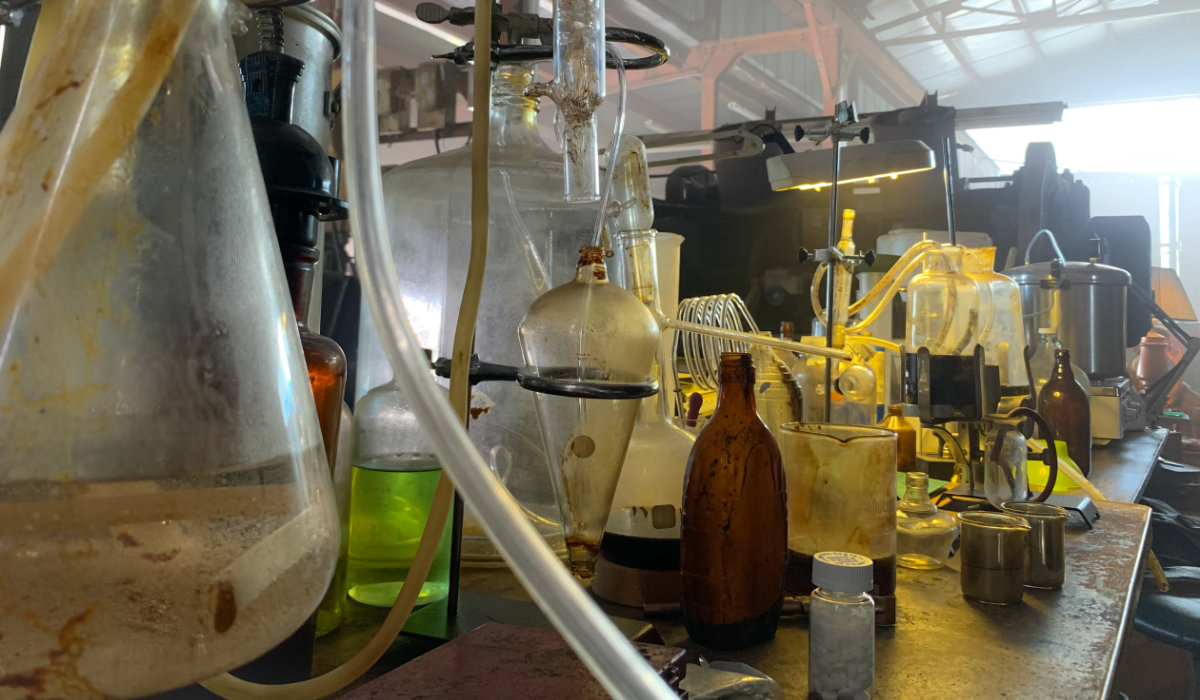
A shabu drug laboratory. (Shutterstock photo)
“What starts off as a good feeling from a hug, for example, or an intimate encounter with a partner … (or) finishing a complicated task … all dissipates with time because the brain tricks the user into believing ‘it’s not good enough, I want more,’ because it’s so euphoric, but not euphoric enough,” said Alwajeeh.
The results can be catastrophic for the user and those around them.
“The leading violent act by crystal users in the Kingdom has to be traffic accidents, as they experience an out-of-body experience, impaired judgment, and can’t comprehend or take in their surroundings,” said Alwajeeh.
“We see more drug users today than a couple of years ago and every six months we hear of a horrible crime committed.” And yet, he says, the issue has received scant attention. “In my opinion, it shouldn’t receive less attention than war or terrorism.”
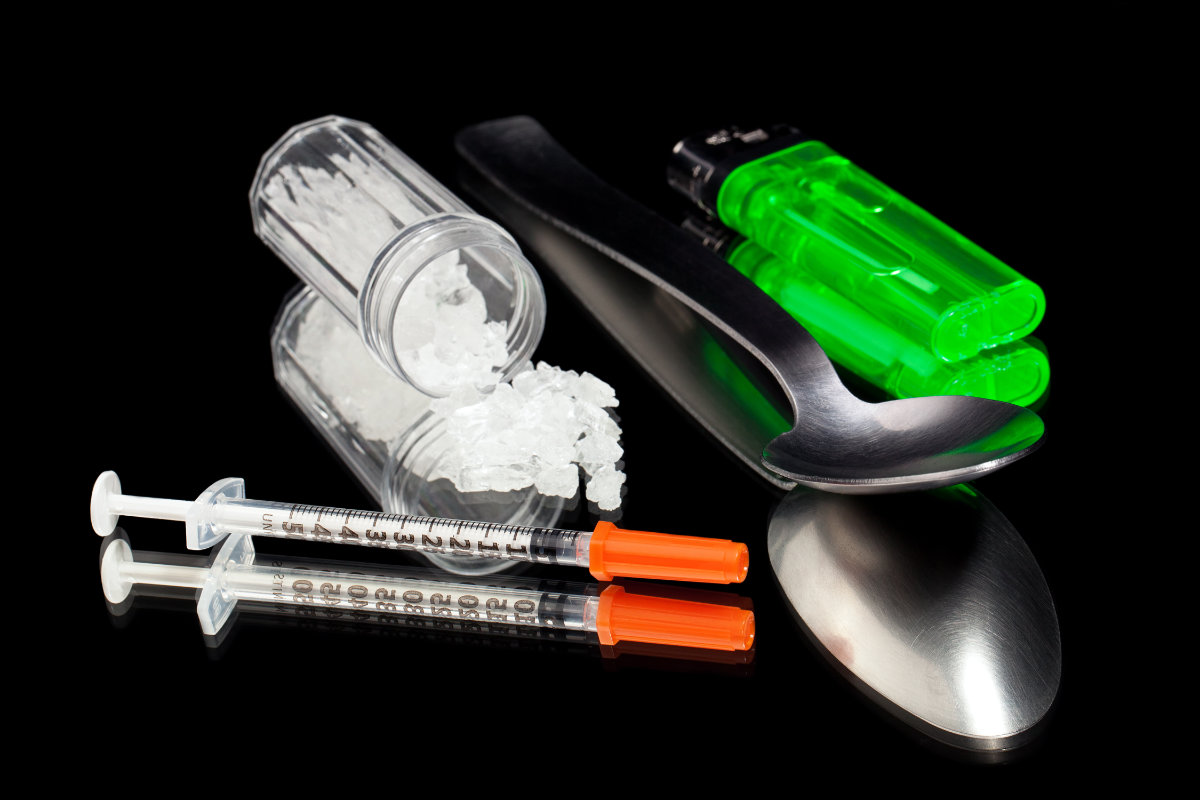
Various items used in combination with injecting methamphetamine. (Shutterstock)
Although the war on drugs is typically seen as a matter for law enforcement agencies, focused on tackling the trade at its source, it is only half the battle. Helping addicts break their habit and rebuild their lives is arguably just as important.
“One of the most difficult stages of treatment is the stage of detoxification, which lasts from a week to one month, during which he suffers,” Khalid Al-Mashari, CEO of Qaweem, a drug rehabilitation center with facilities in Riyadh and Jeddah, told Arab News.
“Shabu causes severe withdrawal symptoms that (place) the recovering person in a state of agitation and possibly continuous convulsions (making them) difficult to control. Another challenge is peer pressure detaching the patient from people in the addiction circle. They must be cut off completely for recovery.”
Fortunately, if a user receives timely assistance, their chances of getting clean and avoiding relapse are high.
“The success rate can reach 70 percent if the recovering person can stay away from people, places and stimuli,” said Al-Mashari.
“The longer the recovery period, especially after the first three months, the closer he will be to a life worth living as an acceptable and productive person in society.”

keywords


