


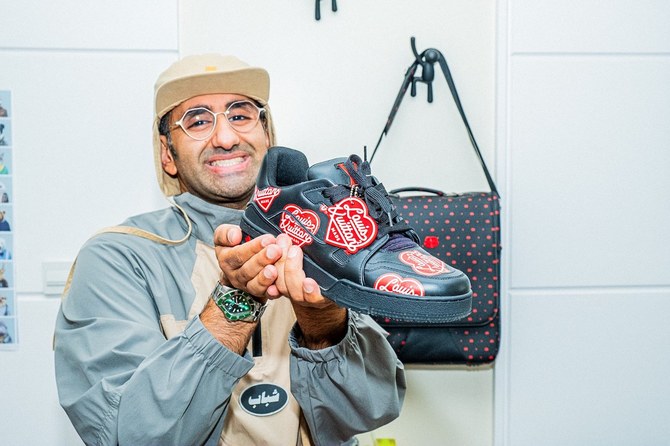


DUBAI: For Saudi creative Mashari Alomarai, shoes are more than just an everyday article of clothing. To date, Alomarai has amassed 450 pairs of sneakers. And he says this is just the beginning.
It started with a birthday gift from his mother: a pair of Nike Cortez shoes. From there, Alomarai quickly realized he had a passion for style and began searching for more shoes to add to his collection.
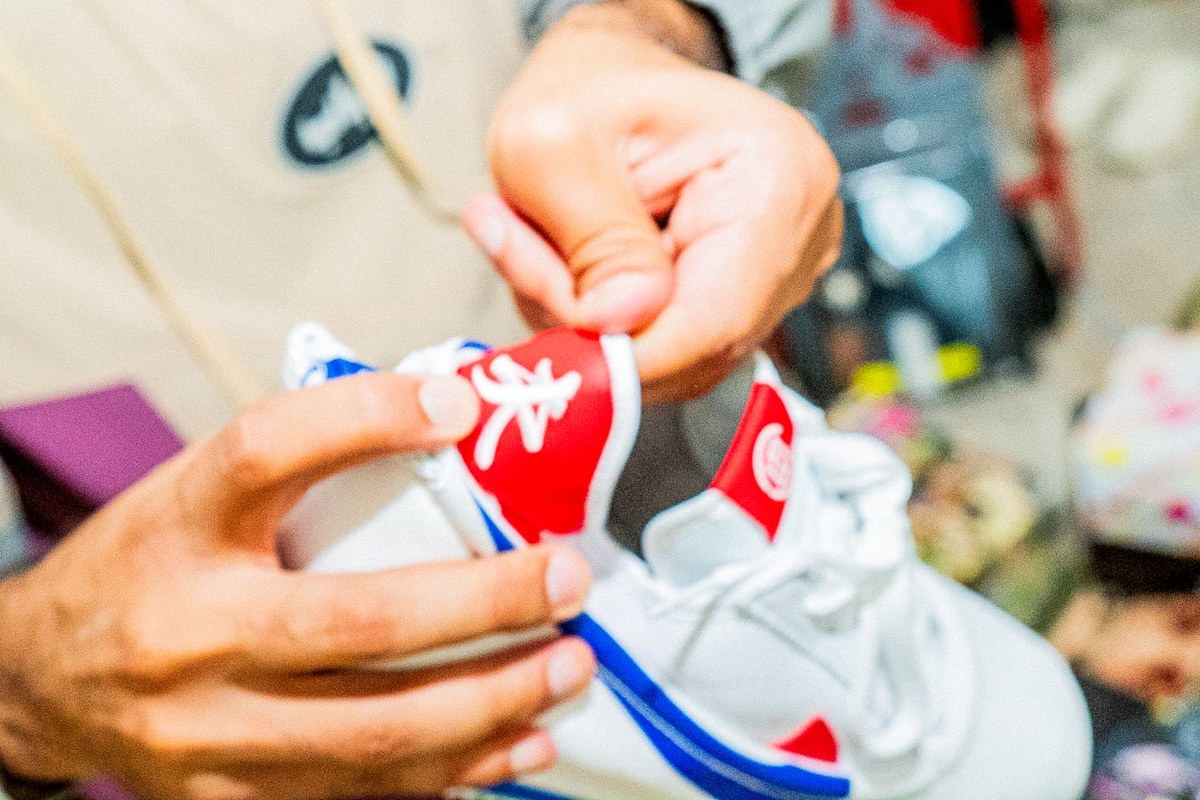
Mashari Alomari’s Clot Cortez. (Photo credit: Sultan Mutard)
“Having more kicks meant more options to develop my own style,” he tells Arab News. “Fashion is a combination of science and art — the clothes and accessories we need, and the way we express who we are individually and socially, how we feel, how we wish to communicate. It’s how I want the world to look at me. Fashion communicates values and tastes, thoughts and ideas, form, and function, how we work, how we play… our joie de vivre,” Alomarai says.
“I love pieces that are colorful and outspoken,” he continues — and his collection includes several bold pieces such as MSCHF red boots, Vandy The Pink Skeleton Clarks and a pair of Caveman slippers by Imran Potato, probably the weirdest shoes he owns. “I like to put together my outfits with any accessory that looks like it pops or stands out.”
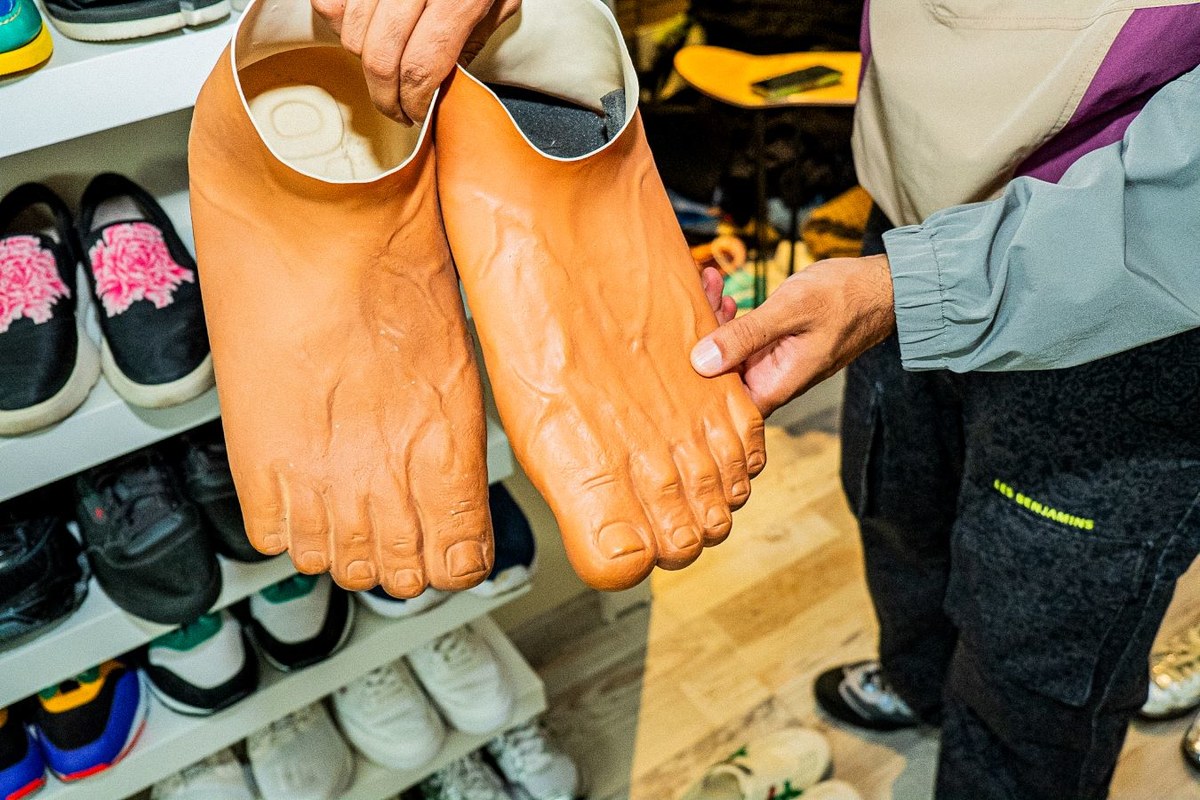
Mashari Alomari's caveman slippers. (Photo credit: Sultan Mutard)
Given his love for vibrant fashion and his enthusiasm for skateboarding, many are shocked to learn that Alomari is a lawyer. Born in Riyadh but raised in Pennsylvania, education was important to him, he says, but so was style.
Mashari also uses fashion as a way of remaining in touch with his culture. “I own some clothing from well-known designers such as Noble&fresh and Torba Studio,” he says. “I find them highly connected to Arab culture.”
Alomarai started a series on Instagram (his handle is @sneakershead413) called “Jummah Fits,” in which he posted outfits he wore to Friday prayers — traditional thobes that he gives a modern twist.
The series quickly became popular online and many other Saudi and Mulsim creators have since followed suit. Social media has been good to him.
“People use Instagram not only for communication but also for identity seeking and self-expression,” he says. “Photos are such a great way to portray who you are as a person. Spontaneous photos of your life are a strong way to connect with your audience. Communication through visual content is the new normal — visual images and photographs are becoming our primary means of communication.”
Through social media, Alomarai has met many Saudi and Arab creatives who have become collaborators and friends.
“I’ve met some amazing people and made friends with great ones by posting. I believe that by posting pictures you attract people who share the same interests, I actually met Sultan Mutard, the photographer who took the pictures for this piece, through Instagram.”

Alomari is also a skateboarding enthusiast. (Photo credit: Sultan Mutard)
Alomarai believes that Saudi Arabia has the potential to become a hub for international fashion. “The Ministry of Culture’s Fashion Commission is spearheading initiatives that underscore Saudi Arabia’s determination to become a global fashion capital,” he says. “The evolution of fashion events in the Kingdom has gained momentum.”
He also emphasizes the need for fashion to be inclusive, saying: “Fashion should not be a reason to make you feel bad about yourself. People of all ages, heights, colors, shapes and of all sizes should feel good about themselves and should be allowed to wear what makes them feel good.”
It seems like the natural next step for Alomarai would be to launch his own brand, but he says that’s not necessarily on the cards at the moment.
“Building a brand is like having a baby,” he says. “You need time, effort and, of course, money. However, I welcome any collaboration with brands to work together on any shoe-related projects.”
For now, then, Alomarai is content to keep adding to his ever-growing collection.
“Sneakerhead. Sneaker addict. Sneaker slave, call it what you want,” he says. “There’s a certain thrill, like an itch only shoes can scratch, that sneakerheads feel for their passion.”


