

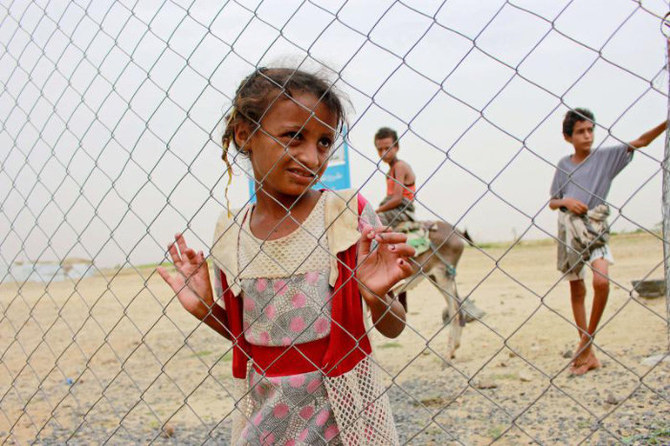

AL-MUKALLA: The international medical charity Medecins Sans Frontieres said that its medical teams in Yemen’s northern Hajjah province have recorded hundreds of measles cases, many critical, as the Iran-backed Houthis oppose the distribution of vaccines.
Between February and May this year, the Abs Hospital in Hajjah treated 341 measles patients, including 22 critical cases, while the other MSF-operated Al-Mahabisha Hospital in the same province admitted an increasing number of children with the illness, the organization said on Twitter.
“We’re concerned about the increase in measles cases reported among children from areas surrounding Abs, including from more isolated areas where patients have limited access to healthcare, including vaccination services that could contribute to preventing the spread of measles,” Dr. Bakeel Ghushaim, MSF deputy medical coordinator, said.
The UN Office for the Coordination of Humanitarian Affairs said in April that a measles outbreak in Yemen had killed 77 Yemenis and that 10,000 cases of measles had been detected in Houthi-controlled northern Yemeni provinces since the beginning of the year.
In 2022, the same UN body recorded 22,000 measles cases, including 161 fatalities, as well as an increase in diphtheria and whooping cough cases.
Yemeni health officials and international aid organizations attributed the epidemic of measles in northern provinces, primarily Hajjah, to anti-vaccine campaigns by the Houthis.
During the past three years, Houthi media and officials have adopted a narrative that demonizes vaccines, describing them as a weapon used by the US to kill Yemenis and urging Yemeni parents to refrain from vaccinating their children.
Even Houthi officials claimed that children who did not receive vaccinations were healthier than those who did.
Meanwhile, Yemeni Landmine Record, a group that chronicles land mine casualties in Yemen, said on Friday that Houthi-planted mines have killed or injured 12 Yemeni civilians in multiple Yemeni regions since the beginning of this month.
Six civilians, including three children and a woman, were killed and six others, including two children, were injured in land mine blasts in Hodeidah, Taiz, Saada, Jouf and Al-Bayda.
Even as fighting has decreased significantly since early last year as a result of the UN-brokered agreement, land mines planted by the Houthis have continued to kill and maim dozens of Yemeni civilians, primarily in the western province of Hodeidah, where the militia planted thousands of land mines to obstruct Yemeni government forces.
Masam, a Saudi-funded demining program, has defused more than 400,000 land mines and unexploded ordnance in Yemen since mid-2018, enabling hundreds of Yemenis to return to their homes, workplaces and schools.


