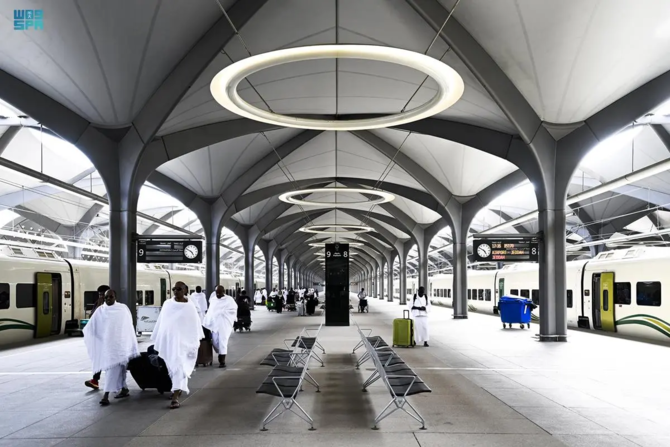
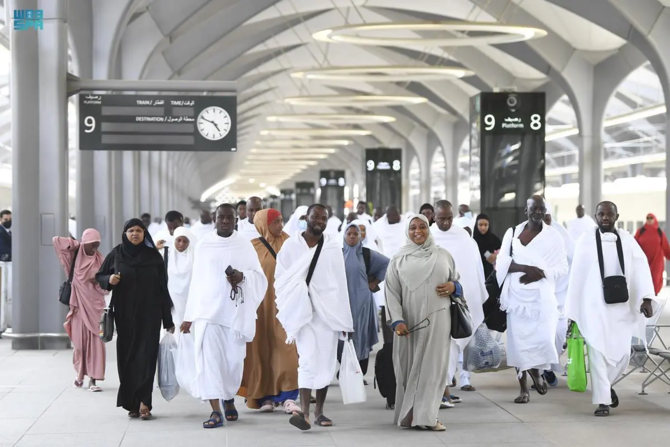
MAKKAH: The first batch of pilgrims have arrived from Jeddah and Madinah to Makkah via the fastest electric train in the Middle East to begin performing the annual Hajj pilgrimage in Saudi Arabia, the state-run SPA news agency reported on Friday.
The transport and logistics system provides its services through one of the longest trains in the world to the pilgrims of the Grand Mosque, to enhance integration and interdependence with all modes of transport, as the Haramain train services arrivals from the airport to transport them to Makkah, with a fleet of 15 trains and a capacity of 1.5 million seats.
Its speed reaches 300 kilometers per hour and its road network spans for 453 kilometers.
The Haramain express train is being operated by 35 electric trains, with a capacity of 417 passengers per train through 13 carriages divided into five business class compartments, in addition to catering services and eight economy class compartments, with a total of 113 business class seats and 304 economy class seats.


![]()
![]()
![]()
![]()
![]()

First batch of pilgrims arrive in Makkah via Haramain express train to perform Hajj


Short Url
https://arab.news/pqhpp
First batch of pilgrims arrive in Makkah via Haramain express train to perform Hajj


Latest updates


© 2026 SAUDI RESEARCH & PUBLISHING COMPANY, All Rights Reserved And subject to Terms of Use Agreement.