UNITED NATIONS: The UN envoy for Afghanistan warned the country’s Taliban rulers Wednesday that international recognition as the country’s legitimate government will remain “nearly impossible” unless they lift severe restrictions on women and girls’ education and employment.
Roza Otunbayeva told the UN Security Council that the Taliban have asked to be recognized by the United Nations and its 192 other member nations, “but at the same time they act against the key values expressed in the United Nations Charter.”
In her regular discussions with the Taliban, she said, “I am blunt about the obstacles they have created for themselves by the decrees and restrictions they have enacted, in particular against women and girls.”
The Taliban seized power in Afghanistan in August 2021 as US and NATO troops were in the final weeks of withdrawing from the country after two decades of war. The group’s decrees limiting the participation of girls and women have impacted foreign aid to the country, whose citizens face the world’s largest humanitarian crisis.
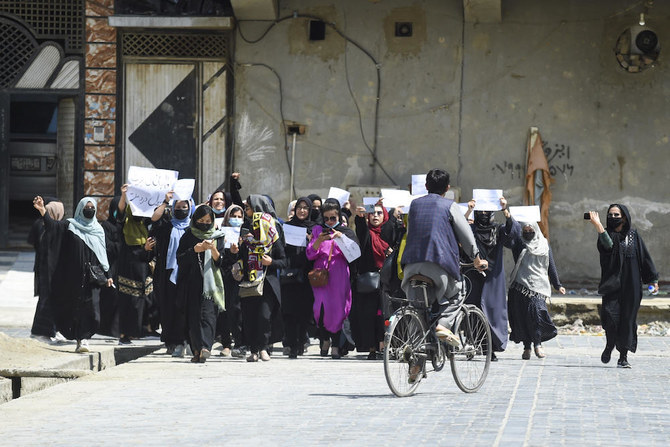
The Taliban initially promised a more moderate rule than during their first stint in power from 1996 to 2001 but started to enforce restrictions on women and girls soon after the 2021 takeover. Women are barred from most jobs and public places, including parks, baths and gyms, while girls are banned from education beyond sixth grade.
The Taliban also have brought back their strict interpretation of Islamic law, or Shariah, including public executions.
Despite UN appeals, Otunbayeva reported no change to the restrictions, including an April ban on Afghan women working for the United Nations. She called the prohibition a violation of Afghanistan’s obligations as a UN member nation “to respect the privileges and immunities of the United Nations and its officials, including Afghan women who work for us.”
Otunbayeva, a former president of Kyrgyzstan, reiterated that all non-essential Afghan staff, both women and men, are still staying at home, and she said the UN is “steadfast” that female national staff will not be replaced by male staff “as some Taliban authorities have suggested.”
In late April, the Security Council unanimously approved a resolution calling on the Taliban to swiftly reverse the increasingly harsh constraints imposed on women and girls and condemning the ban on Afghan women working for the UN, calling it “unprecedented in the history of the United Nations.”
Based on discussions with many people across Afghanistan, Otunbayeva said, it is clear the Taliban’s decrees “are highly unpopular among the Afghan population” and cost the country’s rulers “both domestic and international legitimacy, while inflicting suffering on half of their population and damaging their economy.”
In a frank political assessment, she told council members that the Taliban regime “remains insular and autocratic,” with “an unaccountable central authority” and an all-male government almost entirely from its Pashtun and rural base.
While the Afghan economy “remains stable, albeit at a low equilibrium,” 58 percent of households struggle to fulfill the basic needs of their families, and the UN continues to address the needs of 20 million people who need assistance, Otunbayeva said.
She said cash shipments, required for UN humanitarian operations, “are expected to decrease as donor funding declines,” which could negatively effect Afghanistan’s monetary stability. And despite the bans, she said, “the international community can do more to ensure the future stability of the Afghan economy in a way that directly improves the lives of Afghans.”
The humanitarian organization Save The Children said Monday that a large-scale plague of locusts is ravaging Afghanistan’s northern provinces and has the potential to destroy 1.2 million tons of wheat, approximately one-quarter of the country’s annual harvest.
It said the infestation comes at the worst possible time, pointing to 8 million Afghans cut off from food aid in the past two months due to funding shortfalls, and over 15 million people – one-third of Afghanistan’s population – projected to face crisis levels of hunger over the next five months.


![]()

UN warns Taliban that restrictions on Afghan women and girls make recognition ‘nearly impossible’
Short Url
https://arab.news/m842r
UN warns Taliban that restrictions on Afghan women and girls make recognition ‘nearly impossible’
- Roza Otunbayeva told the UN Security Council that the Taliban have asked to be recognized by the United Nations and its 192 other member nations
- The group's decrees limiting the participation of girls and women have impacted foreign aid to the country


Latest updates


© 2026 SAUDI RESEARCH & PUBLISHING COMPANY, All Rights Reserved And subject to Terms of Use Agreement.