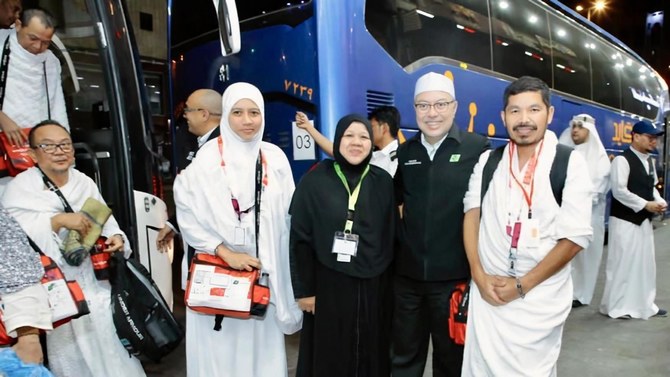
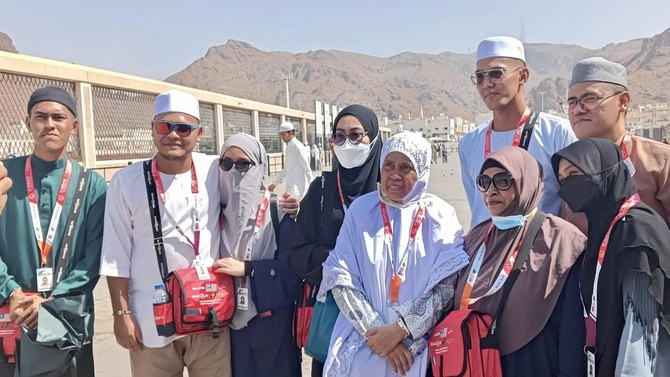
KUALA LAMPUR: Malaysian pilgrims said on Friday they are enjoying smooth travel under the Makkah Route initiative and are moved by Saudi hospitality as they reach the Kingdom to perform Hajj.
Malaysia is among seven Muslim-majority countries — including Pakistan, Bangladesh, Indonesia, Morocco, Turkiye and Cote d’Ivoire — where Saudi Arabia opened its Makkah Route initiative.
The program, launched in 2019, is dedicated to Hajj pilgrims, allowing them to fulfill all visa, customs and health requirements at their airport of origin, saving long hours of waiting. Upon arrival, pilgrims can enter the Kingdom having already gone through visa and customs processes back home.
This year, 31,600 Malaysians are participating in the annual pilgrimage that is one of the five pillars of Islam.
Those departing from Kuala Lumpur International Airport are taken care of by Saudi immigration officials working round the clock to facilitate their journey under Makkah Route.
“It is a successful program in facilitating the movement of pilgrims through immigration and customs at KLIA and the airports in Madinah and Jeddah,” Mohammed Naser Jaffar, director of media operations for Tabung Hajji — Malaysia’s Hajj board — told Arab News, as he expressed his gratitude to the Saudi government for providing the special service “for the comfort of Malaysian Hajj pilgrims.”
Among those who enjoyed the service was Nuryutta Yahya, who reached the Kingdom accompanied by her father.
“The process of the Makkah Route was very smooth for me and my father,” she told Arab News over the phone from Saudi Arabia.
“I am happy and grateful to be here in Makkah. I am still young, and it is a blessing for me.”
Like many other Malaysians, Yahya was also moved by Saudi hospitality.
“The Saudis here are very friendly,” she said. “Every time we walked by, they would greet us Malaysians!”
Khawlah Al-Azwar Mohd Lukmanuddin, another female pilgrim from Yahya’s group, was full of praise for her hosts’ willingness to assist whenever help is needed.
“If we go to the mosque and seek help, they willingly assist us, even though many of us here do not know how to speak Arabic,” she said.
“They go out of their way to help.”


![]()
![]()

Malaysian pilgrims grateful for smooth Makkah Route journey, Saudi hospitality
Short Url
https://arab.news/nceaj
Malaysian pilgrims grateful for smooth Makkah Route journey, Saudi hospitality
- 31,600 pilgrims from Malaysia participating in this year’s Hajj
- Malaysians moved by hosts’ willingness to assist whenever help is needed


Latest updates


© 2026 SAUDI RESEARCH & PUBLISHING COMPANY, All Rights Reserved And subject to Terms of Use Agreement.