Three Pakistani soldiers, three militants killed in northwest Pakistan shootout
Three Pakistani soldiers, three militants killed in northwest Pakistan shootout/node/2319571/pakistan
Three Pakistani soldiers, three militants killed in northwest Pakistan shootout
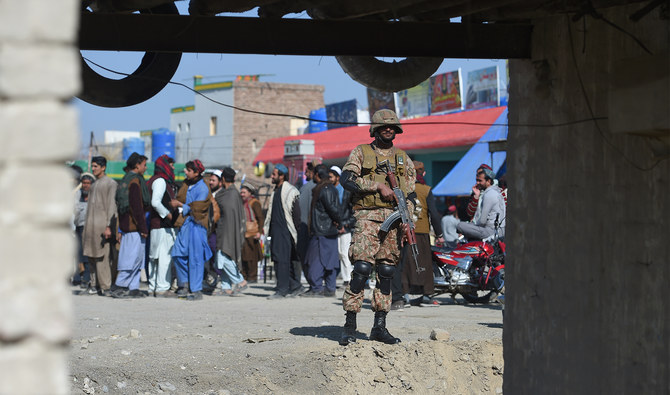
A Pakistani army soldier stands guard at a market in Miran Shah, a town in North Waziristan, near the border between Pakistan and Afghanistan, on January 27, 2019. (AFP/File)
ISLAMABAD: Three Pakistani soldiers and three militants were killed in a shootout in Pakistan's northwestern Khyber Pakhtunkhwa province, the Pakistani military said on Sunday, amid a renewed wave of militant attacks in the South Asian country.
The exchange of fire took place in Miran Shah area of North Waziristan tribal district, according to the Inter-Services Public Relations (ISPR), the military's media wing.
Pakistani troops effectively engaged the militants, killing three of them and injuring four others.
"During intense exchange of fire, Subedar Asghar Ali (age 40 years, resident of Lakki Marwat District), Sepoy Naseem Khan (age 26 years, resident of Lakki Marwat District) & Sepoy Muhammad Zaman (age 22 years, resident of Abbottabad) having fought gallantly, embraced shahadat (martyrdom)," the ISPR said in a statement.
"Sanitization of the area is being carried out to eliminate any other terrorists found in the area."
The development came almost a week after two Pakistani soldiers and two militants were killed in a gun battle in the same district, which had been a stronghold of the Pakistani Taliban before they were driven out of the country's northwestern tribal region in a military offensive in 2014.
The Pakistani Taliban, or the Tehreek-e-Taliban Pakistan (TTP), are a separate entity but are allied with the Afghanistan Taliban, who took over Afghanistan in August 2021 after the withdrawal of US and NATO forces from the country.
The takeover emboldened the TTP. They unilaterally ended a cease-fire agreement with the Pakistani government in November after the failure of months-long talks with Islamabad that were facilitated by the Afghan Taliban, and have since stepped up their attacks in the country.
KARACHI: In the flood-scarred plains of southern Pakistan, where rising salinity and hardened soil are squeezing farm incomes, 30-year-old Dhani Satram has found unlikely allies: earthworms.
The mother of six farms in Bachal Sand village in Sindh’s Tando Allahyar district. In recent years, her sugarcane fields were losing productivity as repeated floods and long dry spells compacted the land.
Now she produces and applies vermicompost — an organic fertilizer made with worms — and says the results have been dramatic.
“First, we bring animal dung and water it. Then we make a bed and put the worms into it. When it is ready, we apply it to our crops,” she told Arab News, describing the simple process she carries out at home.
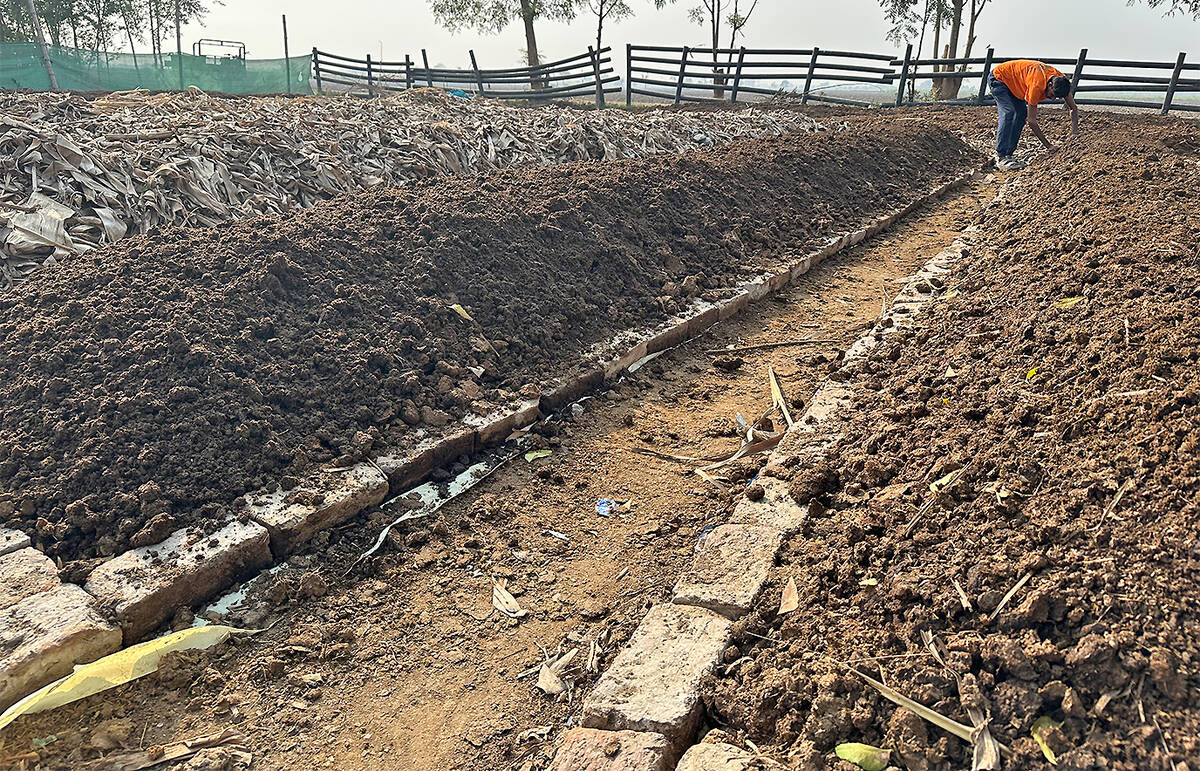
A man is checking examining vermicompost on a farm in Tando Allahyar district of Pakistan's Sindh province on February 11, 2026. (AN photo)
The results, she said, speak for themselves.
“Earlier, our sugarcane crop used to yield 1,000 mounds per acre. Now, we are getting 1,500 to 2,000 mounds per acre.”
A mound, a traditional South Asian agricultural unit of weight, equals 40 kilograms.
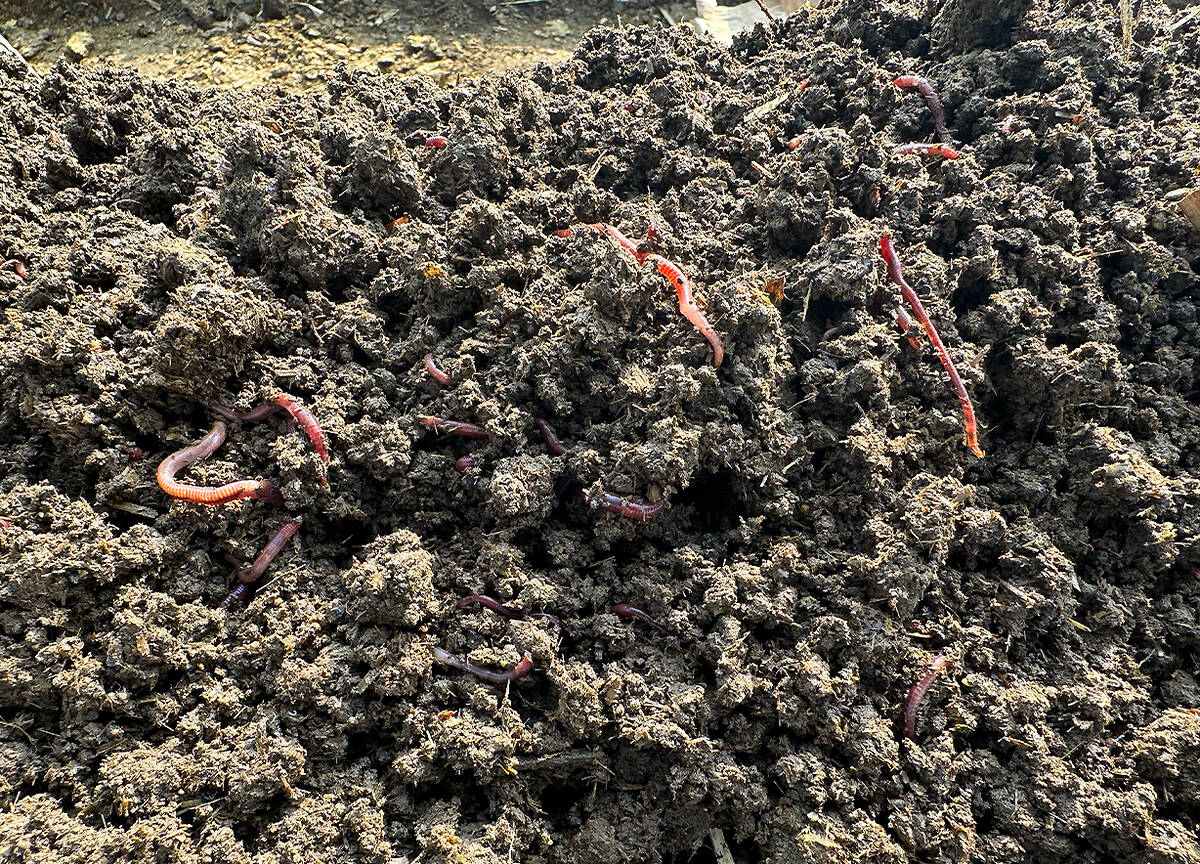
Worms are crawling over animal manure on a farm in Tando Allahyar district of Pakistan's Sindh province on February 11, 2026. (AN photo)
Pakistan ranks among the countries most vulnerable to climate change. Intense monsoon rains and recurring floods regularly damage farmland, particularly in Sindh, where soil has also become increasingly saline and hard.
Vermicompost — often called “black gold” in Europe — is produced when earthworms break down organic waste into nutrient-rich fertilizer.
In Tando Allahyar, the movement is being led by 61-year-old Khalid Maqsood, founder of K-Organic, who runs what he says is Pakistan’s largest vermicompost training center.
Maqsood said he trained in India in 2015 and initially imported worms from England. He has since multiplied them locally into hundreds of composting beds.
“This vermicompost basically works on materials that are decomposable, except citrus,” he said. “It uses a specific Australian-bred worm called Eisenia fetida. Whatever it eats is decomposed. This is one of the fastest natural methods of decomposition in the world.”
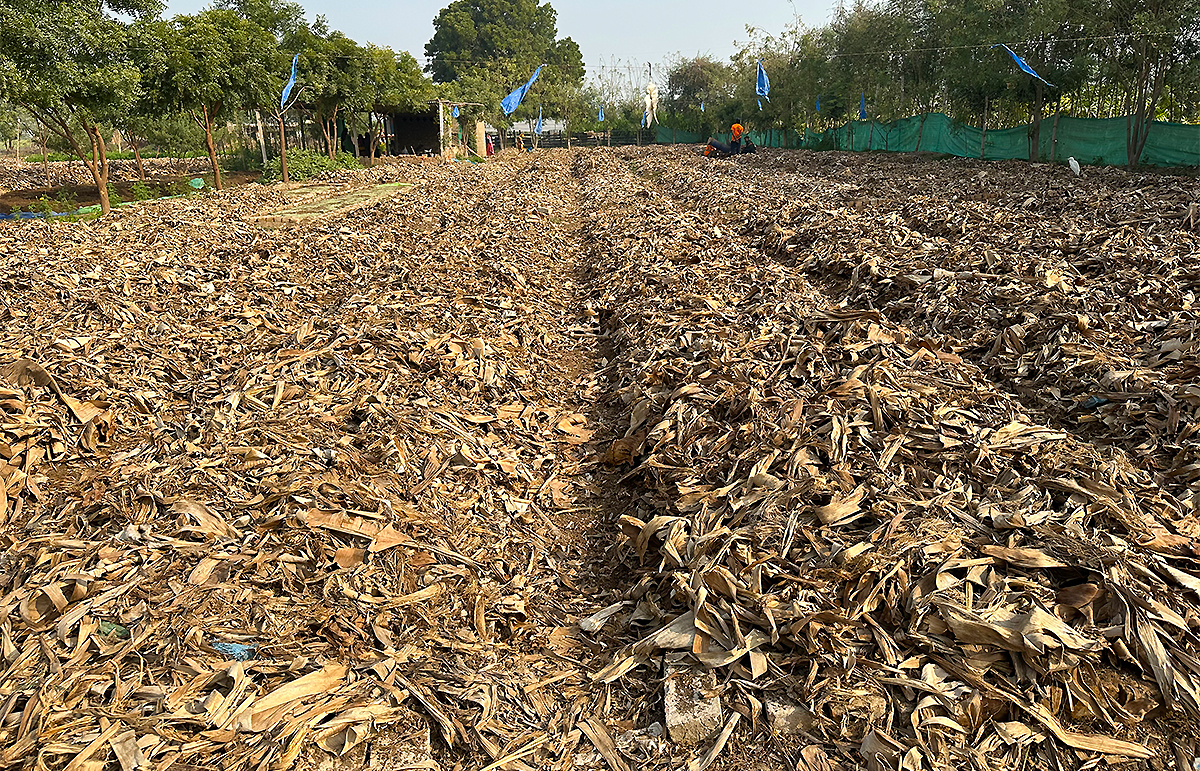
A man is checking examining vermicompost on a farm in Tando Allahyar district of Pakistan's Sindh province on February 11, 2026. (AN photo)
He said the organic fertilizer is particularly useful in areas hit by floods and water shortages.
“With vermicompost, our crops and our land would not dry out the way they do with chemical fertilizers,” he said.
According to Maqsood, years of heavy chemical fertilizer use have made soil harder and less able to absorb water. Organic compost helps soften it, allowing rainwater to seep into the ground rather than run off.
He said the benefits are practical as well as environmental.
“When we use vermicompost, our expenses are reduced,” he said. “We saved Rs8,000 ($28.6) by cutting plowing. We reduced chemical fertilizer use. We also saved 20 percent water.”
The approach is spreading beyond Satram’s fields.
Mawjee Kachi, 38, who grows sugarcane, cotton, wheat and vegetables on six acres in the same village, said chemical fertilizers were no longer delivering results.
“The soil was getting hard and there was a water shortage,” he said. “After using vermicompost, the soil has become softer. The crops have grown well. There has been an increase in the average yield.”
“Earlier it was 800-900 [mounds per acre]. Now it has increased to 1,500-2,000.”
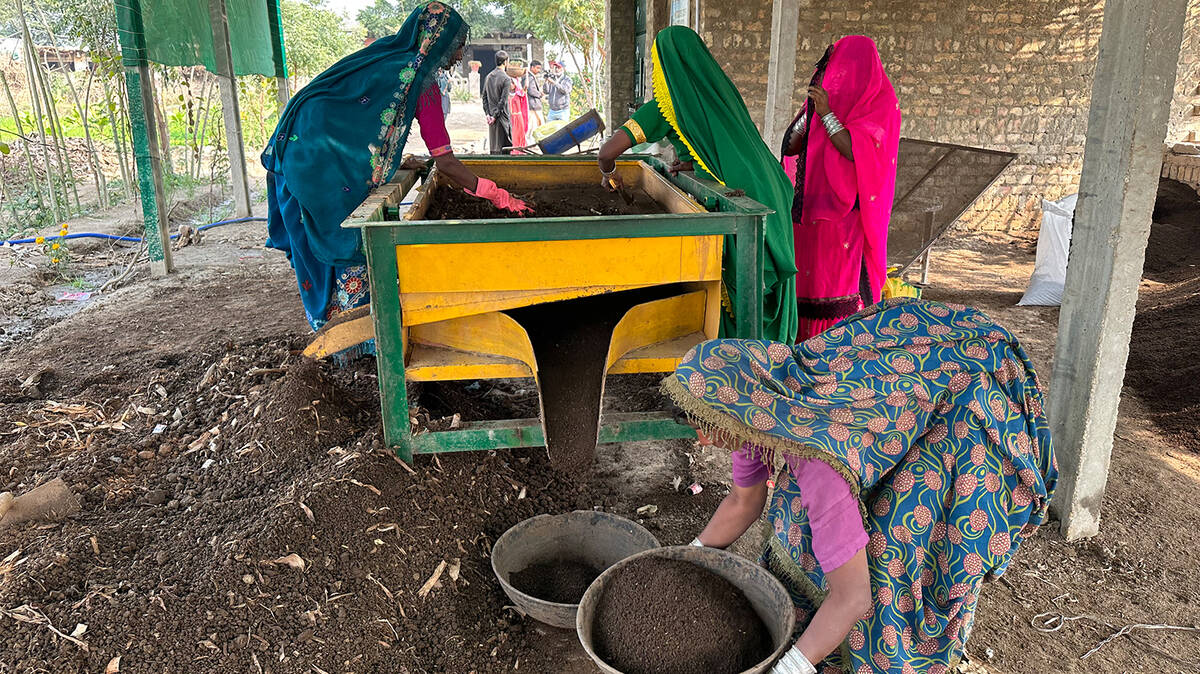
Women farmers are sifting soil on a farm in Tando Allahyar district of Pakistan's Sindh province on February 11, 2026. (AN photo)
Beerchand, a farm supervisor trained at Maqsood’s center who only goes by a single name, has now started vermicomposting at a 2,500- to 3,000-acre farm in Mirpurkhas district.
“We have experimented with it,” he said. “We will increase it further ... If we are successful, we will expand it more.”
While it is still a relatively new agricultural method at the national level, Maqsood said universities and agricultural institutions in Sindh are now collaborating with his center, and the government is planning training programs to promote the practice.
He has also begun receiving export inquiries.
“We are currently at an early stage and don’t have enough quantity for exports,” he said, adding: “Within two years or even before that we hope to begin exporting.”
He sees the strongest potential in Gulf countries.
“The biggest and nearest markets are Saudi Arabia and the United Arab Emirates,” Maqsood said.
“It has already given best results in date farming,” he added.