BOGOTA, Colombia: Four Indigenous children who were missing for more than five weeks in a jungle in Colombia’s south following a deadly plane crash arrived in the capital Bogota early on Saturday for medical treatment.
The siblings were found on Friday in Colombia’s Caqueta province according to the country’s armed forces and were initially treated by military medics who had been among the search teams searching for them.
The mission to find the four siblings, called Operation Hope, captured the imagination of Colombians as reports of clues to their whereabouts fueled longing they would be found safely despite spending more than a month in the inhospitable jungle.
“We did everything necessary to make the impossible possible, using satellites, using aircraft that launched messages, that launched food, that launched flyers, that launched hope,” General Pedro Sanchez, commander of the military’s joint command for special operations said at an air base in Bogota.
In photos shared by Colombia’s military, the four children — three girls and a boy — appeared gaunt as they were being cared for by rescuers.
After the plane carrying the children landed in Bogota, four ambulances were waiting at to collect them and take them to a military hospital for specialist medical care.
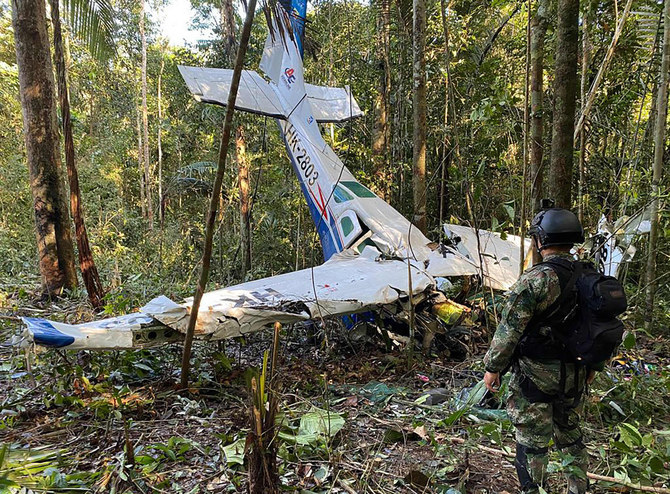
They had been missing in the jungle since a Cessna 206 carrying seven people on a route between Araracuara, in Caqueta, and San Jose del Guaviare, a city in Guaviare province, issued a mayday alert due to engine failure in the early hours of May 1.
Three adults, including the pilot and the children’s mother, died in the crash and their bodies were found inside the plane. The siblings, aged 13, 9, 4, as well as a now 12-month-old baby, survived the impact.
They are members of the Huitoto people, and officials said the oldest children in the group had some knowledge of how to survive in the rainforest.
On Friday, after confirming the children had been rescued, the president said that for a while he had believed the children were rescued by one of the nomadic tribes that still roam the remote swath of the jungle where the plane fell and have little contact with authorities.
But Petro added that the children were first found by one of the rescue dogs that soldiers took into the jungle. He said that he hoped to meet with the children Saturday.
“The jungle saved them” Petro said. “They are children of the jungle, and now they are also children of Colombia.”


![]()
![]()
![]()

Four Colombian children lost in Amazon jungle for 40 days after plane crash found alive


Short Url
https://arab.news/n25bf
Four Colombian children lost in Amazon jungle for 40 days after plane crash found alive
- The pilot and 2 adult passengers of the Cessna single-engine propeller plane did not survive the May 1st plane crash
- Colombia’s army employed 150 soldiers with dogs into the jungle to track the four siblings, who were missing from the crash site


Latest updates


© 2026 SAUDI RESEARCH & PUBLISHING COMPANY, All Rights Reserved And subject to Terms of Use Agreement.