


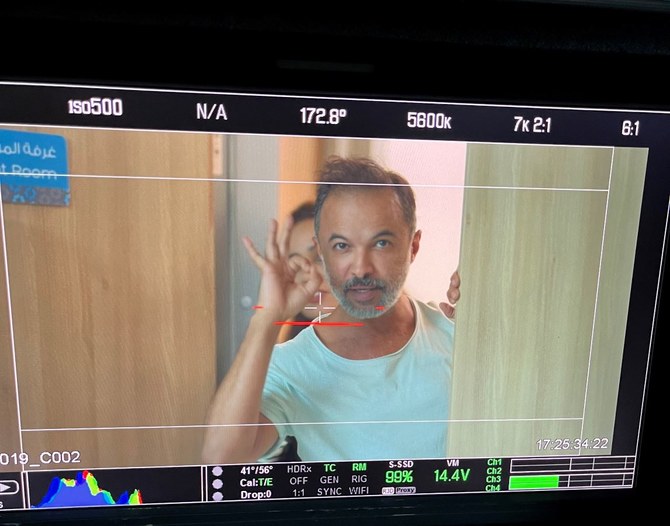
DUBAI: If Dubai has a face, it was probably drawn by Mohammed Saeed Harib. The Emirati animator, artist and filmmaker behind the new film ‘King of the Ring’ — now screening in cinemas across the Middle East — has become an icon in his home country, and is responsible for so much of how the city presents itself to the world, with the characters from his animated series “Freej” welcoming tourists on FlyDubai, his robot design having guided visitors through Expo 2020, and now the newly redesigned characters Modesh and Dana serving as the city’s mascots.
It's no wonder, then, that Harib focuses more these days on the message behind what he’s making. He hasn’t lost his sense of fun, of course, but while he may have set out 20 years ago with a goal to entertain and lovingly poke fun at his own culture, he’s become much more aware that he is a cultural ambassador, and as the region’s artistic voice begins to boom louder, what is being said matters just as much as how it’s said.

A scene from ‘King of the Ring.’ (Supplied)
“I’ve found it very important to use my skills to make sure that there are good products for kids growing up,” Harib tells Arab News. “My animated series ‘Siraj’ may not get as much media attention, but it’s been (out for) years and it’s still shown in schools. It’s funny, because I’d would rather be known for that kind of work, honestly.”
At first glance, “King of the Ring” (Malik Al-Halaba in Arabic) may be an odd fit for an artist with those intentions. It’s the story of a Saudi man who aspires to be a pro wrestler, far from Harib’s usual wheelhouse. But beneath the surface it’s something more.
“When I was approached, they cautioned me that this was not a slapstick film — it was a heartfelt story. I said, ‘Perfect, that’s exactly what I want to do.’ I wanted an action-comedy with some soul in it,” says Harib.
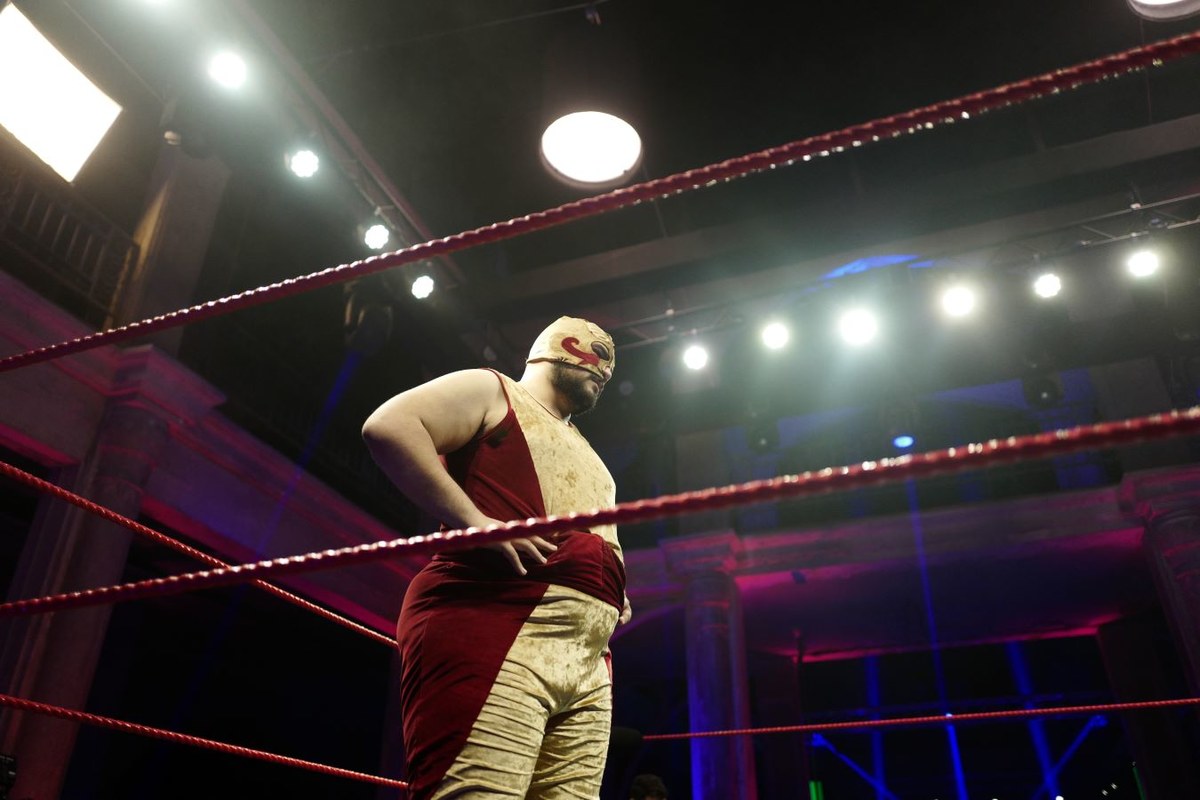
Yassin Ghazzawi as Musaab in ‘King of the Ring.’ (Supplied)
That was easier said than done, of course, especially in the circumstances Harib was handed. The film was shot in Abu Dhabi halfway through 2020, at the height of the COVID-19 pandemic, and ‘unprecedented times’ led to a production no one could have prepared for.
“Abu Dhabi was by far the most restrictive city during the pandemic, and so we had to adjust accordingly. It was a bit surreal checking into a hotel and having them repeat back to me, ‘So you’ll be staying here 90 days?’ And just as that was sinking in, Saudi Arabia stopped all flights, and we lost our lead actor,” says Harib.
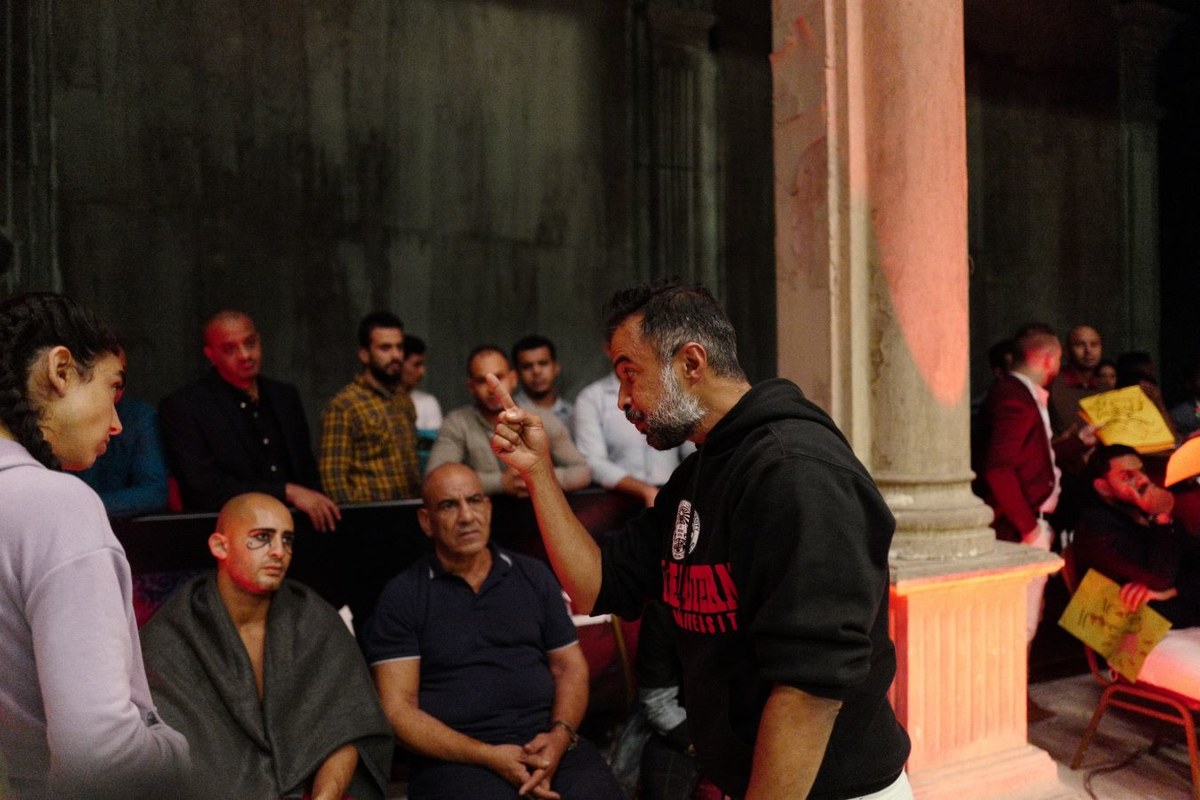
Filmmaker Harib directing the cast of ‘King of the Ring’ during shooting.
He didn’t have much to compare this to. His last live action film, 2019’s “Rashid & Rajab,” was made over a six-year period in intimate locations near his home, with actors and crew he’d known for years, and producers he counts among his closest friends. “King of the Ring” was a major film, with an international cast — the first large-scale co-production between Saudi Arabia’s MBC, Abu Dhabi’s Image Nation and Vox Cinemas. And even with all that weighing on him, a pressing question jumped into his mind: ‘How the heck do I capture pro wrestling?’
“I was a big fan as a kid, but I haven’t really focused on it for years, and never with a filmmaker’s eye. But I became obsessed. We ended up having to build a wrestling ring in one of the board rooms of the hotel, just to practice the routines over and over again because I was so adamant on understanding what every movement meant,” says Harib.
“In the film, the wrestling starts very amateurish, both in its choreography and how it’s filmed. Then as the film goes on, my best directing comes just as the wrestling gets really good as well. We all were learning as we went — we grew up with the character,” Harib continues.
The director pushed himself further than he ever had before, guided through a harrowing experience by the yearning to become a better filmmaker than before he started — a goal he accomplished. It’s probably why he connected so strongly with the soul of the film, the chronicle of a man battling the limitations his society has placed on him.
“This story sheds light on struggling personalities — people who are fighting to find their voice when society dictates that you don’t go against the grain. There are judgmental figures around you telling you how you should act, how you should look, how you should betray yourself or what line of business to go into. We made this film to be a family picture because we want parents and kids to see this journey and gain something from watching this man fight to be something different and succeed,” says Harib.
Coincidentally, this is not the first film from the Gulf this year to deal with pro wrestling. “Sattar,” from Telfaz11, was a record-breaking hit in the Kingdom, but is substantively different from “King of the Ring.” While the former’s over-the-top comic sensibility fitted more with its YouTube comedy origins, Harib’s film is aimed at a very different audience.
“Last week, one of the stakeholders from Telfaz11 came to our premiere in Saudi Arabia, and he came up to me afterwards to tell me how happy he was that he’d come,” Harib says. “This was a film that kids should see, with a clear message. ‘I can’t recommend our film ‘Sattar’’, the man said, ‘if they’re not of a certain age. It’s wonderful both these films exist!’”
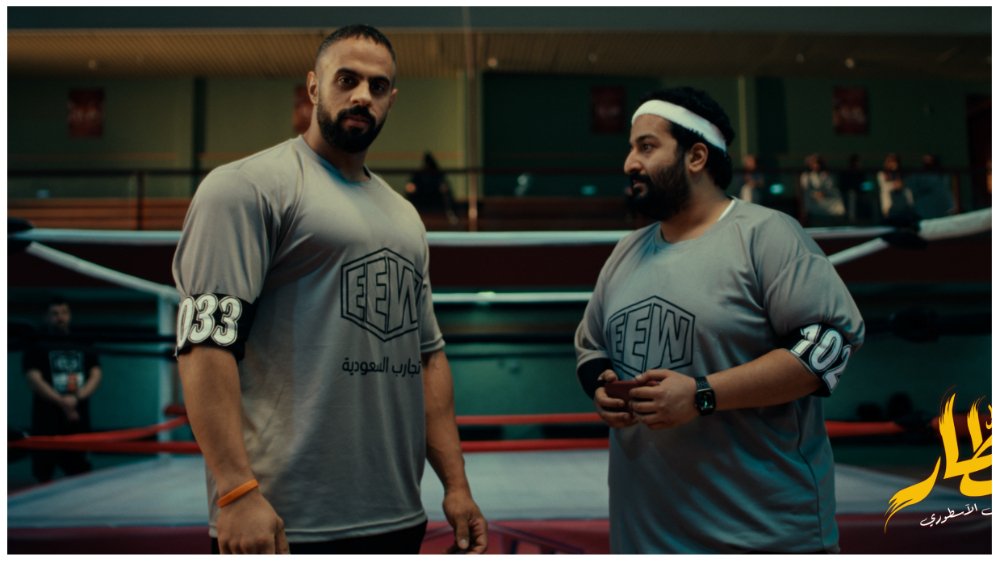
‘King of the Ring’ is not the first film from the Gulf this year to deal with pro wrestling. ‘Sattar,’ from Telfaz11, was a record-breaking hit in Saudi Arabia, but is substantively different from ‘King of the Ring.’ (Supplied)
“Sattar” has singlehandedly redrawn the cinema landscape in the region, offering a roadmap towards the untapped commercial prospects for Saudi-related films in the Kingdom. In the UAE, on the other hand, “Sattar” didn’t perform nearly as well, showing that there is still work to be done in crafting films that appeal to both Emiratis and Saudis in equal measure.
“I hope we arrive at a point where we can enjoy each other’s films, but people need to know that while we are part of one family, we have differences,” Harib says. “There are many unique cultural nuances. The Emirati population, for example, did not have the same YouTube culture that has shaped Saudi appetites over the last decade. That material is a hard sell to audiences who are unfamiliar with it, and vice versa. There is a lot of work to be done in navigating these differences.”
And those differences, of course, are ever-evolving. Harib is working on a new season of “Freej,” and he’s constantly marveling at how different the country is from when he started the show in 2006. The characters he created barely exist in real life, as the Emirati people continue to evolve with the times, and cultural traditions begin to change with them.
“I’m working on a film about this now actually — an animated feature — and it’s my passion project. I’ve spent so long servicing companies, or governmental organizations, but this one is for me. It will take some time, though,” says Harib. “Perhaps in five years, we can sit down for an interview about it, and try to figure out how much the Gulf has changed once again.”




