MIAMI: Donald Trump said Thursday that he was indicted for mishandling classified documents at his Florida estate, a remarkable development that makes him the first former president in US history to face criminal charges by the federal government that he once oversaw.
The indictment carries unmistakably grave legal consequences, including the possibility of prison if he’s convicted.
But it also has enormous political implications, potentially upending a Republican presidential primary that Trump had been dominating and testing anew the willingness of GOP voters and party leaders to stick with a now twice-indicted candidate who could face still more charges. And it sets the stage for a sensational trial centered on claims that a man once entrusted to safeguard the nation’s most closely guarded secrets willfully, and illegally, hoarded sensitive national security information.
The Justice Department did not immediately confirm the indictment publicly. But two people familiar with the situation who were not authorized to discuss it publicly said the indictment included seven criminal counts. One of those people said Trump’s lawyers were contacted by prosecutors shortly before he announced on his Truth Social platform that he had been indicted.
Within 20 minutes of his announcement, Trump began fundraising off it for his 2024 presidential campaign. He declared his innocence in a video and repeated his familiar refrain that the investigation is a “witch hunt.” He said he planned to be in court Tuesday afternoon in Miami, where a grand jury had been meeting to hear evidence as recently as this week.
The case adds to deepening legal jeopardy for Trump, who has already been indicted in New York and faces additional investigations in Washington and Atlanta that also could lead to criminal charges. But among the various investigations he faces, legal experts — as well as Trump’s own aides — had long seen the Mar-a-Lago probe as the most perilous threat and the one most ripe for prosecution. Campaign aides had been bracing for the fallout since Trump’s attorneys were notified that he was the target of the investigation, assuming it was not a matter of if charges would be brought, but when.
Appearing Thursday night on CNN, Trump attorney James Trusty said the indictment includes charges of willful retention of national defense information — a crime under the Espionage Act, which polices the handling of government secrets — obstruction, false statements and conspiracy.
The case is a milestone for a Justice Department that had investigated Trump for years — as president and private citizen — but had never before charged him with a crime. The most notable investigation was an earlier special counsel probe into ties between his 2016 campaign and Russia, but prosecutors in that probe cited Justice Department policy against indicting a sitting president. Once he left office, though, he lost that protection.
The inquiry took a major step forward last November when Attorney General Merrick Garland, a soft-spoken former federal judge who has long stated that no person should be regarded as above the law, appointed Jack Smith, a war crimes prosecutor with an aggressive, hard-charging reputation to lead both the documents probe as well as a separate investigation into efforts to subvert the 2020 election.
The indictment arises from a monthslong investigation into whether Trump broke the law by holding onto hundreds of documents marked classified at his Palm Beach property, Mar-a-Lago, and whether he took steps to obstruct the government’s efforts to recover the records.
Prosecutors have said that Trump took roughly 300 classified documents to Mar-a-Lago after leaving the White House, including some 100 that were seized by the FBI last August in a search of the home that underscored the gravity of the Justice Department’s investigation. Trump has repeatedly insisted that he was entitled to keep the classified documents when he left the White House, and has also claimed without evidence that he had declassified them.
Court records unsealed last year showed federal investigators believed they had probable cause that multiple crimes had been committed, including the retention of national defense information, destruction of government records and obstruction.
Since then, the Justice Department has amassed additional evidence and secured grand jury testimony from people close to Trump, including his own lawyers. The statutes governing the handling of classified records and obstruction are felonies that could carry years in prison in the event of a conviction.
It remains unclear how much it will damage Trump’s standing given that his first indictment generated millions of dollars in contributions from angry supporters and didn’t weaken him in the polls. But no matter what, the indictment — and legal fight that follows — will throw Trump back into the spotlight, sucking attention away from the other candidates who are trying to build momentum in the race.
Florida Gov. Ron DeSantis, a Trump opponent in the primary, condemned the indictment on Twitter, saying it represented “the weaponization of federal law enforcement.”
The former president has long sought to use his legal troubles to his political advantage, complaining on social media and at public events that the cases are being driven by Democratic prosecutors out to hurt his 2024 election campaign. He is likely to rely on that playbook again, reviving his longstanding claims that the Justice Department — which, during his presidency, investigated whether his 2016 campaign had colluded with Russia — is somehow weaponized against him.
Trump’s legal troubles extend beyond the New York indictment and classified documents case.
Smith is separately investigating efforts by Trump and his allies to overturn the results of the 2020 presidential election. And the district attorney in Georgia’s Fulton County is investigating Trump over alleged efforts to subvert the 2020 election in that state.
Signs had mounted for weeks that an indictment was near, including a Monday meeting between Trump’s lawyers and Justice Department officials. His lawyers had also recently been notified that he was the target of the investigation, the clearest sign yet that an indictment was looming.
Though the bulk of the investigative work had been handled in Washington, with a grand jury meeting there for months, it recently emerged that prosecutors were presenting evidence before a separate panel in Florida, where many of the alleged acts of obstruction scrutinized by prosecutors took place.
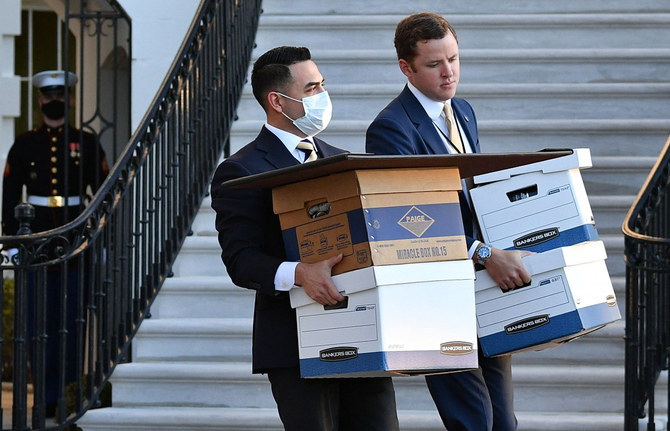
The Justice Department has said Trump and his lawyers repeatedly resisted efforts by the National Archives and Records Administration to get the documents back. After months of back-and-forth, Trump representatives returned 15 boxes of records in January 2022, including about 184 documents that officials said had classified markings on them.
FBI and Justice Department investigators issued a subpoena in May 2022 for classified documents that remained in Trump’s possession. But after a Trump lawyer provided three dozen records and asserted that a diligent search of the property had been done, officials came to suspect even more documents remained.
The investigation had simmered quietly for months until last August, when FBI agents served a search warrant on Mar-a-Lago and removed 33 boxes containing classified records, including top-secret documents stashed in a storage room and desk drawer and commingled with personal belongings. Some records were so sensitive that investigators needed upgraded security clearances to review them, the Justice Department has said.
The investigation into Trump had appeared complicated — politically, if not legally — by the discovery of documents with classified markings in the Delaware home and former Washington office of President Joe Biden, as well as in the Indiana home of former Vice President Mike Pence. The Justice Department recently informed Pence that he would not face charges, while a second special counsel continues to investigate Biden’s handling of classified documents.
But compared with Trump, there are key differences in the facts and legal issues surrounding Biden’s and Pence’s handling of documents, including that representatives for both men say the documents were voluntarily turned over to investigators as soon as they were found. In contrast, investigators quickly zeroed on whether Trump, who for four years as president expressed disdain for the FBI and Justice Department, had sought to obstruct the inquiry by refusing to turn over all the requested documents.

Trump charged over classified documents in first federal indictment of an ex-president
Short Url
https://arab.news/7npgz
Trump charged over classified documents in first federal indictment of an ex-president
- The controversial former president said he was due in court Tuesday in Miami, calls it a "DARK DAY for the United States of America"
- Trump has already been indicted in New York and faces additional investigations in Washington and Atlanta that also could lead to criminal charges
Swiss investigators believe sparklers on champagne bottles ignited bar fire
- Authorities are investigating whether the sparkling candles came too close to the ceiling of a bar crowded with New Year’s Eve revelers
- At least 40 people were killed and another 119 injured as the blaze ripped through Le Constellation bar in Crans-Montana
CRANS-MONTANA, Switzerland: Investigators said Friday that they believe sparkling candles atop Champagne bottles ignited a fatal fire at a Swiss ski resort when they came too close to the ceiling of a bar crowded with New Year’s Eve revelers.
Authorities planned to look into whether sound-dampening material on the ceiling conformed with regulations and whether the candles, which give off a stream of upward-shooting sparks, were permitted for use in the bar.
Forty people were killed and another 119 injured in the blaze early Thursday as it ripped through the busy Le Constellation bar at the ski resort of Crans-Montana, authorities said. It was one of the deadliest tragedies in Switzerland’s history.
Officials said they would also look at other safety measures on the premises, including fire extinguishers and escape routes. The attorney general for the Valais region warned of possible prosecutions if any criminal liability is found.
Arthur Brodard, 16, from the Swiss city of Lausanne, was among the missing. His mother, Laetitia, was in Crans-Montana on Friday and frantic to find him. She held out “a glimmer of hope” that he might be one of the six injured people who had yet to be identified.
“I’m looking everywhere. The body of my son is somewhere,” she told reporters. “I want to know, where is my child, and be by his side, wherever that may be — be it in the intensive care unit or the morgue.”
The injured included 71 people from Switzerland, 14 from France and 11 from Italy, along with citizens of Serbia, Bosnia-Herzegovina, Luxembourg, Belgium, Portugal and Poland, according to Frédéric Gisler, police commander of the Valais region. The nationalities of 14 people were unclear.
An evening of celebration turns tragic
Among the crowd was Axel Clavier, a 16-year-old from Paris, who said he felt as if he was suffocating inside the Swiss Alpine bar where moments before he had been ringing in the new year.
The teenager escaped the inferno by forcing a window open with a table. The dead included one of Clavier’s friends, and he told The Associated Press that two or three other friends were still missing hours after the disaster.
An impromptu memorial took shape near the bar, where mourners left candles and flowers. Hundreds of others prayed for the victims at the nearby Church of Montana-Station.
A French teenager on Friday brought a bouquet of tulips to the regional hospital in Sion for her best friend, a fellow 17-year-old girl who was badly burned and in intensive care. The two attend school together in Lausanne, said the girl, who was in distress and did not give her full name to the AP.
But when she arrived at the hospital, her friend had been heavily sedated for a dressing change and could not see visitors. It was the latest in hours of heartbreak for the teen, who had intended to join a dozen schoolmates at the bar but ultimately decided against it.
She said she has since learned that two of the 12 are in a Zurich hospital. She did not know if the others survived.
On Instagram, an account filled up with photos of people who were unaccounted for, and friends and relatives begged for tips about their whereabouts.
Valais regional government head Mathias Reynard told RTS radio Friday that officials have “numerous accounts of heroic actions, one could say, of very strong solidarity in the moment.”
He lauded the work of emergency officials on the day after the fire but added “in the first minutes it was citizens — and in large part young people — who saved lives with their courage.”
Servers arrived with burning sparklers
Clavier, the Parisian teenager, said he did not see the fire start, but he saw servers arrive with Champagne bottles topped with the burning sparklers.
Two women told French broadcaster BFMTV they were inside when they saw a male bartender lifting a female bartender on his shoulders as she held a lit candle in a bottle. The flames spread, collapsing the wooden ceiling, they told the broadcaster.
One of the women described a crowd surge as people frantically tried to escape from the basement nightclub up a flight of stairs and through a narrow door.
Another witness speaking to BFMTV described people smashing windows to escape the blaze, some gravely injured, and panicked parents rushing to the scene in cars to see whether their children were trapped inside.
Gianni Campolo, a Swiss 19-year-old who was in Crans-Montana on vacation, raced to the bar to help first responders after receiving a call from a friend who escaped the inferno. He described people on the ground suffering from terrible burns.
“I have seen horror, and I don’t know what else would be worse than this,” Campolo told French television network TF1.
Marc-Antoine Chavanon, 14, joined the effort to get people out of the tavern.
“People were collapsing. We were doing everything we could to save them,” he said. “There was one of our friends: She was struggling to get out. She was all burnt. You can’t imagine the pain I saw.”
The severity of the burns made it difficult to identify bodies, requiring families to supply authorities with DNA samples. In some cases, wallets and any identification documents inside turned to ash in the flames.
Emanuele Galeppini, a promising teenage Italian golfer who competed internationally, was officially listed as missing. His uncle Sebastiano Galeppini told Italian news agency ANSA that their family is awaiting the results of DNA tests, though the Italian Golf Federation on its website announced that he had died.
With high-altitude ski runs rising around 3,000 meters (nearly 9,850 feet) in the heart of the Valais region’s snowy peaks and pine forests, Crans-Montana is a major destination for international alpine skiing competitions. It’s also home to the European Masters each August.
Authorities planned to look into whether sound-dampening material on the ceiling conformed with regulations and whether the candles, which give off a stream of upward-shooting sparks, were permitted for use in the bar.
Forty people were killed and another 119 injured in the blaze early Thursday as it ripped through the busy Le Constellation bar at the ski resort of Crans-Montana, authorities said. It was one of the deadliest tragedies in Switzerland’s history.
Officials said they would also look at other safety measures on the premises, including fire extinguishers and escape routes. The attorney general for the Valais region warned of possible prosecutions if any criminal liability is found.
Arthur Brodard, 16, from the Swiss city of Lausanne, was among the missing. His mother, Laetitia, was in Crans-Montana on Friday and frantic to find him. She held out “a glimmer of hope” that he might be one of the six injured people who had yet to be identified.
“I’m looking everywhere. The body of my son is somewhere,” she told reporters. “I want to know, where is my child, and be by his side, wherever that may be — be it in the intensive care unit or the morgue.”
The injured included 71 people from Switzerland, 14 from France and 11 from Italy, along with citizens of Serbia, Bosnia-Herzegovina, Luxembourg, Belgium, Portugal and Poland, according to Frédéric Gisler, police commander of the Valais region. The nationalities of 14 people were unclear.
An evening of celebration turns tragic
Among the crowd was Axel Clavier, a 16-year-old from Paris, who said he felt as if he was suffocating inside the Swiss Alpine bar where moments before he had been ringing in the new year.
The teenager escaped the inferno by forcing a window open with a table. The dead included one of Clavier’s friends, and he told The Associated Press that two or three other friends were still missing hours after the disaster.
An impromptu memorial took shape near the bar, where mourners left candles and flowers. Hundreds of others prayed for the victims at the nearby Church of Montana-Station.
A French teenager on Friday brought a bouquet of tulips to the regional hospital in Sion for her best friend, a fellow 17-year-old girl who was badly burned and in intensive care. The two attend school together in Lausanne, said the girl, who was in distress and did not give her full name to the AP.
But when she arrived at the hospital, her friend had been heavily sedated for a dressing change and could not see visitors. It was the latest in hours of heartbreak for the teen, who had intended to join a dozen schoolmates at the bar but ultimately decided against it.
She said she has since learned that two of the 12 are in a Zurich hospital. She did not know if the others survived.
On Instagram, an account filled up with photos of people who were unaccounted for, and friends and relatives begged for tips about their whereabouts.
Valais regional government head Mathias Reynard told RTS radio Friday that officials have “numerous accounts of heroic actions, one could say, of very strong solidarity in the moment.”
He lauded the work of emergency officials on the day after the fire but added “in the first minutes it was citizens — and in large part young people — who saved lives with their courage.”
Servers arrived with burning sparklers
Clavier, the Parisian teenager, said he did not see the fire start, but he saw servers arrive with Champagne bottles topped with the burning sparklers.
Two women told French broadcaster BFMTV they were inside when they saw a male bartender lifting a female bartender on his shoulders as she held a lit candle in a bottle. The flames spread, collapsing the wooden ceiling, they told the broadcaster.
One of the women described a crowd surge as people frantically tried to escape from the basement nightclub up a flight of stairs and through a narrow door.
Another witness speaking to BFMTV described people smashing windows to escape the blaze, some gravely injured, and panicked parents rushing to the scene in cars to see whether their children were trapped inside.
Gianni Campolo, a Swiss 19-year-old who was in Crans-Montana on vacation, raced to the bar to help first responders after receiving a call from a friend who escaped the inferno. He described people on the ground suffering from terrible burns.
“I have seen horror, and I don’t know what else would be worse than this,” Campolo told French television network TF1.
Marc-Antoine Chavanon, 14, joined the effort to get people out of the tavern.
“People were collapsing. We were doing everything we could to save them,” he said. “There was one of our friends: She was struggling to get out. She was all burnt. You can’t imagine the pain I saw.”
The severity of the burns made it difficult to identify bodies, requiring families to supply authorities with DNA samples. In some cases, wallets and any identification documents inside turned to ash in the flames.
Emanuele Galeppini, a promising teenage Italian golfer who competed internationally, was officially listed as missing. His uncle Sebastiano Galeppini told Italian news agency ANSA that their family is awaiting the results of DNA tests, though the Italian Golf Federation on its website announced that he had died.
With high-altitude ski runs rising around 3,000 meters (nearly 9,850 feet) in the heart of the Valais region’s snowy peaks and pine forests, Crans-Montana is a major destination for international alpine skiing competitions. It’s also home to the European Masters each August.
© 2026 SAUDI RESEARCH & PUBLISHING COMPANY, All Rights Reserved And subject to Terms of Use Agreement.


