

PIF-owned aircraft lessor AviLease raises $1.1bn to expand fleet

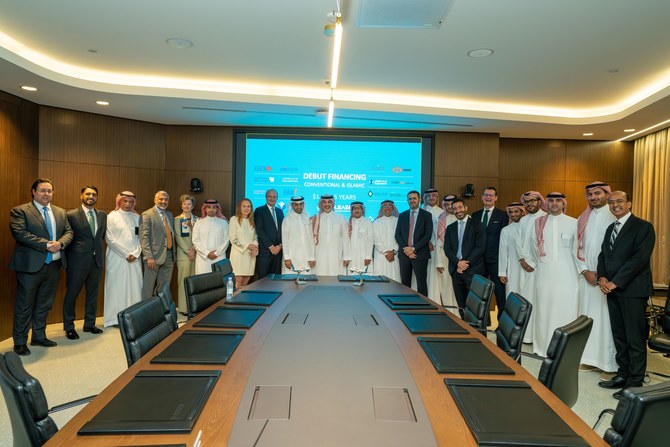
With plans to augment its fleet to roughly 300 aircraft by 2030, the company is targeting to position itself among the world’s leading aircraft leasing firms. (Supplied)
Short Url
Updated 07 June 2023
Follow

PIF-owned aircraft lessor AviLease raises $1.1bn to expand fleet

RIYADH: Aiming to procure 45 aircraft by the end of 2023, AviLease, an aircraft financing and leasing company owned by the Public Investment Fund, has garnered $1.1 billion in its inaugural financing.  

The unsecured five-year facility will be predominantly used to acquire additional aircraft, thereby enhancing the company’s premier portfolio.  

“We are very pleased to announce the successful closing of our debut $1.1 billion unsecured term financing facility, supported by a syndicate of banking partners locally, regionally and across the world,” AviLease CEO Edward O’Bryne said in a statement.  

The financing is split into two segments — a conventional funding section of $850 million and an imminent Shariah-compliant tranche of $250 million.   

The financing request spurred substantial interest locally, regionally, and internationally, with an oversubscription rate of 3.3 times, according to the press release.  

“We thank the lenders for their support and long-term confidence in AviLease. The quality and breadth of demand for the debut funding far exceeded our expectations, and we are thankful to our banking partners and advisers for their support in achieving this outcome,” O’Bryne commented.  

With plans to augment its fleet to roughly 300 aircraft by 2030, the company is targeting to position itself among the world’s leading aircraft leasing firms. It has already acquired or committed to acquiring 45 aircraft by the end of 2023, amounting to a book value of $2.4 billion.  

“It is crucial for us to work with a wide variety of international financial partners with strong balance sheets, who can provide incremental funding to support our growth objectives,” O’Bryne said.  

Citibank, Riyad Bank, First Abu Dhabi Bank, Gulf International Bank and Saudi Awwal Bank functioned as the mandated lead arrangers for the transaction.   

Meanwhile, Banque Saudi Fransi, Saudi Investment Bank, Abu Dhabi Commercial Bank and HSBC Middle East served as mandated lead arrangers for the conventional tranche.  

Dubai Islamic Bank, Al Rajhi Bank, Bank AlJazira, and Saudi National Bank will serve as mandated lead arrangers for the Shariah-compliant tranche.  

Moreover, Citibank functioned as the financial adviser for AviLease, with Allen & Overy acting as its counsel, while Clifford Chance provided advisory services to the lenders.  

Headquartered in Riyadh, AviLease invests in the latest generation aircraft via purchase and lease-back transactions, portfolio trades and direct orders from aircraft manufacturers.  


How AI is powering Saudi Arabia’s video games industry

Updated 13 March 2026
Follow

How AI is powering Saudi Arabia’s video games industry

  • Technology is boosting efficiency and supporting local content development

RIYADH: Artificial intelligence is becoming a central force in Saudi Arabia’s rapidly expanding gaming and esports sector, shaping everything from game development and publishing to player analytics and competitive tournaments.

As the Kingdom accelerates its ambitions under Vision 2030, AI is increasingly being deployed not only as a technical tool but also as a strategic driver for industry growth and global competitiveness.

Saudi Arabia is integrating AI across studios, publishing platforms and esports operations to improve efficiency, expand local content creation, attract international investment and streamline tournament management. The broader goal is to position the Kingdom not only as one of the world’s largest gaming markets but also as a global hub for game development and esports infrastructure.

For Saudi studios seeking international audiences, understanding how AI systems generate results is also critical to maintaining cultural accuracy and relevance in game content. (Unsplash.com photo)

According to Saudi Arabia’s National Gaming and Esports Strategy, the Kingdom is home to more than 23.5 million gamers — around 67 percent of the population. Market revenues are projected to reach $1.36 billion by 2026. By 2030, the sector aims to contribute more than SR50 billion to the national GDP and create about 39,000 jobs.

Women represent 42 percent of gamers and 18 percent of esports players, among the highest participation rates in the region.

The Public Investment Fund, through its gaming arm Savvy Games Group, has invested billions of dollars in game studios, publishers and esports platforms worldwide. The investments are designed to strengthen local content creation while attracting global developers and investors to Saudi Arabia.

INNUMBERS

23.5 million Number of gamers in Saudi Arabia, representing about 67% of the population

$1.36 billion Revenue the Kingdom’s gaming market is expected to reach by 2026

SR50 billion Amount the gaming and esports sector aims to add to GDP to create 39,000 jobs by 2030

A spokesperson for Savvy Games Group told Arab News that AI is already integrated across its portfolio, particularly within ESL FACEIT Group.

“AI is used across our businesses. At ESL FACEIT Group, AI is already embedded in operations, particularly around data analytics and fair play,” the spokesperson told Arab News. “For example, EFG uses Minerva, an AI-powered moderation system that identifies and reduces toxic or abusive behavior by analyzing player communications and behavior patterns at scale. This enables faster and more consistent decisions and helps create healthier competitive environments for players.”

However, the spokesperson said AI itself does not automatically create a competitive advantage.

“AI tools are increasingly accessible to studios everywhere, which means they are not a competitive advantage on their own,” the spokesperson told Arab News. “The advantage comes from how clearly studios define their use cases and how effectively they apply AI to support their goals.”

For Saudi studios seeking international audiences, understanding how AI systems generate results is also critical to maintaining cultural accuracy and relevance in game content.

Within development studios, AI is helping accelerate production while lowering costs. AI-powered tools assist with concept art, 3D modeling, animation and world design, while automated testing systems can simulate thousands of gameplay scenarios to identify bugs and balance issues before release.

Steer Studios, for example, is applying AI in asset production and testing workflows. Automating repetitive tasks allows creative teams to devote more time to storytelling, gameplay design and world-building — key elements that distinguish successful games.

AI is also playing an important role in localizing content for Arabic-speaking audiences. Studios including Fahy Studios, Starvania Studio and Lobah Game Studio use AI for dialogue generation, translation and other localization tasks, helping Saudi-developed games reach global markets more quickly without losing cultural context.

For live-service and mobile games, maintaining player engagement is crucial to long-term revenue. AI systems track player behavior in real time, adjust difficulty levels, refine matchmaking systems and personalize in-game experiences.

Publishing platforms such as Nine66 and Sandsoft also rely on AI-driven analytics to support developers. These tools help predict player lifetime value, optimize marketing campaigns and manage online gaming communities.

“Our approach aligns closely with KSA’s focus on digital transformation, innovation and long-term capability building under Vision 2030,” the Savvy Games Group spokesperson told Arab News. “We see AI as an enabler of productivity, operational efficiency and ecosystem sustainability.”

The spokesperson added that partnerships, including collaboration with Humain, allow Saudi companies to explore scalable and responsible applications of AI across studios.

Opinion

This section contains relevant reference points, placed in (Opinion field)

“We take a pragmatic approach,” the spokesperson told Arab News. “We focus on technologies that provide real benefits. Any AI solution we use must improve efficiency and make day-to-day work easier.”

Artificial intelligence is also transforming the esports ecosystem.

Esports Infra — a platform created by Singapore-based Samarium in partnership with Saudi AI firm Wakeb — is designed to streamline the management of players, teams and content creators.

“Esports suffers from fragmentation,” Jonas Moaz, Esports Infra founder, told Arab News. “Talented players often don’t have a clear path to professionalism. Organizations struggle to find players, and content creators lack tools to connect with audiences.”

The platform uses machine learning to classify player skill levels, computer vision to analyze gameplay and predictive analytics to forecast development potential.

“We expect to improve the efficiency of building esports organizations — particularly in talent discovery and time management — by up to 50 percent,” Moaz told Arab News.

In addition to player analytics, the platform assists with scheduling, contract management and sponsorship evaluation, giving teams and brands clearer insights into performance and commercial value.

Saudi Arabia’s gaming sector is steadily evolving from a consumer-driven market into a center for game creation and esports infrastructure. (Unsplash.com photo)

Despite AI’s growing role, its use in esports competition itself remains tightly regulated. Organizations such as the International Esports Federation prohibit AI from influencing live matches.

“We fully respect those regulations,” Moaz told Arab News. “Our tools support analysis but do not play on behalf of players. AI operates outside match time or as a statistical layer.”

Protecting player data and ensuring fairness remain key priorities for developers and platform providers.

“This is a top priority for us,” Moaz told Arab News. “Player data is encrypted and used only to improve the experience. To ensure fairness, we regularly audit our algorithms to prevent bias.”

Saudi Arabia’s gaming sector is steadily evolving from a consumer-driven market into a center for game creation and esports infrastructure. AI is embedded throughout this transformation — from accelerating game development and localization to analyzing player behavior and professionalizing competitive gaming.

If the targets outlined in Vision 2030 are achieved, AI will play a defining role not only in improving industry operations but also in helping Saudi Arabia compete globally in a sector increasingly driven by data, efficiency and advanced technology.