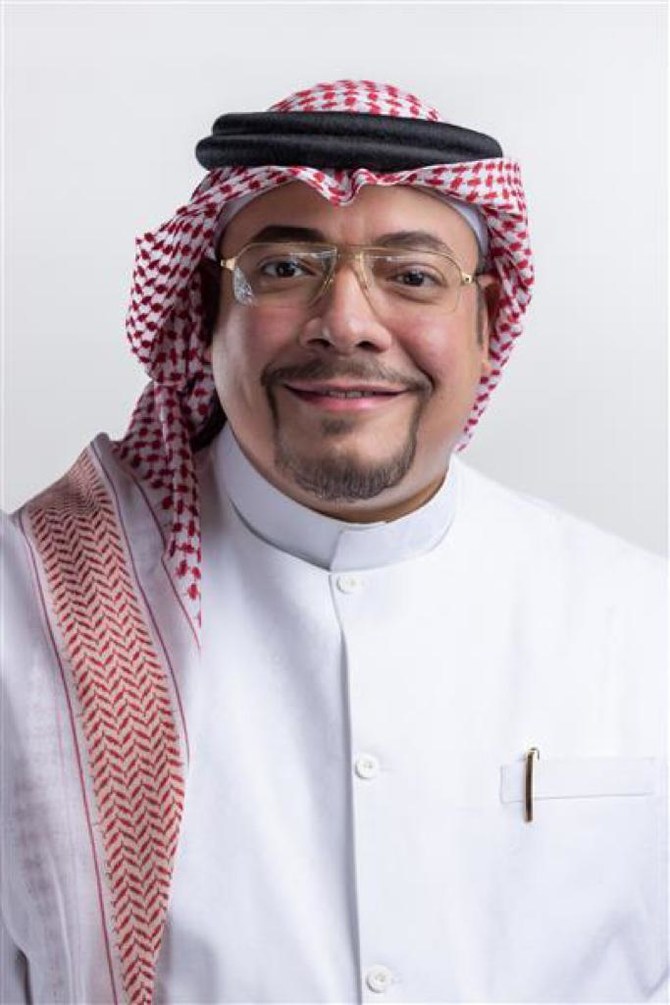
Who’s Who: Moataz Bin Ali, regional vice president and managing director for Trend Micro

Moataz Bin Ali
Short Url
Updated 04 June 2023
Follow

Who’s Who: Moataz Bin Ali, regional vice president and managing director for Trend Micro

Moataz BinAli has been appointed as the regional vice president and managing director for Trend Micro in the Mediterranean, Middle East, Central Asia and Africa since January.

In his new role, BinAli has taken on the strategic leadership of the company throughout the region, enhancing its position as a cybersecurity leader dedicated to secure digital information exchange.

BinAli’s responsibilities encompass leading Trend Micro’s efforts to strengthen cybersecurity for both government and private entities across the entire region.

He is focused on contributing to the region’s digital economy by driving cybersecurity adoption programs, and fostering the exchange and localization of cybersecurity successful global practices in the region.

Under his leadership, numerous successful long-term partnerships have been established in both the public and private sectors.

He has significantly increased the company’s profits, spearheaded a qualitative leap in the region, and expanded its influence across all levels. Additionally, he has brought technical expertise and global business resources to the region.

BinAli established Trend Micro’s regional headquarters for the Middle East and Africa in Riyadh, making it the first global cybersecurity company to establish a regional hub in Saudi Arabia.

With over 20 years of professional experience in the information technology sector, BinAli is recognized as a forefront innovator and renowned transformer in the field.

Before joining Trend Micro, he held several leadership roles within global technology organizations, such as SAP, IBM and Microsoft in the region.

He holds a doctorate in technology innovation management from the Universite de Lyon. He also received a master’s degree in business administration with a focus on organizational management from the University at Buffalo, and a bachelor’s degree in software engineering from King Fahd University of Petroleum & Minerals.



Saudi FM joins Arab counterparts in talks with Slovenia on Gaza, regional stability

Updated 06 February 2026
Follow

Saudi FM joins Arab counterparts in talks with Slovenia on Gaza, regional stability

  • Prince Faisal and Tanja Fajon later signed general cooperation agreement aimed at enhancing ties between Kingdom and Slovenia

LJUBLJANA: Saudi Foreign Minister Prince Faisal bin Farhan held talks with Slovenia’s Deputy Prime Minister and Minister of Foreign and European Affairs Tanja Fajon in Ljubljana on Friday, as he joined Arab counterparts for an expanded meeting focused on Gaza and wider regional developments.

Prince Faisal met Fajon separately to review Saudi-Slovenian relations and explore ways to strengthen cooperation across various fields, the Saudi Press Agency reported.

The two sides later signed a general cooperation agreement aimed at enhancing ties between the Kingdom and Slovenia and intensifying joint efforts to support further progress and prosperity for both countries, SPA added.

The expanded ministerial meeting also brought together Jordanian Deputy Prime Minister and Foreign Minister Ayman Safadi, Egyptian Foreign Minister Badr Abdelatty, Bahraini Foreign Minister Abdullatif Al-Zayani and Qatar’s Minister of State for Foreign Affairs Sultan Al-Muraikhi.

During the talks, ministers discussed ways to bolster regional and international security and stability, with a focus on the situation in Gaza.

They stressed the need to uphold the ceasefire agreement between Israel and Hamas, ensure its full implementation and deliver sufficient and sustainable humanitarian aid to the enclave.

The officials also reviewed efforts to advance US President Donald Trump’s peace plan and reiterated the importance of achieving a clear political horizon leading to an independent and sovereign Palestinian state along the 1967 borders, with East Jerusalem as its capital, based on the two-state solution.

They addressed developments in the occupied West Bank, calling for an end to illegal, unilateral Israeli measures and violations against Islamic and Christian holy sites in occupied Jerusalem, warning that such actions undermined de-escalation efforts.

The ministers praised Slovenia’s support for Palestinian rights and its recognition of a Palestinian state, and also discussed broader regional developments, ways to reduce escalation through dialogue, and efforts to resolve the Russia-Ukraine crisis.