UNITED NATIONS: Despite a dire warning from the UN chief that the UN agency for Palestinian refugees “is on the verge of financial collapse,” donors at a pledging conference on Friday provided just $107 million in new funds — significantly less than the $300 million it needs to keep helping millions of people.
Philippe Lazzarini, commissioner general of the agency known as UNRWA, said he was grateful for the new pledges but they are below the funds needed to keep over 700 schools and 140 clinics open from September through December.
“We will continue to work tirelessly with our partners, including host countries — the refugees’ top supporters — to raise the funds needed,” he said in a statement.
At the beginning of the year, UNRWA appealed for $1.6 billion for its programs, operations and emergency response across Syria, Lebanon, the Israeli-occupied West Bank and east Jerusalem, the Gaza Strip and Jordan. That includes nearly $850 million for its core budget, which includes running schools and health clinics.
According to UNRWA, donors on Friday announced $812.3 million in pledges, but just $107.2 million were new contributions. The countries pledging new funds were not announced.
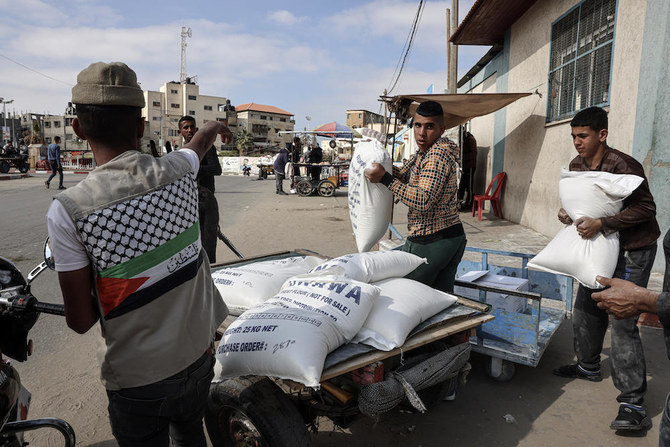
Lazzarini told a press conference Thursday that UNRWA needs $150 million to keep all services running until the end of the year, and an additional $50 million to start 2024 without liabilities. In addition, he said, the agency needs $75 million to keep the food pipeline in Gaza operating and about $30 million for its cash distribution program in Syria and Lebanon.
UNRWA was founded in the wake of the creation of the state of Israel in 1948 to provide hundreds of thousands of Palestinians who fled or were forced from their homes with education, health care, social services and in some cases jobs. Today, their numbers — with descendants — have grown to some 5.9 million people, most in the Gaza Strip and West Bank, as well as neighboring countries in the Middle East.
UNRWA has faced a financial crisis for 10 years, but Lazzarini said the current crisis is “massive,” calling it “our main existential threat.”
“It is deepening, and our ability to muddle through is slowly but surely coming to an end,” he said. “The situation is even more critical now that some of our committed donors have indicated that the will substantially decrease their contribution to the agency.”
UN Secretary-General Antonio Guterres said in a speech read by his chief of staff at the start of the pledging conference that “when UNRWA’s future hangs in the balance so do the lives of millions of Palestine refugees relying on essential services.”
Those services include education for over half a million girls and boys, health care for around 2 million people, job opportunities for young people in Gaza and elsewhere, psycho-social support for hundreds of thousands of children, and a social safety net for nearly half a million of the poorest Palestinians, he said. More than 1.2 million Palestinians also receive humanitarian assistance.

UN agency for Palestinian refugees raises just a third of $300m needed to help millions
Short Url
https://arab.news/945f2
UN agency for Palestinian refugees raises just a third of $300m needed to help millions
- UNRWA chief grateful for the new pledges but they are below the funds needed to keep over 700 schools and 140 clinics open from September through December
UN delivers vital aid to Sudan’s Kordofan: WFP
- Life-saving aid from several UN agencies reaches 130,000 people in Dilling and Kadugli
- The famine-hit South Kordofan state capital Kadugli had endured a punishing RSF siege
CAIRO: A convoy of life-saving aid from several UN agencies has reached two cut-off cities in Sudan’s Kordofan region, currently the fiercest frontline in the nearly three-year war.
“This marks the first major delivery of assistance to the area in three months,” the World Food Programme said in a statement on Tuesday.
It said 26 trucks had delivered essential supplies including medicine and food for more than 130,000 people in Dilling and Kadugli.
Since April 2023, the Sudanese army and the paramilitary Rapid Support Forces have been locked in a bitter struggle for control of the country.
The famine-hit South Kordofan state capital Kadugli had endured a punishing RSF siege for much of the conflict, before the army broke the blockade this month.
Nearby Dilling, where the army also recently broke an RSF siege, is believed to be experiencing similar famine conditions.
The cities had come to exemplify the violence in Kordofan, where hundreds of thousands face starvation under daily drone strikes.
Dilling lies halfway between Kadugli and North Kordofan capital, El-Obeid.
Violent clashes and ongoing insecurity along the main route linking the three cities had “forced the convoy to halt for more than 40 days,” the WFP said.
The trucks reached Dilling by taking “a longer and more difficult off-road passage,” it added.
“Routes must stay open and predictable so vital assistance can reach people without interruption, including communities that have been cut off for far too long,” said Makena Walker, acting country director for WFP in Sudan.
Since seizing El-Fasher — the army’s last stronghold in western Darfur — last October, the RSF have pushed eastward into oil-rich Kordofan.
The vast agricultural region lies between RSF-controlled Darfur in the west and army-held areas in the north, east and center.
The nearly three-year war has killed tens of thousands, displaced 11 million and triggered what the UN calls one of the world’s worst humanitarian crises.
With truce talks deadlocked for months, the UN has repeatedly urged warring parties to respect international humanitarian law and allow access for aid.
“This marks the first major delivery of assistance to the area in three months,” the World Food Programme said in a statement on Tuesday.
It said 26 trucks had delivered essential supplies including medicine and food for more than 130,000 people in Dilling and Kadugli.
Since April 2023, the Sudanese army and the paramilitary Rapid Support Forces have been locked in a bitter struggle for control of the country.
The famine-hit South Kordofan state capital Kadugli had endured a punishing RSF siege for much of the conflict, before the army broke the blockade this month.
Nearby Dilling, where the army also recently broke an RSF siege, is believed to be experiencing similar famine conditions.
The cities had come to exemplify the violence in Kordofan, where hundreds of thousands face starvation under daily drone strikes.
Dilling lies halfway between Kadugli and North Kordofan capital, El-Obeid.
Violent clashes and ongoing insecurity along the main route linking the three cities had “forced the convoy to halt for more than 40 days,” the WFP said.
The trucks reached Dilling by taking “a longer and more difficult off-road passage,” it added.
“Routes must stay open and predictable so vital assistance can reach people without interruption, including communities that have been cut off for far too long,” said Makena Walker, acting country director for WFP in Sudan.
Since seizing El-Fasher — the army’s last stronghold in western Darfur — last October, the RSF have pushed eastward into oil-rich Kordofan.
The vast agricultural region lies between RSF-controlled Darfur in the west and army-held areas in the north, east and center.
The nearly three-year war has killed tens of thousands, displaced 11 million and triggered what the UN calls one of the world’s worst humanitarian crises.
With truce talks deadlocked for months, the UN has repeatedly urged warring parties to respect international humanitarian law and allow access for aid.
© 2026 SAUDI RESEARCH & PUBLISHING COMPANY, All Rights Reserved And subject to Terms of Use Agreement.


