
WASHINGTON: Moroccan youth are working to address their country’s dire environmental future amid drastic climate change, water scarcity and food production issues.
Morocco is one of many countries that have been wrestling with the consequences of climate change and water scarcity, which has the potential to impact population stability and the country’s resources.
In a session organized by the Middle East Institute in Washington DC on Wednesday, several Moroccan youths addressed the serious environmental challenges their communities are facing. They discussed ways to decrease the impact of climate change in Morocco.
They said climate change had a direct impact on water scarcity, energy, agricultural production and education, and argued that these issues were connected.
Fatna Ikrame El Fanne, an environmental engineer and climate activist, said that the Moroccan government had recently started paying attention to the issue. She said that several water-related strategies were in place to deal with water scarcity and management.
“In recent years, the Moroccan government has enacted a number of policies that are aimed at improving water management and availability within the country,” she said.
She said that the government had put together several long-term strategies — among them an integrated water resources management and efficiency road map, in addition to enacting a national water law that provided a legal framework for water governance, rights and protections.
Ikrame said that the idea behind these governmental measures was to encourage conservation and the sustainable use of water.
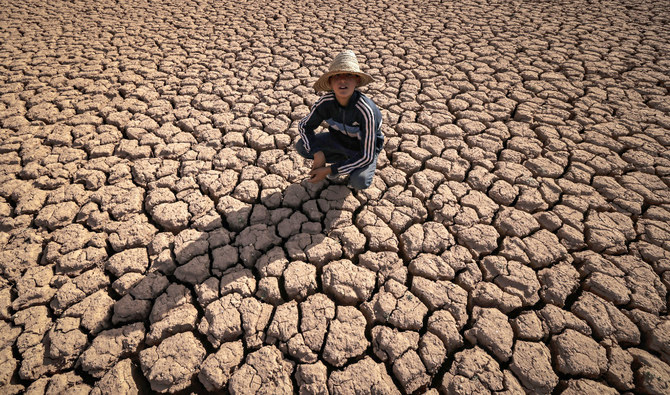
Wissal Ben Moussa, an engineer in agro-food industries and agroecology specialist, said that because of its geographical location, Morocco had an ecosystem that was prone to desertification and aridification.
She said that the country’s ecosystem has been severely impacted by climate change, which had increased water scarcity through less rainfall, an increase in water evaporation and rising temperatures.
These factors, she said, had a direct impact on agriculture and food productivity.
“In the coastal areas, we see sea level rises, sea water temperatures rise, which has a direct effect on biodiversity and marine life and the whole eco system,” she said.
“Climate change is impacting our unique and very fragile ecosystem in the forests, wetlands, the mountainous regions and more specifically in the southern regions or Morocco, which are already semi-arid and becoming more and more arid.”
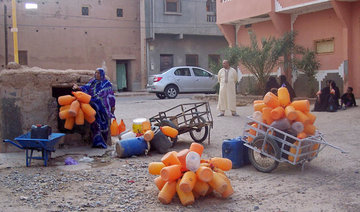
Hasnae Bakhouch, a UN Women Young Peacebuilder and environmental activist, said that water scarcity was impacting women in rural areas because they carried out many household and farming responsibilities. She said that lack of adequate infrastructure in rural areas created added risks for women trying to find water for their families.
Bakhouch said that children also lacked adequate health care due to the impact of climate change in the regions.
“The whole system needs to be fixed,” she said.