HALIFAX, Nova Scotia: Nova Scotia’s leader begged people to stay out of the woods and avoid any activity that could start more fires after a wildfire on Canada’s Atlantic coast damaged about 200 houses and other structures and prompted the evacuation of 16,000 people.
“It’s extensive. It’s heartbreaking,” said Premier Tim Houston, who announced a ban on woodland activity after visiting the disaster area to get a sense of the damage.
Many residents were eager to return Tuesday to see whether homes and pets had survived, while fire officials expressed concern that dry, windy conditions could cause a “reburn” in the evacuated subdivisions. The extended forecast is calling for hotter weather on Wednesday and no rain until Friday at the earliest.
Houston said the ban extends to all travel and activity in all wooded areas. That includes all forestry, mining, hunting, fishing, hiking, camping, off-road vehicle driving and all commercial activity on government lands, he said.
“Don’t be burning right now. No burning in Nova Scotia. Conservation officers reported six illegal burns last night. This is absolutely ridiculous with what’s happeniung in this province — three out-of-control fires, eight fires yesterday, 12 on Sunday. Do Not Burn!” Houston said Tuesday. “We have to do what we can to make sure we don’t have new fires popping up.”
Scott Tingley, the forest protection manager in the province’s wildfire management group, said it is safe to say that all of these fires were “very likely human-caused.”
“Much of it probably is preventable. Accidents do happen and so that’s why we certainly appreciate the premier’s message,” Tingley said.
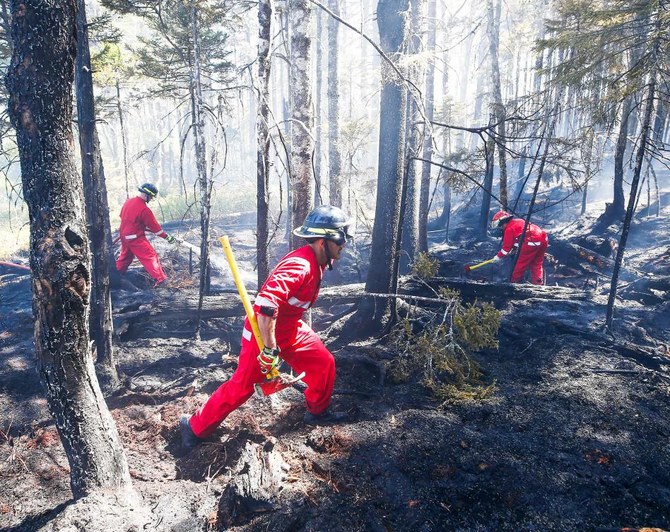
Firefighters have been working to extinguish hotspots in the fire that started in the Halifax area on Sunday, Halifax Deputy Fire Chief David Meldrum said. He said Tuesday that it was too early to give an exact count of homes damaged or destroyed, but the municipal government put the toll at about 200 buildings.
Dan Cavanaugh was among two dozen people waiting Tuesday in a Halifax-area parking lot to learn if their suburban homes had been consumed.
“We’re like everyone else in this lot,” said the 48-year-old insurance adjuster. “We’re not sure if we have a house to go back to.”
Police officers wrote down names of residents and were calling people to be escorted to see what had become of their properties.
Sarah Lyon of the Nova Scotia Society for the Prevention of Cruelty to Animals said an eight-member team was going into the evacuation zone to retrieve animals left behind.
In all, about 16,000 people were ordered to leave their homes northwest of Halifax, most of which are within a 30-minute drive of the port city’s downtown. The area under mandatory evacuation orders covers about 100 square kilometers (38 miles).
Sonya Higgins, who runs a cat rescue operation in Halifax, said she and more than 40 others waited in a nearby supermarket parking lot to be led into the evacuation area. They hoped to retrieve seven cats from two homes. She said the pet owners contacting her have been “frantic” to find their animals and get them to safety.


![]()

Wildfire on Canada’s Atlantic coast forces evacuation of 16,000 people
Short Url
https://arab.news/49j2b
Wildfire on Canada’s Atlantic coast forces evacuation of 16,000 people
- “It’s extensive. It’s heartbreaking,” said Premier Tim Houston, who announced a ban on woodland activity after visiting the disaster area to get a sense of the damage
- The forest protection manager in the province's wildfire management group said it is safe to say that all of these fires were “very likely human-caused”


Latest updates


© 2026 SAUDI RESEARCH & PUBLISHING COMPANY, All Rights Reserved And subject to Terms of Use Agreement.