Sudan crisis sparks EU fears of ‘spillover’ to other nations

Annette Weber discusses current developments in the Horn of Africa with GCC chief Jasem Albudaiwi in Riyadh. (Supplied)
Short Url
Updated 30 May 2023
Follow

Sudan crisis sparks EU fears of ‘spillover’ to other nations

  • The risk of having an arc of instability between the Sahel and the Red Sea is serious, says Annette Weber

RIYADH: The EU envoy to the Horn of Africa has hailed Saudi-US efforts to end the violence in Sudan but warned that the ongoing fighting continues to threaten regional stability.

In an interview with Arab News on Monday Annette Weber, the EU Special Representative, said that the risk of a “spillover” of violence was clear. 

Weber arrived in Riyadh on Saturday to discuss the Sudan crisis with officials from the Foreign Ministry and representatives of the Gulf Cooperation Council.

“The focus was on Sudan and the current engagement of Saudi Arabia and the US in Jeddah with the two generals,” Weber said in reference to preliminary talks between the rival Sudanese Armed Forces and the paramilitary Rapid Support Forces. 

She said that a solution would not be found without the Saudi and US efforts to get them talking.

“The focus was really on the question, ‘how can we get to a comprehensive agreement?’ A peace agreement. There’s clear support from the EU member states for this engagement and for these negotiations.”

While she acknowledged that gaining a permanent ceasefire might be considered “far-fetched” at this point, she hoped at least for a cessation of hostilities in order to allow aid shipments to Khartoum and beyond.

“We all made it very clear that the Kingdom of Saudi Arabia and the US are doing this first step. The ‘pre-negotiation’ as they call it, for a ceasefire, opening a window for humanitarian (aid),” she said.

However, she warned that the violence could easily spread across the Horn of Africa without a firmer agreement in place.

“We need to contain the conflict in Sudan. I think this is very clear and I think … the faster they can agree in Jeddah to have at least a ceasefire or cessation of hostility, the less likely the spillover is going to be,” she said.

“But the risk of spillover is clear. We’ve seen people crossing ... We’ve seen the risk of the conflict crossing into Chad, into South Sudan.

“We see a lot of refugees crossing into Egypt and into neighboring countries. The region is very volatile. The risk of having an arc of instability between the Sahel and the Red Sea is serious. 

“And for us as the EU, of course, it's our neighbor. It's our neighborhood. So to contain the conflict and to end the conflict is imperative.”
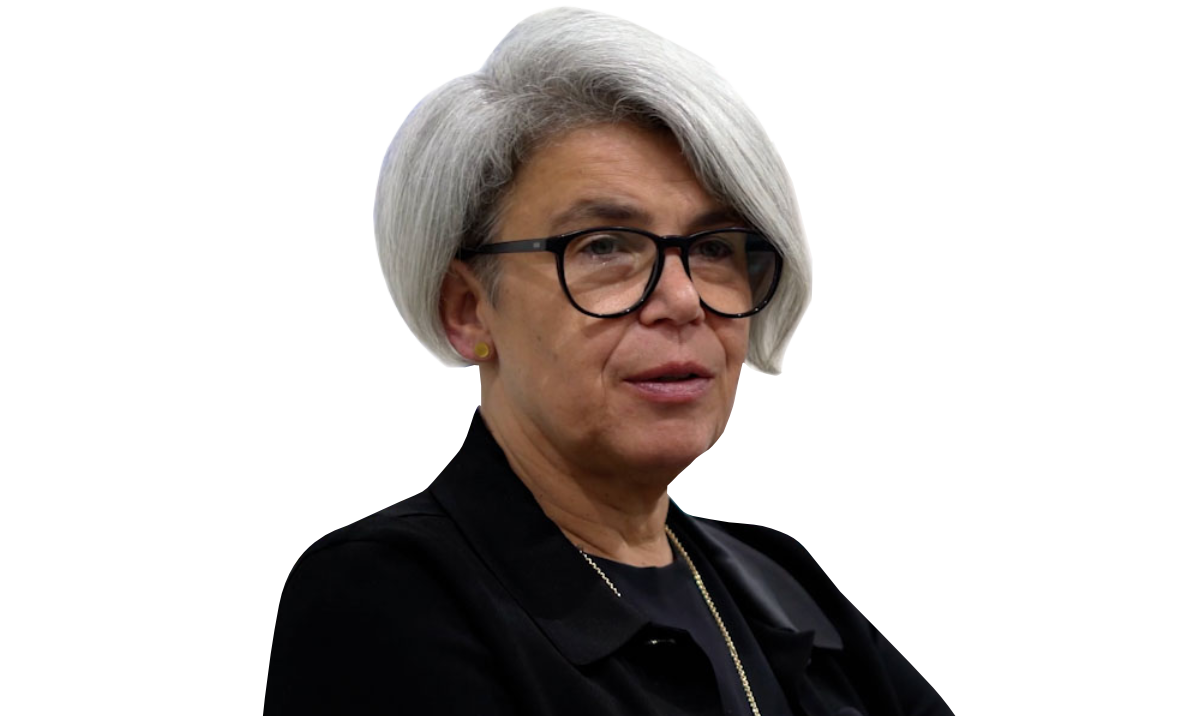
A solution would not be found without the Saudi and US efforts to get them talking.

Annette Weber

According to the UN, nearly 1.4 million Sudanese have fled their homes since fighting began on April 15. Of those, 330,000 have crossed over to a neighboring country. To this day, Saudi Arabia has helped more 8,200 people from more than 100 nationalities leave Sudan on evacuation flights.

Saudi Arabia and the US urged the warring sides to work toward a ceasefire and welcomed the start of pre-negotiation talks in Jeddah on May 6.

Both sides agreed to a temporary ceasefire on May 20. However, the deal fell apart almost immediately as fighting continued in Khartoum and beyond. Saudi Arabia and the US said both sides had a hand in its breakdown.

The EU representative said that the efforts to support Sudan’s neighboring countries were “ongoing.”

“We are very much engaged in Chad and South Sudan. It’s an ongoing effort. The EU has one of the biggest donors and humanitarian efforts in Sudan now and before the war,” she said. “So we will continue on this. That’s very clear.”

During her visit to the Kingdom, Weber also met the Secretary-General of the Gulf Cooperation Council Jasem Albudaiwi to discuss regional cooperation and security.

“It is necessary for all of us: The EU, Saudi Arabia, UN, and everyone, to cooperate and coordinate the relief efforts and the humanitarian efforts,” she said, adding that the GCC was an “important counterpart” in the region. 

“I think we are aligned in the situation in Sudan,” she added.


Kingdom key player in regional peace, EU official says

Updated 17 January 2026
Follow

Kingdom key player in regional peace, EU official says

  • Hana Jalloul Muro highlights Riyadh’s role in regional stability, economic growth and advancing EU-Saudi strategic ties

Riyadh: Hana Jalloul Muro, vice-chair of the European Parliament’s Foreign Affairs Committee, has praised Saudi Arabia’s role as a “reliable partner” to the EU.

Describing the Kingdom as a “key international actor,” she highlighted its pivotal role in regional stability, including brokering peace talks on Ukraine, promoting peace in Palestine, and supporting stable governments in Lebanon and the Syrian Arab Republic.

“Saudi is a reliable partner because it is a country that has demonstrated that with Vision 2030, only in the last five, six years, it has changed impressively. It has a major women’s labor force, a very low youth unemployment rate and is growing very fast,” Muro told Arab News.

Speaking on the sidelines of the Future Minerals Forum in Riyadh, she added: “Saudi Arabia is becoming a key major player in the international arena now — for peace conversations on Ukraine, supporting the Syrian government, paying Syria’s external debt, stabilizing the government in Lebanon, promoting peace in Gaza, in Palestine and pushing for a ceasefire, too.

“So, I think it is a very key international actor, very important in the region for stability,” Muro added.

Explaining why she considers the Kingdom a reliable partner, Muro said: “It’s a country that knows how to see to the East and to the West.”

Muro also serves as the European Parliament’s rapporteur for Saudi Arabia, and is responsible for drafting reports on legislative and budgetary proposals and other key bilateral issues.

In mid-December 2025, the European Parliament endorsed a road map to elevate EU-Saudi relations into a full-fledged strategic partnership, which Saudi Ambassador to the EU Haifa Al-Jedea described as “an important milestone” in bilateral ties.

The report highlighted the possibility of Saudi-EU visa-free travel, reaffirming the EU’s commitment to advancing a safe, mutually beneficial visa-free arrangement with the five GCC countries to ensure equal treatment under the new EU visa strategy.

“One of the key hot topics is the visa waiver to Saudi Arabia, which I always support,” Muro said. “Saudi Arabia has, as you are aware, been in cascade for five years, and I think we need to work toward a visa waiver.”

The report also highlighted the economic significance of Saudi tourists to EU member states, particularly for the hospitality, retail and cultural sectors, while emphasizing that Saudi citizens do not pose a source of irregular migration pressure.

When asked about the status of the visa waiver, Muro said: “The approval, it is the recommendation to the commission to take into account its importance. We need to advance on that because we are in the framework of this strategic partnership agreement that covers many topics, so this is why the visa waiver is a central key issue.”

She added: “I think by now we recognize the international role of Saudi Arabia and how important it is to us as a neighbor — not only for security, counter-terrorism and energy, but for everything. We need to get closer to partners like the GCC, Saudi specifically.

“And I think that we need to take Saudi Arabia as a very big ally of ours,” Muro said.

During her time in Riyadh, Muro took part in a panel at the forum focused on the EU-KSA business and investment dialogue, and advancing the critical raw materials value chain.

On the sidelines, she met Saudi Vice Foreign Minister Waleed Elkhereiji to discuss ways to further strengthen Saudi-EU relations.

She also met Hala Al-Tuwaijri, chairwoman of the Saudi Human Rights Commission, saying: “I have to congratulate you and the government, your country, on doing a great job.”