

Saudi Arabia issues 55 mining licenses in April

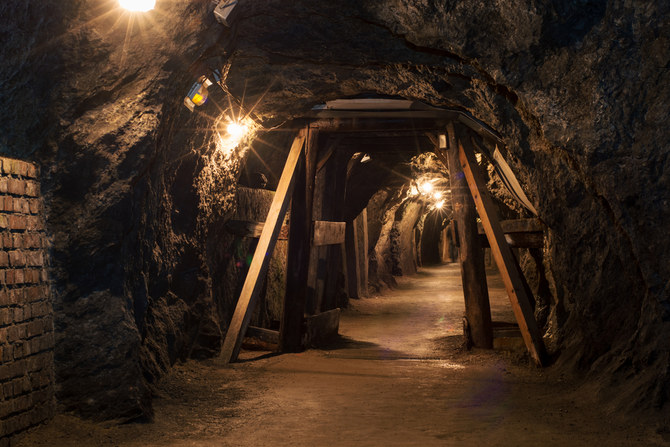
In April, the ministry issued 34 licenses for exploration, 17 for quarrying building materials, three for surplus mineral ores and one for mining and small mine exploitation.  (Shutterstock)
Short Url
Updated 30 May 2023
Follow

Saudi Arabia issues 55 mining licenses in April

RIYADH: The number of mining licenses handed out in Saudi Arabia showed sustained growth for the third consecutive month, as the government issued 55 new permits in April. 

According to the Saudi Ministry of Industry and Mineral Resources, this number is up from the 27 handed out in March and the 18 handed out in February. 

In April, the ministry issued 34 licenses for exploration, 17 for quarrying building materials, three for surplus mineral ores and one for mining and small mine exploitation.  

The total number of licenses issued in the sector until April numbered 2,336, including 1,454 permits for quarrying building materials, 634 for scavenging, 180 for mining and small mine exploitation, 36 for reconnaissance activities and 32 for the surplus of mineral ores.   

Moreover, Riyadh bagged 573 permits, Makkah 384, the Eastern Province 374 and Madinah 258. 

The ministry further reported that Asir issued 213 permits, Tabuk 149, Al-Qasim 90, Jazan 80 and Hail 68 in April. On the other hand, the number of permits Najran gave stood at 55, Al-Baha 39, the Northern Borders 27 and Al-Jawf 26.

The ministry has been actively pursuing opportunities to protect the mining sector and maximize its value in line with the Kingdom’s Vision 2030 goals and the National Industry Development and Logistics Program.   

Moreover, Saudi Arabia is on track to transform mining into the third pillar of the national industry and work to exploit the mineral resources in the Kingdom spread across more than 5,300 sites and valued at about SR5 trillion ($1.33 trillion).   

Last January, Mike Henry, the CEO of Australian mining giant BHP, stressed that mining activities of critical minerals worldwide should be accelerated to meet the energy transition targets over the next 30 years as the world dreams of a sustainable future.  

Speaking at the Future Minerals Forum in Riyadh, Henry said it is impossible to meet the rising demand for critical minerals if the world continues to move at the current pace.    

“Over the next 30 years, in order to meet the needs of the energy transition, the world is going to need two times as much copper, four times as much nickel, two times as much steel, and two times as much iron ore, as was needed over the past 30 years,” he said.



Marine insurance companies are considering canceling, repricing policies in the Middle East

Updated 6 sec ago
Follow

Marine insurance companies are considering canceling, repricing policies in the Middle East

RIYADH: Marine insurance companies are considering canceling or repricing policies in the Middle East, according to the Financial Times

This comes after the US and Israeli strikes on targets inside Iran, followed by missile attacks and retaliatory military actions in several countries in the region.

Marine brokers expect insurance premiums for ships to rise by up to 50 percent, given the region’s classification as a “war zone.”

Ship owners are considering rerouting their vessels to avoid the Strait of Hormuz and reduce risks to crews and cargo.

20% of the global oil supply passes through the Strait of Hormuz.

Regarding oil prices, a rise is expected as 20 percent of global oil supply passes through the Strait of Hormuz, amid concerns about continued tensions in the region.

Air traffic in the Middle East was severely disrupted after several countries closed their airspace completely or partially, while regional and international airlines suspended or rescheduled flights.

On the morning of March 1st,  the Iranian capital, Tehran, witnessed several large explosions following Israel's announcement of what it described as a “preemptive strike.”

Flights to countries in the region suspended due to attacks

In a video message, US President Donald Trump announced that the US had begun “major combat operations” in Iran, asserting that the goal was to defend the American people by neutralizing what he described as the “imminent threat” from the Iranian regime.

Several regional and international airlines announced the suspension of their flights to some countries in the region due to the attacks.

These military developments come at a time when major shipping companies had already avoided the Red Sea and Suez Canal routes due to security tensions, reverting to the Cape of Good Hope route, which increases shipping costs and puts pressure on global supply chains.

With the closure of airspace in several countries in the region, the risk of disruption to air traffic and trade is increasing, while oil markets are watching closely for any signs of potential supply disruptions from a region that is one of the world's most important energy production hubs.