Biden, McCarthy reach tentative deal to raise debt ceiling

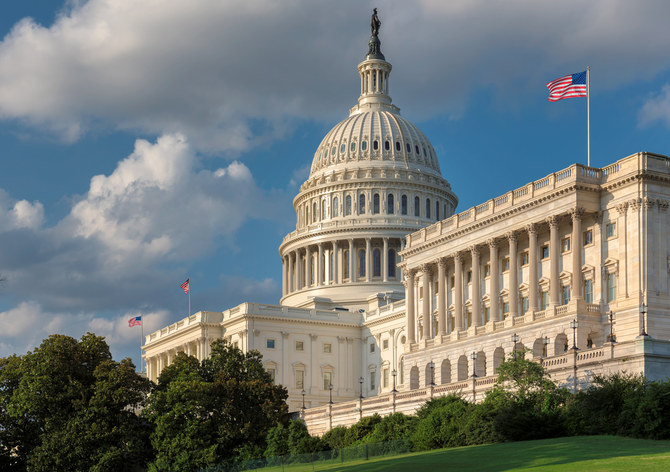
Support from both parties will be needed to win congressional approval next week before a June 5 deadline. (Shutterstock)
Short Url
Updated 28 May 2023
Follow

Biden, McCarthy reach tentative deal to raise debt ceiling

WASHINGTON: President Joe Biden and House Speaker Kevin McCarthy reached an “agreement in principle” to raise the nation’s legal debt ceiling late Saturday as they raced to strike a deal to limit federal spending and avert a potentially disastrous US default.

Support from both parties will be needed to win congressional approval next week before a June 5 deadline.

The Democratic president and Republican speaker reached the agreement after the two spoke earlier Saturday evening by phone, said McCarthy.

“The agreement represents a compromise, which means not everyone gets what they want,” Biden said in a statement late Saturday night. “That’s the responsibility of governing,” he said.

Central to the package is a two-year budget deal that would hold spending flat for 2024 and impose limits for 2025 in exchange for raising the debt limit for two years, pushing the volatile political issue past the next presidential election.

The agreement would limit food stamp eligibility for able-bodied adults up to age 54, but Biden was able to secure waivers for veterans and the homeless.

The two sides had also reached for an ambitious overhaul of federal permitting to ease the development of energy projects and transmission lines. Instead, the agreement puts in place changes in the National Environmental Policy Act that will designate “a single lead agency” to develop economic reviews in hopes of streamlining the process.

The deal came together after Treasury Secretary Janet Yellen told Congress that the United States could default on its debt obligations by June 5 — four days later than previously estimated — if lawmakers did not act in time to raise the federal debt ceiling.

Both sides have suggested one of the main holdups was the Republican effort to expand work requirements for recipients of food stamps and other federal aid programs, a longtime goal that Democrats have strenuously opposed.

Biden has said the work requirements for Medicaid would be a nonstarter. He seemed potentially open to negotiating minor changes on food stamps, now known as the Supplemental Nutrition Assistance Program despite objections from rank-and-file Democrats.

Americans and the world were uneasily watching the negotiating brinkmanship that could throw the US economy into chaos and sap world confidence in the nation’s leadership.

Anxious retirees and others were already making contingency plans for missed checks, with the next Social Security payments due next week.

Yellen said failure to act by the new date would “cause severe hardship to American families, harm our global leadership position and raise questions about our ability to defend our national security interests.”

The president, spending part of the weekend at Camp David, continued to talk with his negotiating team multiple times a day, signing off on offers and counteroffers.


Islamic finance in Oman poised for 25% growth: Fitch 

Updated 01 February 2026
Follow

Islamic finance in Oman poised for 25% growth: Fitch 

RIYADH: Oman’s Islamic finance sector is on track to reach $45 billion this year, rising from $36 billion at the end of 2025, supported by a favorable macroeconomic environment, according to a report by Fitch Ratings. 

The rating agency said the anticipated 25 percent year-on-year growth will be underpinned by increasing demand for sukuk as both a funding mechanism and a public policy tool, alongside government-led initiatives and growing grassroots demand for Shariah-compliant financial products. 

Sukuk accounted for around 60 percent of US dollar-denominated debt issuance in 2025, a sharp decline from 94.3 percent previously, with the remaining share comprising conventional bonds. Despite this progress, Fitch highlighted ongoing structural challenges, including the absence of Islamic treasury bills and derivatives, an underdeveloped Omani rial sukuk and bond market, and the limited role of Islamic non-bank financial institutions. 

The performance of Oman’s banking sector continues to reflect steady advancement toward Vision 2040, the country’s long-term development strategy focused on economic diversification, private sector expansion, and enhanced financial resilience. 

Operating conditions remain supportive for both Islamic and conventional banks in Oman, buoyed by elevated, though gradually moderating, oil prices, the report noted. 

Expanding credit flows — particularly to non-financial corporates and households — are helping drive the growth of small and medium-sized enterprises and boost domestic investment. These trends are reinforcing Oman’s efforts to reduce dependence on hydrocarbons and build a more diversified economic base. 

Fitch projects loan growth of 6 to 7 percent in 2026, fueled by rising demand across both retail and corporate segments. In addition, the proposed 5 percent personal income tax, scheduled for implementation from 2028, is expected to have only a limited overall impact on banks, according to the agency. 

Islamic banking in Oman was introduced following the Central Bank of Oman’s preliminary licensing guidelines issued in May 2011, which allowed the establishment of full-fledged Islamic banks and Islamic banking windows operating alongside conventional institutions. 

This regulatory framework was formally entrenched in December 2012 through a royal decree amending the Banking Law, requiring the creation of Shariah supervisory boards and granting the central bank authority to establish a High Shariah Supervisory Authority.