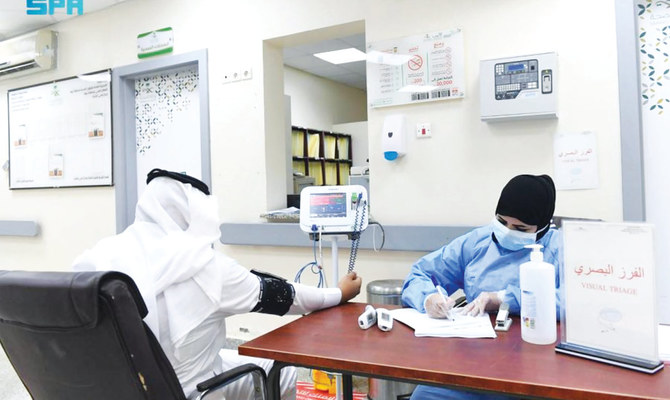

CAIRO: Saudi Arabia is leading the digitalization wave in the wellness space by improving quality care, patient experience, and sustainable health development on par with the best in the world.
The Kingdom aims to restructure the health sector by enhancing its capabilities as an effective, integrated, value-based ecosystem focused on the patient’s health.
It is committed to investing heavily in the health technology sector to meet these ambitious goals. The 2023 budget allocated over SR180 billion ($50.3 billion) to healthcare and social development, reflecting the government’s commitment to this initiative.
Much of this budget is directed toward digital health initiatives to enhance accessibility, efficiency, and transparency within the healthcare system.
Among these initiatives was creating a unified national electronic health record system, which acts as a comprehensive database to ensure patient data is accessible to medical professionals nationwide, enabling seamless cooperation and swift decision-making.
Investment in telemedicine platforms is also prioritized, ensuring healthcare access even in remote areas.
Under Vision 2030, the government has also been working toward privatizing the healthcare industry, focusing on 290 government hospitals and 2,300 primary health centers in the Kingdom.
Changing landscape
In an interview with Arab News, Jalil Allabadi, CEO of Altibbi, an Amman-based digital health platform, explained that the government’s decentralization initiatives would significantly enhance the sector and escalate healthcare technology.
“Hospitals and large corporations are working on their health tech solutions, and smaller companies are focusing on the consumer side,” Allabadi explained.
He added that as hospitals and clinical centers decentralize, they will focus on driving profits, increasing the incentive to adopt healthcare technology to automate and digitalize their work for more efficient operations.
FASTFACTS
• The 2023 budget allocated over SR180 billion to healthcare and social development, reflecting the government’s commitment to this initiative.
• Much of this budget is directed toward digital health initiatives to enhance accessibility, efficiency, and transparency within the healthcare system.
• Among these initiatives was creating a unified national electronic health record system, which acts as a comprehensive database to ensure patient data is accessible to medical professionals nationwide.
Altibbi is one of the largest digital health platforms in the Middle East, raising more than $52.4 million in funding since its inception.
With the Kingdom reducing its dependency on hospital care and moving toward preventive health services, it aims to digitalize 70 percent of patient activities by 2030.
Allabadi explained that digital health consultations and activities are still low compared to Vision 2030’s targets, but “growth is happening very fast.”
“The government is pushing for digital health very fast, especially with policies that mandate the adoption of health tech and the legalization of many aspects around digital healthcare. So I think that 70 percent is very achievable soon,” Allabadi stated.
Startups are fueling the health tech sector with digital tools such as artificial intelligence, the Internet of Things, and big data analytics being integrated into healthcare services to predict, prevent and manage diseases more effectively.
Saudi Arabia’s health tech sector presents a roadmap for a future where digital health solutions are central to holistic and patient-centric care. This pioneering transformation is not only an investment in the health of its people but also a catalyst for economic diversification and sustainable development.
Digital health priorities
According to a report by the Saudi government, the proportion of people in Saudi Arabia aged 60 or more is predicted to be 25 percent of the total population of 40 million by the end of 2050, which calls for an urgent need to revolutionize healthcare delivery.
Chronic diseases such as cardiovascular conditions and obesity are prevalent in this demographic, which has led to a surge in digital solutions to address these challenges.
Sacha Haider, partner at the UAE-based venture capital firm Global Ventures, explained that the next generation of health tech in the Kingdom lies in preventative healthcare and longevity.
Speaking with Arab News, Haider said that 50 percent of the Saudi population is overweight, over 20 percent suffer from obesity and 7 million Saudis have Type 2 diabetes.
She further explained that consultations and check-ins would significantly activate health tech and digital health in the Kingdom.
“Chronic patients who have illnesses such as diabetes or thyroid will have their check-ins done over video conferencing. As the provider pushes that down and says this is more effective and cost-efficient, we’ll see higher adoption,” she added.
In the wake of the COVID-19 pandemic, the industry has adopted digital technologies to enhance patient experiences and improve the quality of care. Saudi-based platforms like Nala and Cura are prime examples of successful digital health services companies, offering everything from instant consultations to tailored digital care programs.
Moreover, Saudi Arabia’s Ministry of Health has launched apps like Mawid, Tabaud, and Seha, which provide virtual consultations, thus eliminating the need for physical hospital visits.
Haider and Allabadi acknowledged the Kingdom’s efforts in introducing high-value digital health solutions.
The concept of express clinics within pharmacies has also gained momentum, providing instant primary care services. These clinics offer services ranging from consultation, measuring blood glucose and blood pressure, skincare analysis, weight management, and vaccination.
The digital health market in Saudi Arabia is projected to grow by 9.06 percent from 2023 to 2027, resulting in a market volume of $1.16 billion, according to global data firm Statista.