

Egypt’s Intella relocates headquarters to Saudi Arabia after KSA’s AI boom 

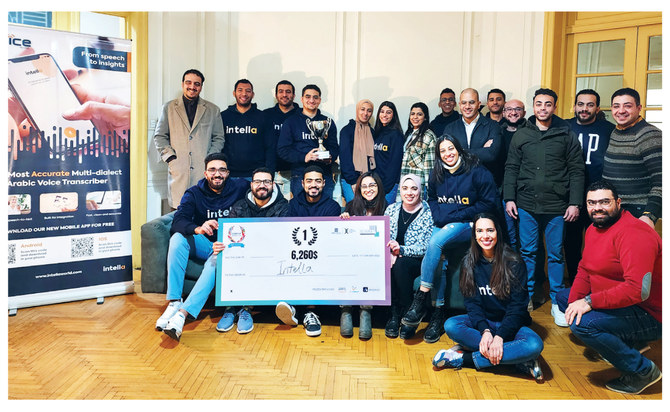
Operating a Software-as-a-Service business model, Intella has been profitable since its inception in 2021 but has been heavily investing in research and development. (Supplied)
Short Url
Updated 28 May 2023
Follow

Egypt’s Intella relocates headquarters to Saudi Arabia after KSA’s AI boom 

  • Kingdom is becoming a hub for tech companies, says Intella CEO and founder Nour Taher
  • Saudi Arabia’s artificial intelligence sector is increasingly attracting regional and international players as demand continues to escalate, with Egypt-based Intella the latest to join the field.

CAIRO: Speaking exclusively with Arab News, Nour Taher, CEO and founder of the company, said Intella has begun relocating its headquarters to the Kingdom after gaining massive traction in the country. 

The move is evidence of how Saudi Arabia is making strides in the field of artificial intelligence and positioning itself at the forefront of the AI revolution in the Middle East. 

“Saudi is becoming a hub for tech companies, and we plan on playing a core role in the Saudi tech ecosystem,” Taher said. 
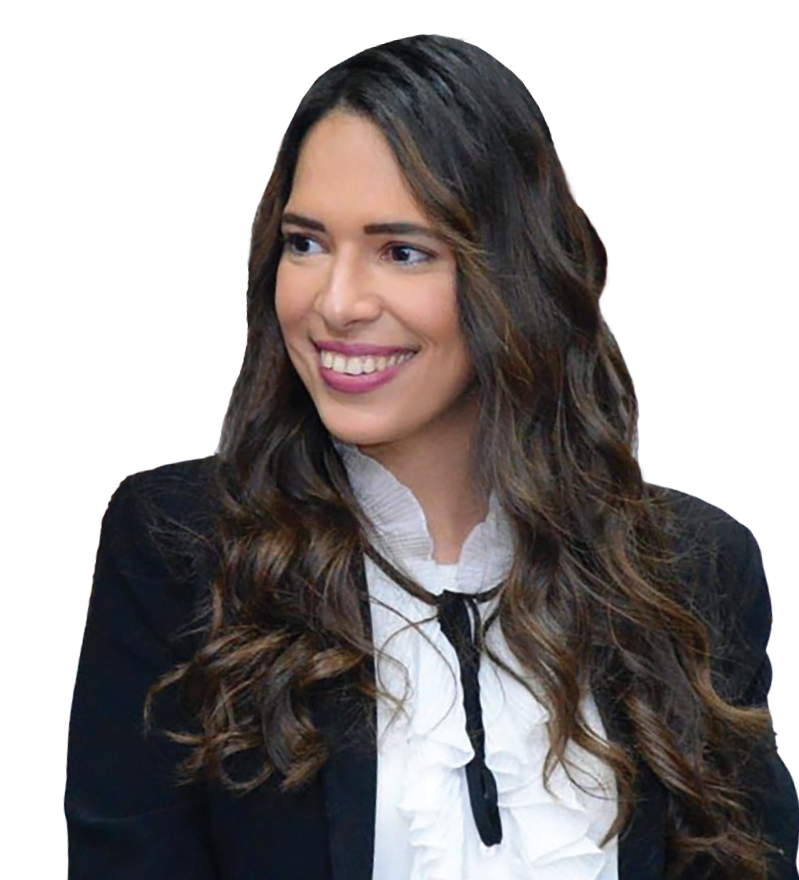


Nour Taher

“Saudi Arabia is currently our largest market with 70 percent of our business coming from there. We have just taken the decision to relocate our HQ there to better serve our existing clients and further expand our business. We are also inspired and aligned with Saudi Arabia’s Vision 2030,” she added. 

Intella is one of the region’s leading deep tech companies that aspires to create Arabic-language AI technology that caters to a vast range of dialects.  

“Our mission is to capture voice data and convert it into text, which we then analyze and mine for valuable information,” Taher explained. 

AI-Powered products 

The company offers a wide range of products in the areas of voice transcribing, data mining, and AI-powered insight capturing. 

“Our unique advantage lies in our ability to amass vast datasets, which we continue to expand with every conversation captured. By harnessing the power of technology, we are able to reveal insights and patterns that might have been impossible to detect through traditional means,” she explained. 

Intella offers Intella Contact Center Intelligence, a transcribing then analyzing tool for call centers; Intella Surveys, a real-time insight-capturing tool for businesses; and Intella Voice, a multi-dialect Arabic voice transcriber which averages a 95.7 percent accuracy rate covering 25 dialects. 

“We transcribe different Saudi dialects such as Najdi, Hejazi, Gulf and Faifi with an accuracy exceeding 95 percent, even when multiple dialects are intertwined within the same conversation,” Taher explained. 

Opportunities Ahead 

Intella has already cemented its position in the Kingdom with a majority of its client base coming from Saudi Arabia as well as landing multiple partnerships. 

Taher explained that the company’s AI products are suited for contact centers, government bodies, businesses, media agencies, and educational institutions. 

FASTFACTS

Intella won the Startup World Cup regional competition last February and will be heading to Silicon Valley to compete in the grand finale for a $1 million prize.

Saudi Arabia has positioned itself as a cornerstone for AI development in the region, with multi-billion dollar investments and initiatives set to reshape the sector.

The Kingdom established the Saudi Data and Artificial Intelligence Authority back in 2019 to drive national data and AI to transform the country as a leading data-driven economy.

Saudi Arabia has also set its sights on being ranked among the top 15 nations in AI by 2030.

“We have hundreds of active partnerships, in Saudi Arabia we are working very closely with governmental entities, consulting firms, tech companies, and contact centers. We have also secured global and regional partnerships with big tech companies like Huawei and Microsoft,” Taher stated. 

Taher believes that the Kingdom holds a massive opportunity for AI adoption. She stated that the company’s products were built for businesses and institutions to capture solutions and expand on them. 

“The most exciting part at Intella is that we’re not trying to build solutions alone. The first thing we’ve done when we built our model was avail it through API integration for other parties to integrate with and build on top of,” she said. 

“Saudi Arabia is becoming a tech hub and is attracting a lot of regional and global tech players, hence empowering everyone with accurate multi-dialect transcription could mean that every single conversation turns into meaningful insights,” she added. 

With Saudi Arabia opening to the world, Arabic speaking individuals are heading to the Kingdom to take hold of the opportunities presented by the trillion-dollar economy. “What’s interesting about the Saudi market for us is that Arabic is the main spoken language and even the expats in Saudi are predominantly Arab, so we believe the country is in line with our vision of bridging the gap between global AI advancements and the Arab-speaking world,” Taher emphasized. 

“We’ve also seen an increasing demand from Saudi media and podcast companies who are using our self-service platform to obtain transcripts for their voice content to boost their search engine optimization,” she added. 

Taher aims to position Intella as a market leader in the Saudi space as she stated that the company is actively hiring in Riyadh across a wide range of roles. 

“We are currently 29 and we’re expecting to double this year with the majority of the new hiring happening in our Saudi office,” she added. 

Operating a Software-as-a-Service business model, Intella has been profitable since its inception in 2021 but has been heavily investing in research and development, Taher claims. 

“We have already quadrupled last year’s revenue in the first 5 months of this year,” she said. 

In terms of funding, the company secured a $1 million investment last year through a funding round led by Hala Ventures, in addition to “wrapping up a larger round which will be announced soon,” Taher said. 

Furthermore, Intella won the Startup World Cup regional competition last February and will be heading to Silicon Valley to compete in the grand finale for a $1 million prize. 

Saudi Arabia has positioned itself as a cornerstone for AI development in the region, with multi-billion dollar investments and initiatives set to reshape the sector. 

The Kingdom established the Saudi Data and Artificial Intelligence Authority back in 2019 to drive national data and AI to transform the country as a leading data-driven economy.  

This includes the development of Saudi Arabia’s National Strategy for Data and AI, which was launched in 2020 with the aim of attracting $20 billion in investments for AI initiatives, training 20,000 data and AI specialists, and certifying 100,000 Saudi citizens in the sector by 2030. 

Moreover, Saudi Arabia has set its sights on being ranked among the top 15 nations in AI by 2030.  

Another major attraction is the Kingdom’s giga-project NEOM, intended to be a smart city powered by AI, machine learning, and other variations of advanced technology.



Mapping Saudi soils to grow better crops

Updated 19 December 2025
Follow

Mapping Saudi soils to grow better crops

  • Palm trees, root crops, and coastal plants reveal the land’s story

RIYADH: Saudi Arabia’s land tells stories written beneath the feet. From fertile plains and rugged highlands to vast deserts, the Kingdom’s diverse landscapes shape what can grow, where it grows, and how agriculture can thrive.

Alongside geography and climate, soil conditions play a decisive role in agricultural success. Understanding soil types across the Kingdom helps determine which crops can flourish and what interventions may be needed to sustain them.

In an interview with Arab News, Turki Almutairi, a senior environmental specialist at the National Afforestation Center under the National Center for Vegetation Cover Development and Combating Desertification, outlined the main soil types found across Saudi Arabia.

High amount of salt makes the soil unfit for the production of most crops, even if the soil is fertile. (Supplied)

“The dominant soil in the Kingdom are sandy desert soils, alongside calcareous soils in the central region. Rocky and stony soils are present along mountainous and hilly landscapes,” he said.

“Alluvial soils are common in wadies (valleys), while saline and sodic soils are located in depressions (Sabkhas) and along coastlines. Pockets of clayed soils can be also found around few sites along the Kingdom.”

The Kingdom’s vast territory gives rise to unique soil characteristics in each region, enabling different crops to grow depending on local conditions.

“Soil is the growing medium for plants. The role of soil includes structural stabilization, providing nutrients and a communication medium for plants,” Basil Nasir, soil lead at engineering consultancy William Sale Partnership, told Arab News.

Basil Nasir, soil lead at the engineering consultant company, William Sale Partnership (WSP). (Supplied)

According to Nasir, assessing soil use is essential before determining whether it is fertile or infertile, as different soils support different plant types.

“The soil used for trees differs from the soil used for ornamental plants and from the soil used for aquatic plants. It varies according to the specific needs of each plant, and based on this, we determine what the soil requires and assess its fertility,” he said.

Nasir explained that soil characteristics are shaped by both physical and chemical components. In addition to water and air, mineral particles such as sand, silt and clay are key indicators of soil health. Organic matter, derived from plant and animal remains, forms the fourth major component.

The balance between these elements determines soil behavior. One important physical trait is water-holding capacity, which influences what types of plants a soil can support.


Opinion

This section contains relevant reference points, placed in (Opinion field)

“If the soil is like dunes, adding water will cause it to run off, but if the soil is clay, its ability to retain water will be very high. If you add water and return the next day, you will find that the water is still there,” said Nasir.

Chemical properties, such as whether soil is alkaline or acidic, are equally important. Understanding both physical and chemical traits allows for proper assessment and treatment when needed.

“What determines whether a plant is suitable for a particular environment is primarily the plant's nature. For example, some plants have fibrous roots and therefore do not require well-draining soil,” Nasir added.

“A palm tree, for example, does not care whether it was planted in one soil or the other because its roots are fibrous. Therefore, palm trees are strong plants and are suitable to grow in both dry and wetlands, while preferring sandy areas.”

Soil Salinity can be treated through Soil leaching which means washing the soil with certain amount of water to reduce the salt in it. (Supplied)

Crops such as potatoes, onions, carrots and beetroots — where the edible part grows underground — typically thrive in sandy soils. As a result, plantations of these crops are commonly found in northern regions such as Hail and in Wadi Ad-Dawasir.

In the eastern region, including Al-Ahsa, wetlands are more common due to climatic conditions. Growing plants in such environments often requires human intervention.

“Plants that are coastal or could be found in lagoons or lakes must have some sort of soil around them, like lotus flowers and mangrove trees.”

“An important parameter to keep in mind is that there is no air in its soil, and they are adapted to this condition. However, the lack of air, along with the presence of organic matter, will create a situation where anaerobic bacteria react with the soil, potentially causing diseases we can easily avoid,” said Nasir.

He emphasized that removing organic matter from such soils is essential to ensure plant survival in aquatic environments.

Mountainous and rocky regions in Saudi Arabia are generally volcanic, resulting in low water-holding capacity and challenging growing conditions. However, volcanic ash contributes to high fertility, allowing certain crops to flourish.

As a result, western regions support tree crops such as coffee, mangoes, some banana varieties and pomegranates.

There are various types of soils such as clay, sandy, silty and loamy. Each type provides excellent conditions for specific plants. (Supplied)

As development accelerates across the Kingdom, soil improvement efforts are expanding under the National Greening Program.

“Soil is considered fundamental for the National Greening Program’s objectives. Understanding the soil variability along the Kingdom is a precondition for fostering sustainable soil management,” Almutairi told Arab News.

Adding, “In this line, the NGP is working towards the establishment of the Saudi Soil Information System (TURBA-KSA), which consists of mapping soils and its functional properties in the Kingdom using state-of-the-art technology.”

He also noted the creation of the “Land Rehabilitation Watch” to report, verify and monitor land rehabilitation nationwide.

“This milestone allows the Kingdom to understand how soil and land health are progressing against national and international targets of land degradation neutrality. Documenting good soil and land management practices is also important, so that those successful practices could be scaled up along the Kingdom, which is a priority task for NGP,” he said.

Raising public awareness is another key pillar of the program.

“Assessing different emerging technologies and soil amendments is a daily activity of NGP, as it then provides technical support to partners on the selection and application of these technologies.”

DID YOU KNOW?

• Saudi Arabia cultivates around 1 million hectares, mainly in Riyadh, Qassim, Hail, and Jouf.

• Farming follows the seasons: winter brings onions, garlic, and carrots, while summer yields watermelon, tomatoes, and cucumbers.

• The Kingdom is a top date producer, with over 31 million palm trees generating nearly 1.54 million tons, especially in Riyadh and Qassim.

Almutairi stressed that soil is often overlooked because it lies unseen beneath the surface, despite its critical role.

Yet soil produces 95 percent of food, stores water, holds more carbon than vegetation and the atmosphere, suppresses contaminants, regulates water, carbon and nutrient cycles, and hosts microorganisms linked to the human microbiome.

He emphasized the need to engage the general public, particularly urban communities disconnected from nature. Education helps people understand where food comes from and how contact with soil — such as walking barefoot — can support well-being. Healthy soils also contribute to cleaner water and air, he added.

Almutairi also called for stronger advocacy among decision-makers, noting that investment in healthy soils supports climate action, food security and sustainable development.

He concluded that key strategies include officially observing UN World Soil Day on Dec. 5, integrating soil education into curricula, launching annual social media campaigns, using art to raise awareness, and organizing public events that connect soils to everyday life.