

Oil Updates — crude slips; Vitol says Asia to drive oil demand growth in H2

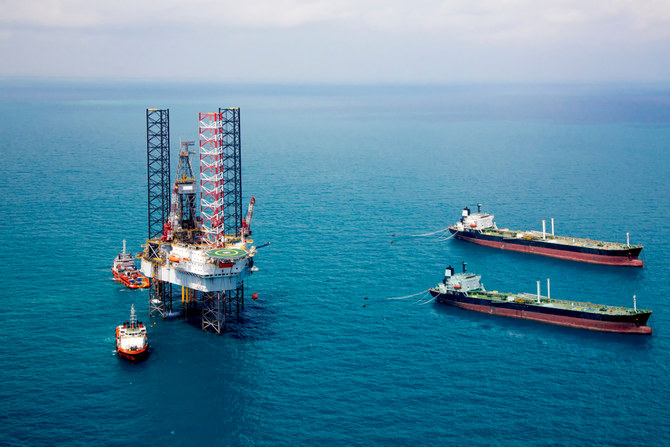
Brent crude fell 13 cents to $75.86 a barrel by 11:35 a.m. Saudi time, while US West Texas Intermediate crude slipped by 12 cents to $71.93. (Shutterstock)
Short Url
Updated 23 May 2023
Follow

Oil Updates — crude slips; Vitol says Asia to drive oil demand growth in H2

RIYADH: Oil prices slipped on Tuesday as investor concern over the risk of a US debt default dampened risk appetite, although a tighter market due to a seasonal rise in gasoline demand and supply cuts from the Organization of the Petroleum Exporting Countries and its allies, known as OPEC+, lent support.

US President Joe Biden and House Speaker Kevin McCarthy ended talks on Monday with no agreement on how to raise the US government’s $31.4 trillion debt ceiling.

Brent crude fell 13 cents, or 0.17 percent, to $75.86 a barrel by 11:35 a.m. Saudi time, while US West Texas Intermediate crude slipped by 12 cents, or 0.17 percent, to $71.93.

Asia to drive oil demand growth in H2, says Vitol

Asia will lead oil demand growth of around 2 million barrels per day in the second half of 2023, a senior executive at Vitol said.

According to Mike Muller, Vitol Asia president, this could potentially lead to a supply shortage and raise prices.

“We are going into the second half of the year where, largely thanks to Asian demand growth, the world is going to need about 2 million bpd more than it needs now,” said Muller at the Middle East Petroleum & Gas Conference in Dubai.

“For those of you asking whether OPEC+ needs to take more off the market or not, I will then let you draw your own conclusions,” he said.

Shell cuts oil imports at Singapore refinery amid repairs

Shell has cut crude oil imports at its Singapore refinery this month and is relying on smaller tankers after extending repairs at its single buoy mooring facility till June, according to shipping data.

The company is moving crude from very large crude carriers onto smaller Aframax tankers through ship-to-ship transfers before discharging them at another jetty on Pulau Bukom, the island south of Singapore where the refinery is located, shipping data from Refinitiv Eikon and Kpler showed.

The transfers typically add to refiners’ transportation costs and come when companies are already contending with depressed processing margins in the region.

Crude imports to Bukom fell to 3 million barrels in May from 7.65 million in April, Kpler data showed on Tuesday, while Refinitiv data said shipments dropped to 3.2 million barrels from 6.9 million.

Repair works at the SBM started in February and have been extended to June, according to public notices on the Maritime Port Authority of Singapore website.

(With input from Reuters)


Saudi Arabia’s foreign reserves rise to a 6-year high of $475bn

Updated 22 February 2026
Follow

Saudi Arabia’s foreign reserves rise to a 6-year high of $475bn

RIYADH: Saudi Arabia’s foreign reserves climbed 3 percent month on month in January to SR1.78 trillion, up SR58.7 billion ($15.6 billion) from December and marking a six-year high.

On an annual basis, the Saudi Central Bank’s net foreign assets rose by 10 percent, equivalent to SR155.8 billion, according to data from the Saudi Central Bank, Argaam reported.

The reserve assets, a crucial indicator of economic stability and external financial strength, comprise several key components.

According to the central bank, also known as SAMA, the Kingdom’s reserves include foreign securities, foreign currency, and bank deposits, as well as its reserve position at the International Monetary Fund, Special Drawing Rights, and monetary gold.

The rise in reserves underscores the strength and liquidity of the Kingdom’s financial position and aligns with Saudi Arabia’s goal of strengthening its financial safety net as it advances economic diversification under Vision 2030.

The value of foreign currency reserves, which represent approximately 95 percent of the total holdings, increased by about 10 percent during January 2026 compared to the same month in 2025, reaching SR1.68 trillion.

The value of the reserve at the IMF increased by 9 percent to reach SR13.1 billion.

Meanwhile, SDRs rose by 5 percent during the period to reach SR80.5 billion.

The Kingdom’s gold reserves remained stable at SR1.62 billion, the same level it has maintained since January 2008.

Saudi Arabia’s foreign reserve assets saw a monthly rise of 5 percent in November, climbing to SR1.74 trillion, according to the Kingdom’s central bank.

Overall, the continued advancement in reserve assets highlights the strength of Saudi Arabia’s fiscal and monetary buffers. These resources support the national currency, help maintain financial system stability, and enhance the country’s ability to navigate global economic volatility.

The sustained accumulation of foreign reserves is a critical pillar of the Kingdom’s economic stability. It directly reinforces investor confidence in the riyal’s peg to the US dollar, a foundational monetary policy, by providing SAMA with ample resources to defend the currency if needed.

Furthermore, this financial buffer enhances the nation’s sovereign credit profile, lowers national borrowing costs, and provides essential fiscal space to navigate global economic volatility while continuing to fund its ambitious Vision 2030 transformation agenda.