Pakistan condemns ‘reprehensible’ storming of Al-Aqsa Mosque compound by Israeli authorities 

Israeli police stand guard as visitors tour Al-Aqsa compound, known to Jews as Temple Mount, amid tensions ahead of the annual flag march which marks Jerusalem Day, in Jerusalem May 18, 2023. (REUTERS)
Short Url
Updated 20 May 2023
Follow

Pakistan condemns ‘reprehensible’ storming of Al-Aqsa Mosque compound by Israeli authorities 

  • Hundreds of Jewish pilgrims, including members of Israeli parliament, toured the Al-Aqsa Mosque compound this week 
  • The rising number of Jewish visitors, some of whom defy a ban on non-Muslim prayer there, has angered the Palestinians 

ISLAMABAD: Pakistan on Saturday condemned storming of the Al-Aqsa Mosque compound by Israeli authorities under the protection of Israeli forces, its foreign office said, terming it a “reprehensible” move in violation of the sanctity of one of the holiest sites of Islam. 

Hundreds of Jewish pilgrims, including members of Israeli parliament, toured the Al-Aqsa Mosque compound in the Old City. The site, called the Noble Sanctuary by Muslims, is the third holiest in Islam and also revered by Jews as the Temple Mount, a vestige of their faith’s two ancient temples. 

The visits passed without incident, but Palestinians have been angered by the rising number of Jewish visitors to the compound, some of whom defy a ban on non-Muslim prayer there. Jordan, which has a custodial role over the Muslim and Christian holy sites of Jerusalem, condemned the visits as a provocation that risked escalating tensions. 

The Pakistani foreign office said the visit by Israeli authorities was part of a series of recent Israeli actions that were disrespectful to Muslims around the world. 

“Pakistan strongly condemns storming of Al Aqsa Mosque by a member of the Israeli occupation authority and members of the Knesset under protection of Israeli occupation forces,” it said in a statement. 

“Violation of the sanctity of one of the holiest sites in Islam constitutes yet another reprehensible event in a series of escalatory Israeli actions disrespectful to religious sentiments of over 1.5 billion Muslims around the world.” 

The visit came as tens of thousands of Israeli nationalists marched through the Muslim quarter of Jerusalem’s walled Old City under heavy security in an annual event that drew condemnation from Palestinians. 

The parade is the main celebration on Jerusalem Day, when Israel marks its capture of Jerusalem in the 1967 Middle East war. The event has become a show of force for Jewish nationalists and, for Palestinians, a blatant provocation meant to undermine their ties to the city. 

Despite fears the event could spark a renewed violence following days of cross-border fire with Palestinian militant fighters in Gaza last week, the march ended with no major security incidents. 

Pakistan once again called on the international community to take immediate action to put an end to Israeli transgressions in the occupied Palestinian territories since the beginning of this year. 

“We reiterate that such acts are inconsistent with the right to freedom of expression and religion or belief of the Palestinian people, defying all humanitarian and human rights laws and norms,” the statement read. 

 “We reaffirm unstinted support for the Palestinian cause, and renew our call for a viable, independent and contiguous Palestinian State, with pre-1967 borders, and Al-Quds Al-Sharif as its capital being the only just and comprehensive solution to the Palestinian issue.” 


No casualties as blast derails Jaffar Express train in Pakistan’s south

Updated 26 January 2026
Follow

No casualties as blast derails Jaffar Express train in Pakistan’s south

  • Passengers were stranded and railway staffers were clearing the track after blast, official says
  • In March 2025, separatist militants hijacked the same train with hundreds of passengers aboard

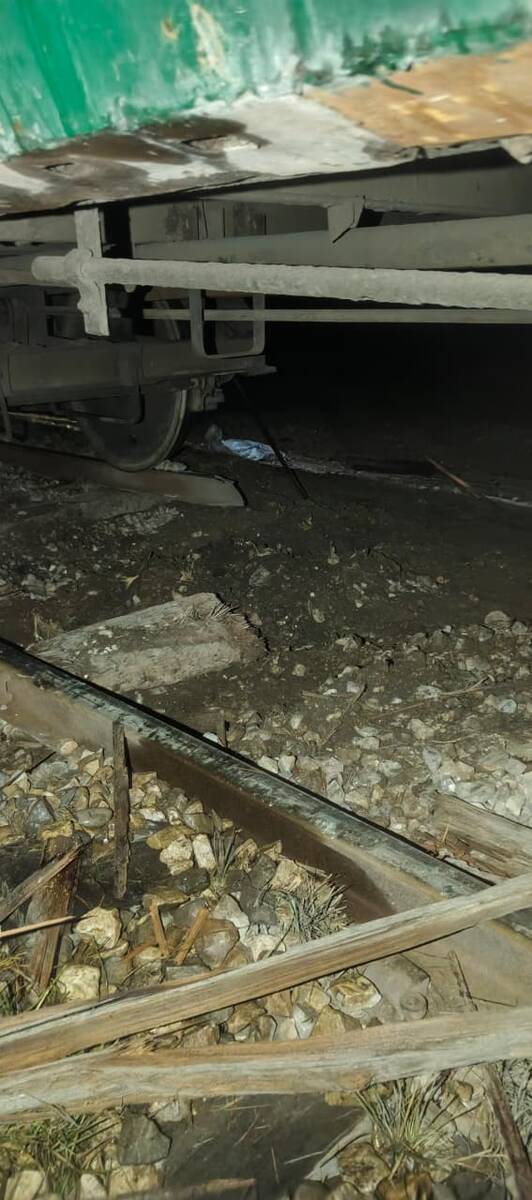
QUETTA: A blast hit Jaffar Express and derailed four carriages of the passenger train in Pakistan’s southern Sindh province on Monday, officials said, with no casualties reported.

The blast occurred at the Abad railway station when the Peshawar-bound train was on its way to Sindh’s Sukkur city from Quetta, according to Pakistan Railways’ Quetta Division controller Muhammad Kashif.

No group immediately claimed responsibility for the bomb attack, but passenger trains have often been targeted by Baloch separatist outfits in the restive Balochistan province that borders Sindh.

“Four bogies of the train were derailed due to the intensity of the explosion,” Kashif told Arab News. “No casualty was reported in the latest attack on passenger train.”

The Jaffar Express stands derailed near Abad Railway Station in Jacobabad following a blast on January 26, 2026. (AN Photo/Saadullah Akhtar)

Another railway employee, who was aboard the train and requested anonymity, said the train was heading toward Sukkur from Jacobabad when they heard the powerful explosion, which derailed power van among four bogies.

“A small piece of the railway track has been destroyed,” he said, adding that passengers were now standing outside the train and railway staffers were busy clearing the track.

In March last year, fighters belonging to the Balochistan Liberation Army (BLA) separatist group had stormed Jaffar Express with hundreds of passengers on board and took them hostage. The military had rescued them after an hours-long operation that left 33 militants, 23 soldiers, three railway staff and five passengers dead.

The passenger train, which runs between Balochistan’s provincial capital of Quetta and Peshawar in the country’s northwest, had been targeted in at least four bomb attacks last year since the March hijacking, according to an Arab News tally.

The Jaffar Express stands derailed near Abad Railway Station in Jacobabad following a blast on January 26, 2026. (AN Photo/Saadullah Akhtar)

Pakistan Railways says it has beefed up security arrangements for passenger trains in the province and increased the number of paramilitary troops on Jaffar Express since the hijacking in March, but militants have continued to target them in the restive region.

Balochistan, Pakistan’s southwestern province that borders Iran and Afghanistan, is the site of a decades-long insurgency waged by Baloch separatist groups who often attack security forces and foreigners, and kidnap government officials.

The separatists accuse the central government of stealing the region’s resources to fund development elsewhere in the country. The Pakistani government denies the allegations and says it is working for the uplift of local communities in Balochistan.