



QUETTA: The first ever Women Anti-Riot Unit has been established in Pakistan’s southwestern province of Balochistan to deal with public disorder, with a special focus on handling female protesters through negotiations, the top commander of the force and several officers said.
Balochistan, Pakistan’s largest province by size but most backward in terms of almost all social indicators and the site of a long-running separatist insurgency, currently has a police force comprising 36,000 male officers and over 600 women.
But to deal with the cultural challenges of women protesters in the deeply conservative province, the first batch of the Women Anti-Riot Unit (ARU) was launched last month. The 48 officers of the force have special training in safety and security protocols during VIP movements in the city, and especially in controlling women protesters during rallies and protests.
Earlier this month, the arrest in Islamabad of former Prime Minister Imran Khan unleashed nationwide protests by his supporters, which turned violent in many cities, including the provincial capital of Balochistan, Quetta, where at least one person was killed and dozens were injured.
“Peaceful protest is the right of every single citizen but somehow there are situations when people provoke the protesters, including women,” Zarmina Imran, the platoon in-charge of the Women ARU, told Arab News. “Thus, we have established this unit to negotiate and protect women in mass protests.”
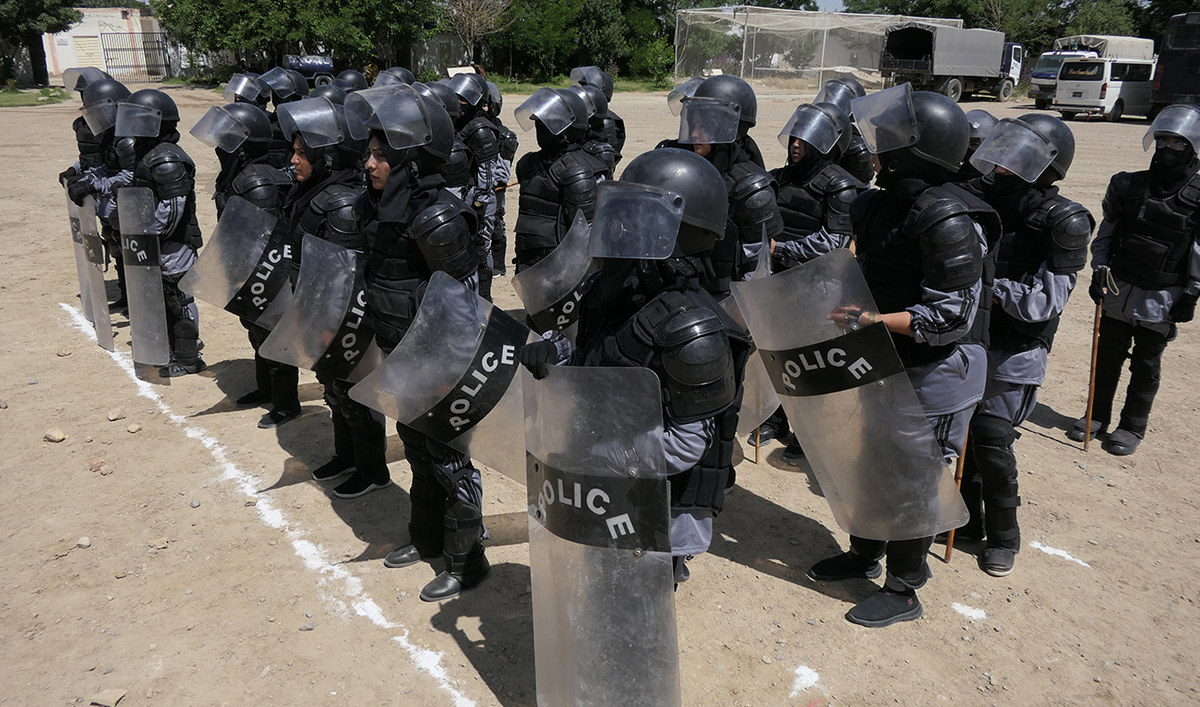
The photo taken on May 18, 2023, shows officers from Pakistan's first batch of the Women Anti-Riot Unit during training in Quetta, Pakistan. (AN Photo)
The unit had not been set up, she assured, to “misbehave” with female protesters or use heavy handedness against them but to initiate peaceful talks and convince them not to become violent and to end their protests peacefully.
“To protect the women, negotiate with them and address their issues because being women we can better understand their problems,” Imran explained.
Many in the new force are no strangers to the police force.
Irum Kakar, 28, a commando in the force, said she was following in the footsteps of her elder brother who served in Quetta’s Anti-Terrorist Force (ATF) and was among over 30 policemen who died in a suicide attack on the Police Line Mosque in August 2013.
“I had a passion because my brother was martyred in the police force. He was an ATF (Anti-Terrorist Force) commando. Looking up to him, this was my childhood dream,” Kakar told Arab News as she readied her safety equipment, consisting of body armor, a riot shield, helmet and a face visor, to participate in a routine anti-riot demonstration.
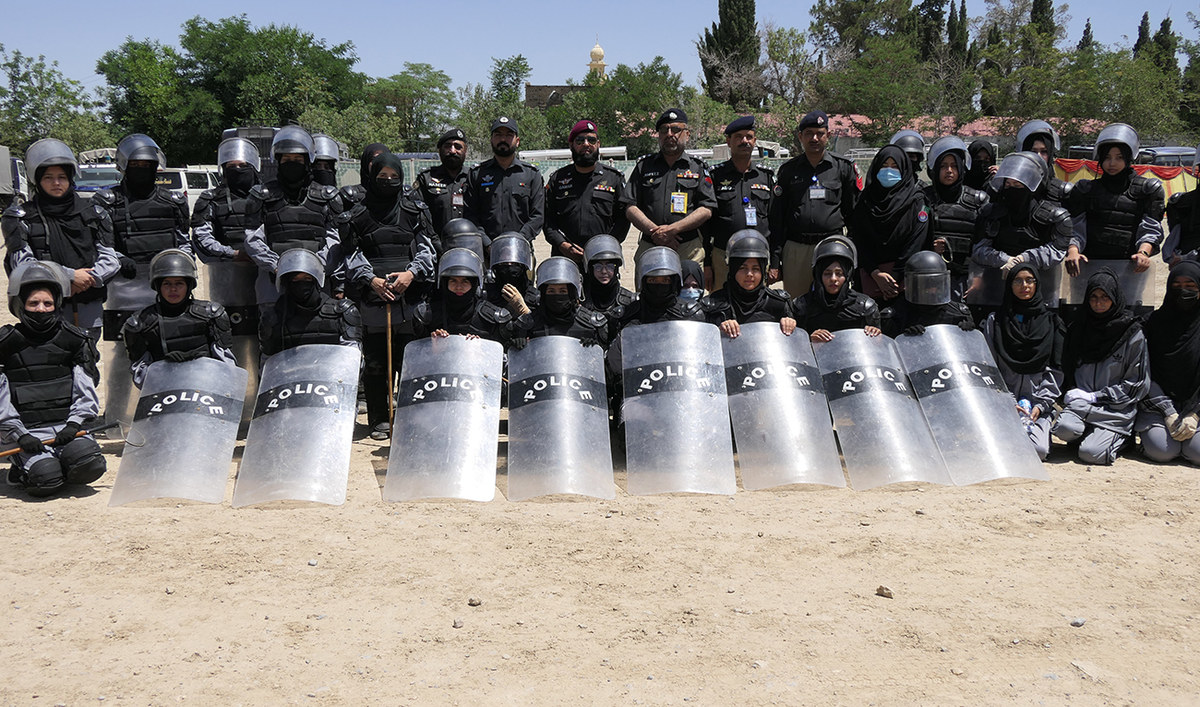
The photo taken on May 18, 2023, shows officers from Pakistan's first batch of the Women Anti-Riot Unit during training in Quetta, Pakistan. (AN Photo)
“In our family, all of us siblings wanted to join the police force. When my brother was martyred, our passion increased even more, especially my mother’s.”
Kakar joined the police force in November 2022 and recently completed the 45-day course to become part of the province’s first all-women ARU. She said her mother and other family members supported her in her passion to join the police force.
“Now we are fully trained to clamp down on any violent protest and protect women protesters in Quetta city,” she added.
Shazia Aman, 28, said her father and other family members, who also served as security officers in Balochistan, had encouraged her to become a policewoman.
“After being part of this unit, now I feel physically strong, because instead of sitting inside the office we [policewomen] can face the situation outside,” the constable told Arab News. “In the current circumstance, we will become stronger if we walk along with male officers.”
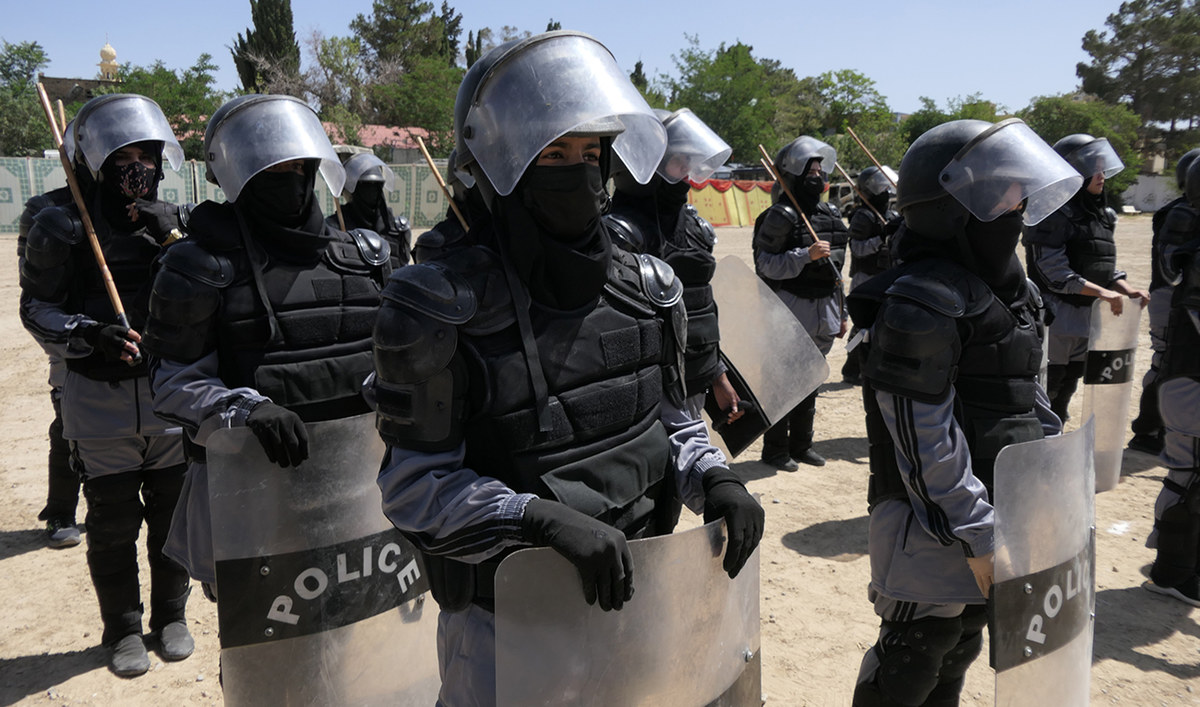
The photo taken on May 18, 2023, shows officers from Pakistan's first batch of the Women Anti-Riot Unit during training in Quetta, Pakistan. (AN Photo)
Deputy Superintendent of Police (DSP) Muhammad Hafeez, who is leading the Anti-Riot Units in Balochistan as its commander, said the first batch of the Women ARU had two platoons who would be deployed in Quetta.
“We have divided the Women Anti-Riot Unit in two platoons and they are based at the Quetta level,” he told Arab News. “In other districts, fresh recruits have been appointed and we are taking measures to train them like we trained the girls here.”
Hafeez said the women officers felt “comfortable and safe” being part of the new force.
“There were negative thoughts about Police Department in society, that this is not a safe profession for girls, but now the bad perceptions have ended because of young girls joining the force.”


