



AMMAN: Saudi Arabia’s coastal city of Jeddah is hosting the 32nd Arab League summit at a time of change and upheaval in many parts of the Arab world. It also coincides with a desire for greater unity and sense of purpose among members of the pan-Arab group.
According to analysts who spoke to Arab News ahead of the event, Saudi Arabia’s growing authority and its support for “home-grown” solutions to regional problems have provided much of the impetus for this collective call for cooperation.
The summit is happening in the shadow of a deadly conflict and humanitarian emergency in Sudan. Fresh tensions between Israelis and Palestinians are also expected to feature prominently in the discussions.
There will no doubt be some positive developments, including progress on resolving the war in Yemen. This is also the first Arab League summit attended by the Syrian leadership since its suspension in 2011, marking the country’s reintegration into the Arab fold.
Overall, there is a pervasive mood of optimism prevailing at the summit, which analysts say will not be merely a “ceremonial” affair or “a meeting for meeting’s sake” as in previous years, but a practical and proactive gathering to offer leadership on multiple regional files.
“Since its establishment in 1945, all previous Arab League summits had been marred by regional crises and much disagreement within the pan-Arab body to the point that many of those meetings had been either canceled or yielded no tangible outcomes,” Omar Ayasrah, a Jordanian lawmaker and political analyst, told Arab News.
“But the summit in Jeddah seems to be different. It has been preceded by a number of Saudi-led initiatives and practical steps aimed first at laying down positive grounds for the meeting and consequently building a unified Arab position on regional crises and the necessary collective framework to address them.”
For Ayasrah, it is Saudi Arabia’s ascent to regional authority, its keenness to alleviate tensions among Arab states, and its aim to solidify a unified Arab front on the world stage that set this year’s summit apart from previous editions.
“A Saudi-led project to formulate home-grown solutions to regional crises will be the theme of the summit in Jeddah,” he said.
Echoing Ayasrah’s remarks, geopolitical analyst Amer Sabaileh says that the simple act of holding the summit in Jeddah makes the occasion more “important, glamorous and rewarding.”
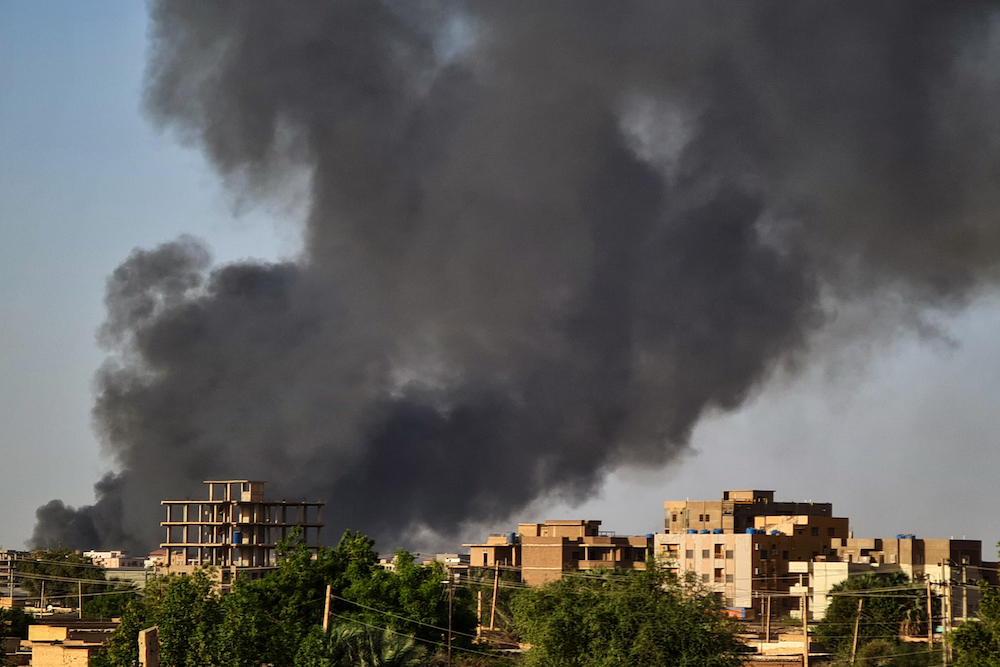
Smoke rises above buildings in Khartoum, as violence between two rival Sudanese generals continues, on May 17, 2023. Khartoum was again rocked by battles on May 17, more than a month into a brutal war that has made "more than half" of the already impoverished country in need of aid, according to the United Nations. (AFP)
Furthermore, “the Saudis are involved in all issues,” he said, highlighting the Kingdom’s “tremendous” diplomatic efforts ahead of the summit to build an Arab consensus and set out a well-defined agenda for the meeting.
Although less optimistic about the outcomes of the gathering, Samih Maaytah, Jordan’s former minister of media, also expects it to be different from past gatherings, citing, in particular, the reintegration of Syria.
The 22-member Arab League agreed to reinstate Syria earlier this month, ending a 12-year suspension imposed in response to the Bashar Assad regime’s crackdown on nationwide protests in 2011, which later escalated into a brutal civil war.
The formulation of an Arab-led plan to end the conflict will likely feature prominently on the summit agenda.
“The major components of the road map for Syria have been agreed upon in Jeddah and Amman,” said Ayasrah. “I think the summit in Jeddah will outline the mechanism for implementation.”
During these preparatory meetings, attended by the foreign ministers of Saudi Arabia, Jordan, Egypt, Iraq and Syria, Damascus pledged to combat illicit drug production and trafficking and to launch practical steps to ensure the safe voluntary return of refugees.
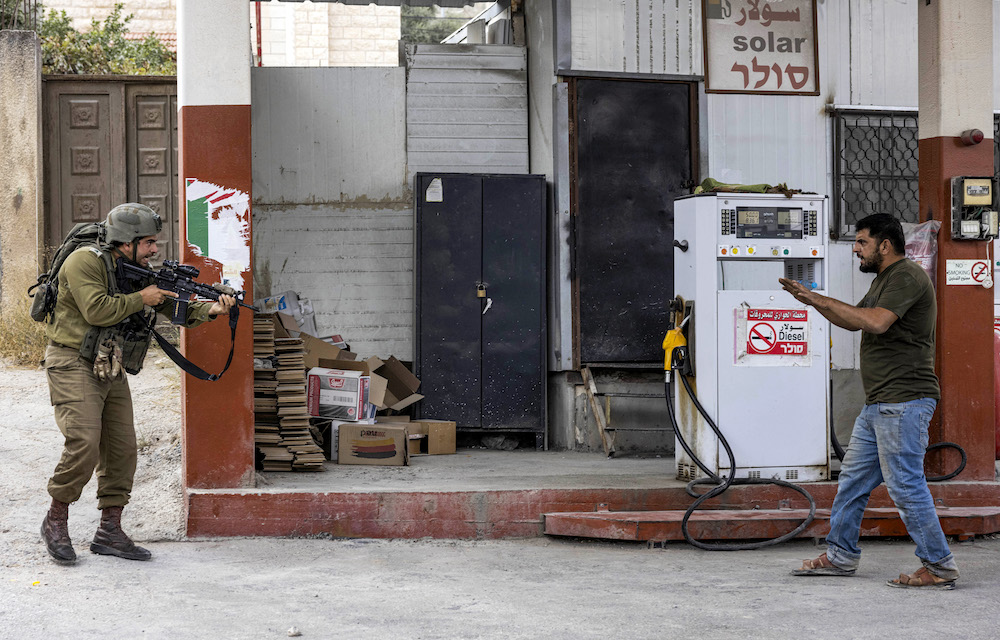
An Israeli soldier aims his rifle at a Palestinian man during clashes in which Israeli settlers attacked Palestinian residents and shops in the town of Huwara in the occupied West Bank on October 13, 2022. (AFP/File Photo)
“The summit in Jeddah will push for a political solution to the Syrian crisis to be formulated from within the Arab League,” Maaytah said. “Arabs are taking the lead on Syria.”
The euphoria marking Syria’s return to the Arab fold will likely be tempered, however, by the situation in Sudan, where the Sudanese Armed Forces are locked in combat with the paramilitary Rapid Support Forces.
“This will have a negative impact on the summit,” said Maaytah. “Arab leaders meeting in Jeddah will be faced by the crisis in Sudan, fully realizing that it is a conflict that will not come to an end until one of the warring parties is completely defeated.”
According to analysts, Arab leaders meeting in Jeddah will call on Sudan’s feuding parties to engage in dialogue and resume the Saudi-hosted talks to end the conflict that has killed hundreds of people and sent hundreds of thousands fleeing to neighboring countries.
Analysts also expect the latest clashes between Israel and Hamas, which controls the Gaza Strip, Israeli activities in Jerusalem and the West Bank, and the policies of Israel’s hardline government to feature on the agenda.
“Arabs will also offer peace during the summit and will reaffirm the two-state solution proposed in the 2002 Arab Peace Initiative,” said Ayasrah.
The Arab Peace Initiative, proposed by Saudi Arabia, calls for an end to the decades-old conflict and the normalization of relations between Israel and the entire Arab world in exchange for an independent Palestinian state based on the pre-1967 borders. The Arab League re-adopted the plan in 2007.
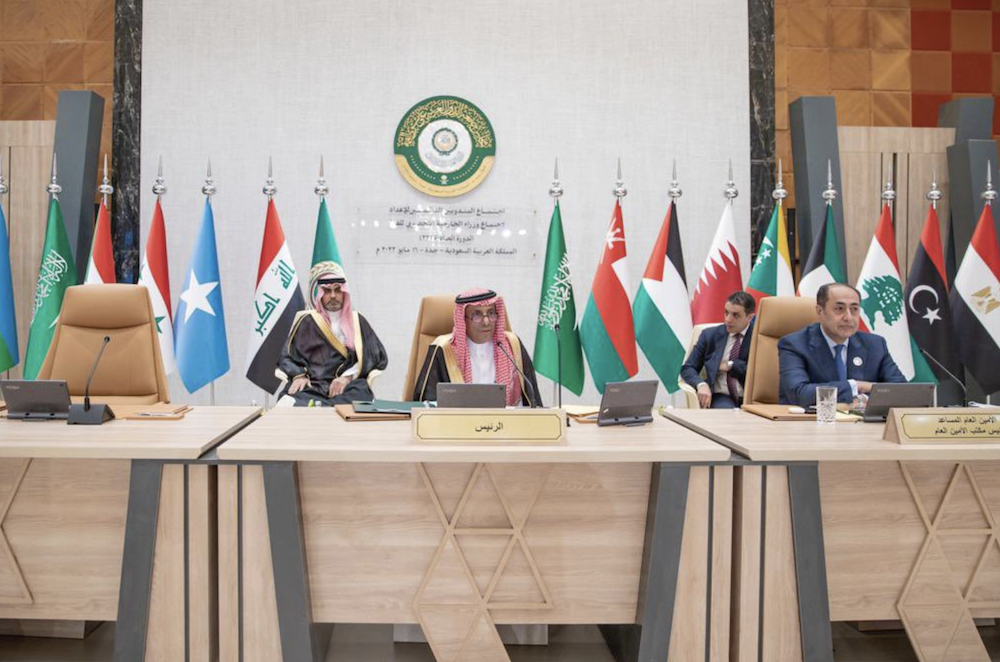
Deputy Minister for International Multilateral Affairs Dr. Abdulrahman Al-Rassi chaired the meeting of the representatives and senior officials for the Foreign Ministers Preparatory Meeting for the 32nd session of the Arab Summit. (Twitter/@KSAmofaEN)
“Although little space is left for political solutions to the Palestinian-Israeli conflict as a result of the Israeli government and society both leaning more toward the extreme right, a re-emphasis of the two-state solution according to relevant international resolutions should be made during the summit,” said Maaytah.
In spite of these challenges, the mood surrounding the summit remains overwhelmingly positive, with a widely felt sense that several long-running issues are finally being addressed by the Arab community itself.
“Reaching consensus on the major topics and then acting accordingly is what matters most during the Jeddah summit,” said Sabaileh.
“Reactivating joint Arab action and regaining momentum to initiatives will be the major achievements of the summit.”


