




KARAWANG, Indonesia: Indonesian mother-of-three Aslem was a domestic worker in Dubai when she started wiring cash to a self-professed shaman, believing that he would honor his promise to magically multiply her hard-earned wages.
But she returned home last year penniless and in shock, saying she had been swindled out of her life savings by a trickster who now faces trial for his complex scams, and charges of murdering nine of his victims.
“I have nothing now,” Aslem, 42, told AFP from her cramped, dilapidated house in a remote village in Karawang, West Java.
“I wanted to renovate this small house my parents left me. I wanted to make them happy... I didn’t manage to do that until the day they died.”
In Muslim-majority Indonesia, where nearly 10 percent of the population live below the poverty line, some view shamans as traditional healers.
Aslem is one of several Indonesians who say they were scammed by people claiming to be spiritual figures, promising to turn small investments into immense wealth.
Police say some alleged scammers turn to violence when their victims come looking for their money.

This picture taken on April 27, 2023 in Bekasi, West Java, shows migrant worker Neng Hana Patiningrum showing bank transfer documents of her remittances to shaman Slamet Tohari. (AFP)
The scams have circulated widely on Indonesian social media.
Just two dozen Facebook posts advertising so-called shaman investment schemes were viewed more than 1.4 million times as of this week, according to AFP Fact Check reporters in Jakarta.
One post, viewed 643,000 times from April 8 to May 17, claimed a Muslim sheikh would help people multiply their funds, and that the service did not violate the tenets of Islam.
AFP reporters contacted a WhatsApp number associated with one of the posts and were told to send photos of their identity cards to determine eligibility for the “magic money” scheme.
AFP has a global team of journalists, including in Indonesia, who debunk misinformation as part of Facebook and WhatsApp owner Meta’s third-party fact-checking program.
After she moved to Dubai in 2016, Aslem said she began talking to a man her friend had recommended, who claimed he was a Javan shaman named Aki Banyu.
Aslem, who now sells snacks from her porch, recalled the first meeting with the man on a 2019 trip home.
The man prepared offerings, chanted a mantra, and promised her money would multiply soon, she said.
She later sent him around 288 million rupiah ($19,500) after he promised to flip her earnings into eye-watering sums totalling nearly $2 million, she told AFP.
Police later identified the man as Wowon Erawan, a 60-year-old who they said worked with two partners to trick migrant workers into sending them money.
In a January press conference, police accused the trio of murdering nine people including Erawan’s wife and stepchildren to cover up their crimes.
Police said the three men had been arrested, and that they had confessed to killing victims with pesticide-laced drinks.
They had planned to poison Aslem after she asked about her investment in late 2022, police said.
The men arranged a meeting with her but she declined to go after her friends told her that Erawan and his friends were con artists, according to police.
Another migrant worker, mother-of-three Neng Hana Patiningrum, told AFP she believes she also escaped death at the hands of the scammers.

Indonesian mother-of-three Aslem, pictured on April 11, 2023 at her snacks stall in Karawang, West Java, was a domestic worker in Dubai when she started wiring cash to a self-professed shaman, believing that he would honor his promise to magically multiply her hard-earned wages. (AFP)
The 30-year-old wired more than 100 million rupiah to the same shaman but stopped sending funds in 2021 when her questions went unanswered, she said.
She returned to Indonesia but didn’t meet him because of heavy rains.
Her friend, Siti Fatimah, did not survive to tell her story.
She went missing before her body was found in waters near Bali in early 2021. Police blamed the trio.
“I was shocked. How can one be so evil to scam the money we worked so hard to earn? I am traumatized,” said Patiningrum.
Erawan repented and apologized to victims’ families at the police press conference.
The trio face the death penalty if found guilty.
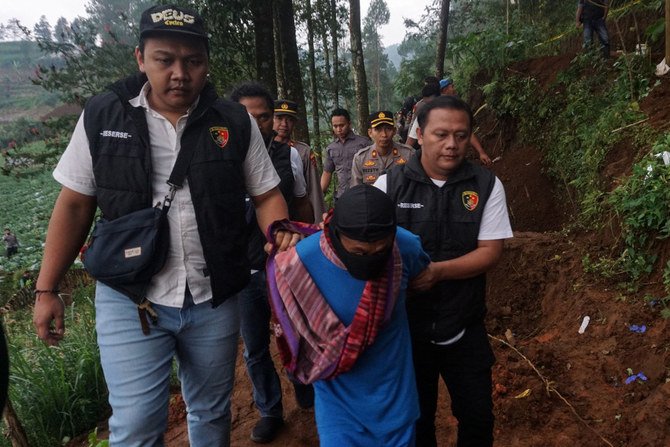
In April police arrested another accused serial killer shaman, 45-year-old Slamet Tohari, after a man was reported missing by his family.
Tohari also stands accused of boasting he could magically multiply money, luring victims into rituals before poisoning them with potassium cyanide when they asked for their money back.
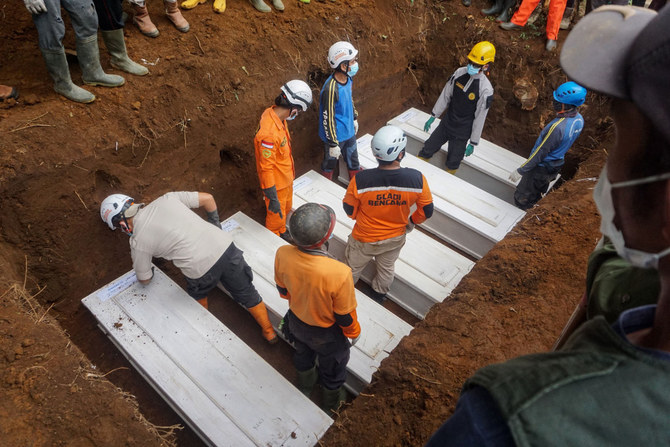
At least 12 bodies have been uncovered on Slamet’s land, according to police, who said in a statement last month the number could be higher after they received further reports of 28 missing people.
Meanwhile, victims told AFP they have been left to live with empty pockets and the shame of falling for the con.
“It was like a nightmare. People kept telling me I was stupid and reckless,” Patiningrum said, sobbing.
“But I never expected this to happen.”


