

Meet Capt. Afrah, the first Saudi woman to pilot a hot-air balloon

1 / 6
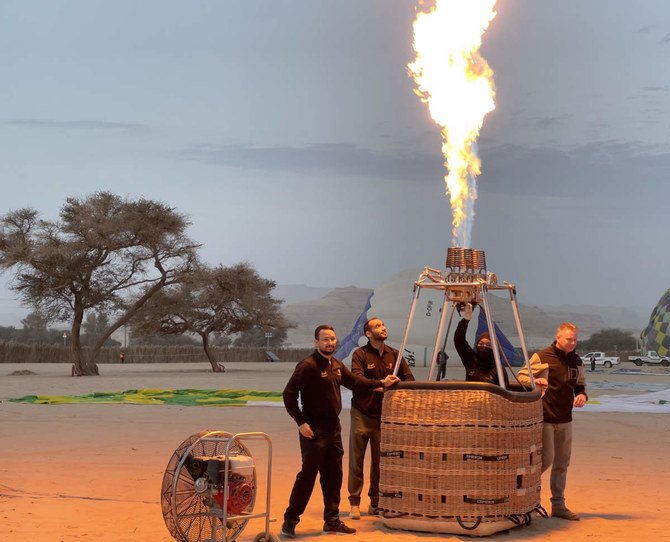
Hot-air balloon pilot Afrah Al-Harbi is inspiring young women to reach for the skies in their career and hobby. (Supplied)
2 / 6
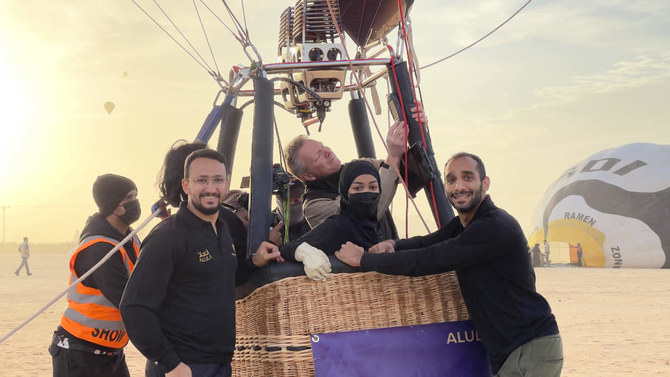
Hot-air balloon pilot Afrah Al-Harbi is inspiring young women to reach for the skies in their career and hobby. (Supplied)
3 / 6
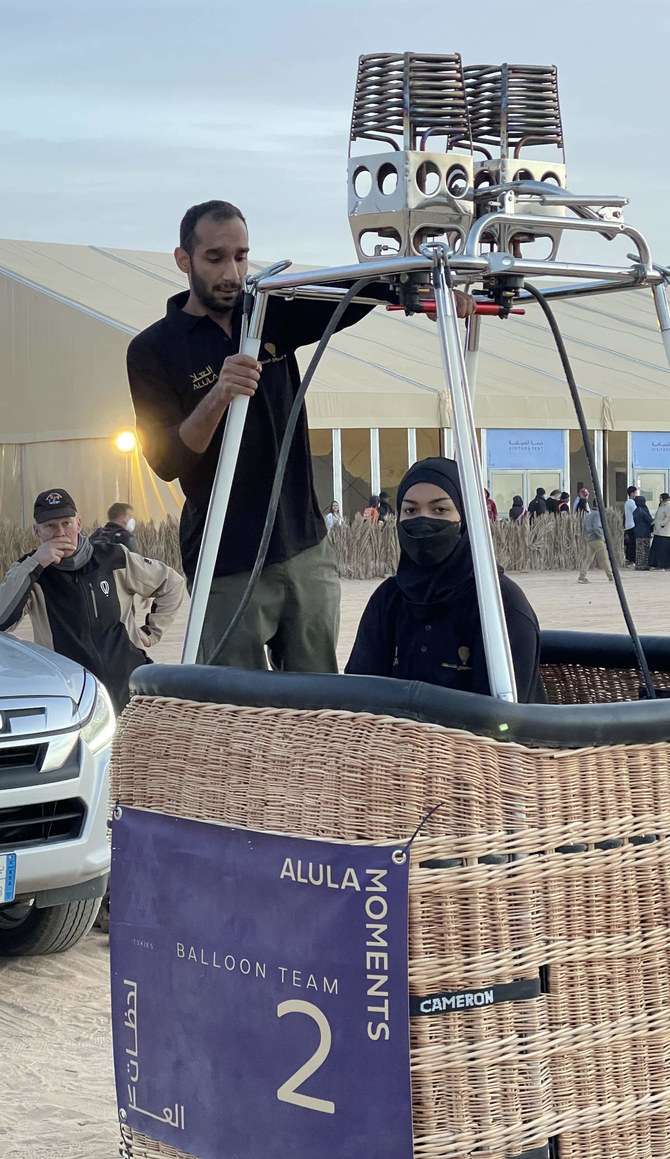
Hot-air balloon pilot Afrah Al-Harbi is inspiring young women to reach for the skies in their career and hobby. (Supplied)
4 / 6
Hot-air balloon pilot Afrah Al-Harbi is inspiring young women to reach for the skies in their career and hobby. (Supplied)
5 / 6
Hot-air balloon pilot Afrah Al-Harbi is inspiring young women to reach for the skies in their career and hobby. (Supplied)
6 / 6
Hot-air balloon pilot Afrah Al-Harbi is inspiring young women to reach for the skies in their career and hobby. (Supplied)
Short Url
Updated 16 May 2023
Follow

Meet Capt. Afrah, the first Saudi woman to pilot a hot-air balloon

  • Flown 55 times including at AlUla’s Skies Festival
  • 22-year-old hopes to make it a full time profession

RIYADH: Meet Capt. Afrah Al-Harbi, a 22-year-old AlUla native, who has piloted hot-air balloons 55 times in Saudi Arabia, after becoming the first Saudi woman to obtain a license to navigate these aircraft.

Al-Harbi was trained by the Saudi Arabian Hot-Air Ballooning Federation while pursuing an education in Hotels and Tourism at Taibah University in AlUla.
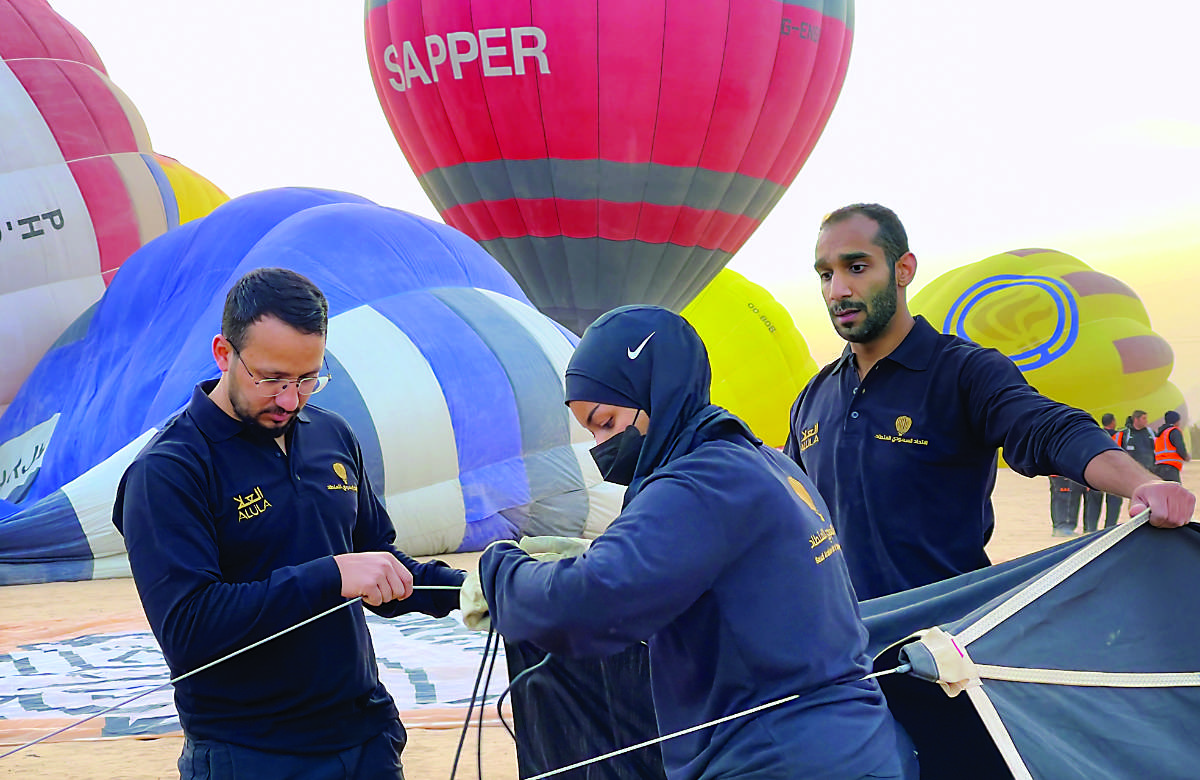


Hot-air balloon pilot Afrah Al-Harbi is inspiring young women to reach for the skies in their career and hobby. (Supplied)

The federation officially opened its headquarters in AlUla in May 2019, a few months after the success of the inaugural Hot-Air Balloon Festival during the Winter at Tantora Festival earlier that year, when 100 balloons lit up the skies on several nights. The festival presented a blueprint for adventure tourism in Saudi Arabia.

Al-Harbi’s story began at this festival.

There is no better way to experience, enjoy and appreciate AlUla’s majestic landscape and natural beauty than from the air.

Afrah Al-Harbi, Hot-air balloon pilot

“When hot-air ballooning started in AlUla, I saw the balloons but I never thought I would be able to fly one of them,” Al-Harbi told Arab News recently.

When the opportunity to learn arose, Al-Harbi asked herself: “Why not me?” After an initial interview, she was accepted into the training program.
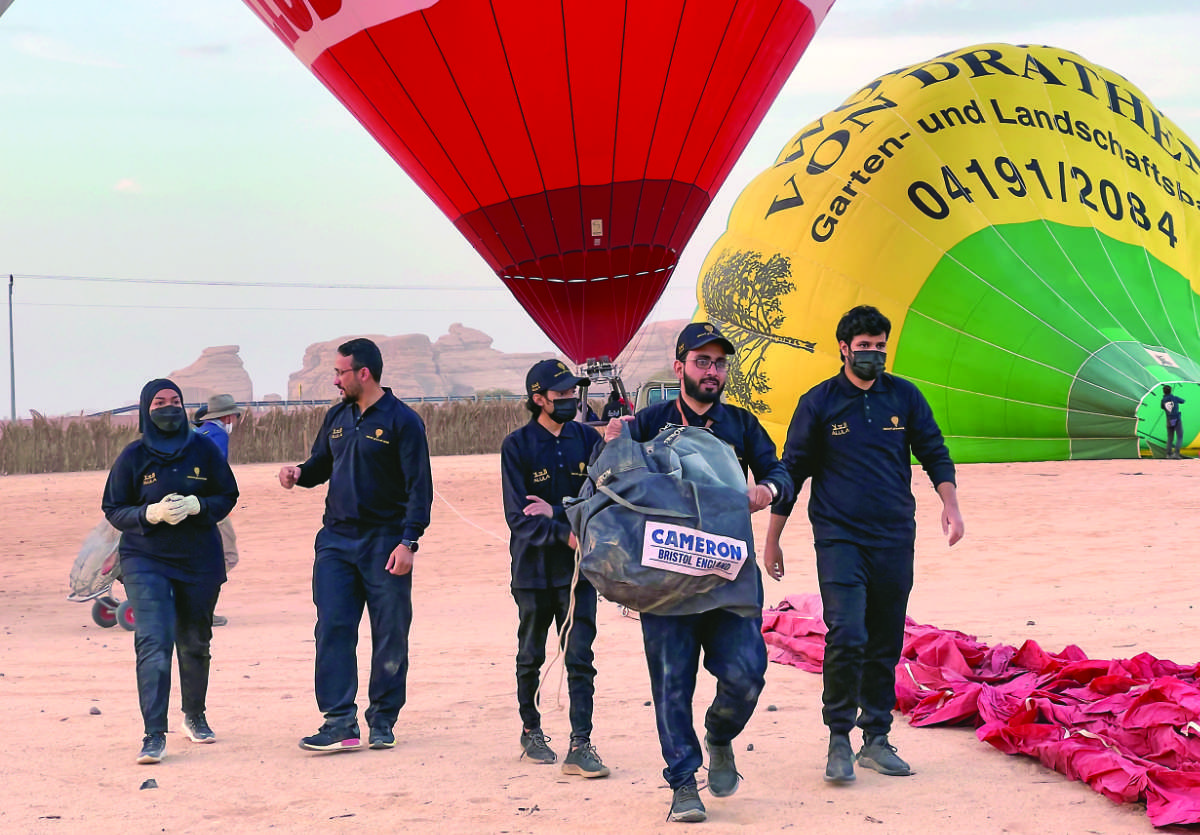


Hot-air balloon pilot Afrah Al-Harbi is inspiring young women to reach for the skies in their career and hobby. (Supplied)

Al-Harbi, one of eight children, said her family has been supportive throughout her journey to make history and become the first Saudi woman to be granted a pilot’s license.

“I have no fear inside me,” she added.

FASTFACT

Afrah Al-Harbi is the first Saudi woman to gain a license to fly hot-air balloons from the Saudi Arabian Hot Air Ballooning Federation in AlUla.

With more than 55 flights to date, Al-Harbi said she would not mind pursuing it as a fulltime career but for now ballooning is a hobby.
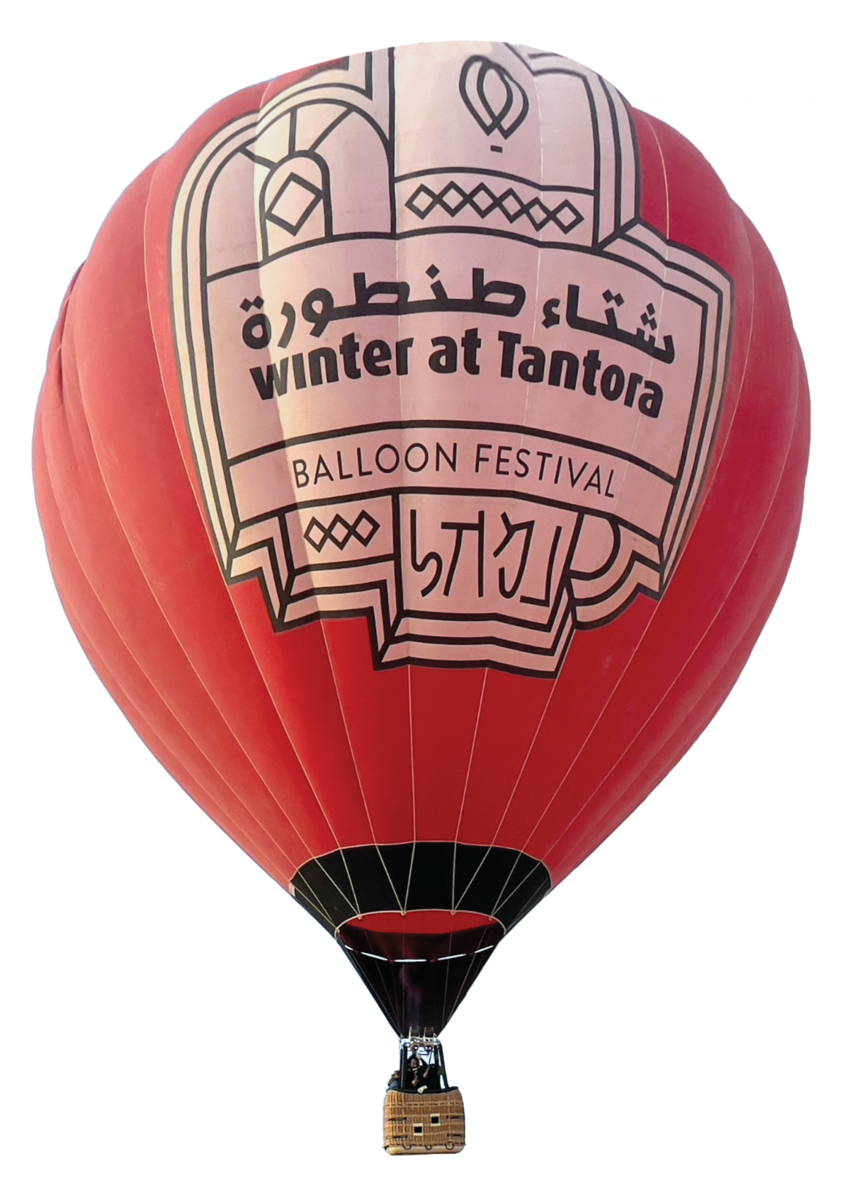


Hot-air balloon pilot Afrah Al-Harbi is inspiring young women to reach for the skies in their career and hobby. (Supplied)

Fellow captains Abdulrahman Al-Wohaibi and Hussain Makkawi, who trained at the federation with Al-Harbi, are also amongst the first licensed Saudi hot-air balloon pilots.

Al-Harbi is one of the Saudi pilots designated to fly guests at the AlUla Skies Festival. This is an annual celebration that includes hot-air balloon rides, helicopter tours and other outdoor adventures and attractions near the historic Hegra monument.

“There is no better way to experience, enjoy and appreciate AlUla’s majestic landscape and natural beauty than from the air,” she said.


Experimental farm in Al-Lith looks into future of Saudi Arabian agriculture

Updated 02 February 2026
Follow

Experimental farm in Al-Lith looks into future of Saudi Arabian agriculture

  • Research initiative reflects strategic transformation

JEDDAH: An experimental farm in Saudi Arabia’s Al-Lith Governorate is one of the research initiatives reflecting the strategic transformation taking place in the Kingdom’s agricultural sector.

The farm uses highly efficient, sustainable production models that combine scientific research with commercial application, contributing to strengthening the country’s food security system and the sustainability of water resources.

Located in the Ghumaiqa Center on an area of about 10 hectares, the cutting-edge farm is a testing platform for modern agricultural technologies that tackle the challenge of water scarcity.

The farm includes developed open fields and modern greenhouses, supported by smart irrigation encompassing drip and sprinkler irrigation alongside surface and subsurface technologies.

All the systems operate via smart controls that enable the monitoring of water consumption and ensure improved efficiency, thereby achieving a balance between agricultural production and water conservation.

The farm also uses treated and diluted low-salinity seawater.

It aims to diversify agricultural water sources, reduce reliance on freshwater, and open new horizons for agriculture in coastal and semi-arid environments.

A view of the experimental farm in Al-Lith. (SPA)

The project represents a promising investment opportunity in the field of smart agriculture, enabling the development of commercially scalable production models, particularly for high-value vegetables and fruits, while reducing operational costs associated with water and energy, enhancing the economic feasibility of future agricultural projects.

In addition, the project contributes to transferring and localizing agricultural expertise, supporting local food supply chains, and creating an attractive environment for agricultural investment.

This aligns with Sustainable Development Goals and enhances the efficiency of the private sector in adopting innovative agricultural solutions.

Yahya bin Abdulrahman Al-Mahabi, the director of the Ministry of Environment, Water and Agriculture office in Al-Lith Governorate, told the Saudi Press Agency that the project represented the future of agriculture in the Kingdom.

He explained that the vision was based on investing in technology, enhancing the return on water per unit, and integrating scientific research with investment opportunities.

Al-Mahabi spoke of the experimental farm as a modern, scalable and replicable model applicable in several regions of the Kingdom, particularly in coastal environments.

Al-Mahabi highlighted the Ministry of Environment, Water and Agriculture’s commitment to supporting distinctive projects that contributed to achieving food security while developing rural areas and enhancing agricultural production efficiency, in line with the objectives of the Kingdom’s Vision 2030.