

Saudi Arabia’s AlUla has ‘coolest natural landscape’ for videos, says R3hab after Now United shoot

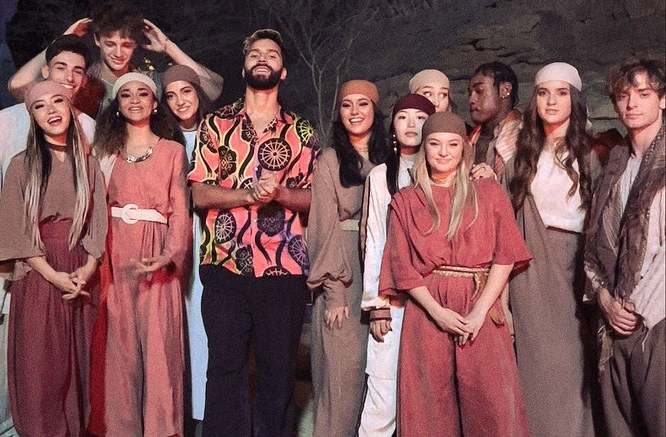
R3hab teamed up with the world’s first global pop group and social media sensation, Now United. (Supplied)
Short Url
Updated 04 April 2023
Follow

Saudi Arabia’s AlUla has ‘coolest natural landscape’ for videos, says R3hab after Now United shoot

  • The DJ, whose real name is Fadil El Ghoul, said he visited AlUla on holiday and loved that it was unlike anything he’d seen before
  • R3hab teamed up with the world’s first global pop group and social media sensation, Now United, for a video shot at the site

LONDON: Saudi Arabia’s ancient city of AlUla has “so many different landscapes and sights” to film videos, according to Dutch-Moroccan DJ R3hab, who teamed up with the world’s first global pop group and social media sensation, Now United, for a video shot at the site.

The musician, whose real name is Fadil El Ghoul, said that he visited AlUla on a holiday and loved that it was unlike anything he’d seen before.


A post shared by R3HAB (@r3hab)

“I visited AlUla on vacation and immediately realized the potential for a shoot,” he told Arab News.

“It’s so different from what you usually see.”

R3hab said that it would have been easy to shoot a video at the beach or a club, “but AlUla has the coolest natural landscape.”

R3hab teamed up with the world’s first global pop group and social media sensation, Now United, and switched gears from his festival/club-oriented “Shockwave” with Afrojack, from January, to the emotive dance-pop vibes of “Run Till Dark,” which was released on March 10.


A post shared by R3HAB (@r3hab)

The video for “Run Till Dark,” which was filmed at the UNESCO World Heritage site in Madinah province in northwestern Saudi Arabia, begins with R3hab coming out of a black and red golden embroidered tent.

It then shows some of the spectacular rock formations in one of the oldest cities in the Arabian Peninsula where a majority of the remains date from the Nabataean period.

Against a backdrop of lush oases and then navigating through the old city, Now United, which consists of 18 singers and dancers from 18 different countries representing different cultures, performed upbeat choreographic moves and also ran through the desert wearing traditional clothing.

“Everywhere you look is intriguing; there are no bad angles,” R3hab said. “The shoot went so smoothly, I wouldn’t hesitate to do it again.”

He also said that local creatives in the Kingdom are doing “amazing work” and expressed happiness that both he and Now United have strong fan bases in Saudi Arabia.

“The Middle East is generally underrepresented and not often considered for global opportunities like music videos,” R3hab said.

Riyadh exhibition to trace the origins of Saudi modern art

Updated 07 January 2026
Follow

Riyadh exhibition to trace the origins of Saudi modern art

  • Features painting, sculpture and archival documents
  • Open from Jan. 27-April 11 at Saudi national museum

DUBAI: A new exhibition in Riyadh is focusing on the origins of Saudi Arabia’s modern art scene, examining how a generation of artists helped shape the Kingdom’s visual culture during a period of rapid change.

The “Bedayat: Beginnings of Saudi Art Movement” show reportedly traces the emergence of creative practices in Saudi Arabia from the 1960s to the 1980s, an era that laid the groundwork for today’s art ecosystem.

On view from Jan. 27 until April 11 at the National Museum of Saudi Arabia, it includes works and archival material that document the early years of modern and abstract art in the Kingdom, according to the organizers.

It will examine how artists responded to shifting social, cultural and economic realities, often working with limited infrastructure but a strong sense of purpose and experimentation.

The exhibition is the result of extensive research led by the Visual Arts Commission, which included dozens of site visits and interviews with artists and figures active during the period.

These firsthand accounts have helped to reconstruct a time when formal exhibition spaces were scarce, art education was still developing, and artists relied heavily on personal initiative to build communities and platforms for their work.

Curated by Qaswra Hafez, “Bedayat” will feature painting, sculpture, works on paper and archival documents, many of which will be shown publicly for the first time.

The works will reveal how Saudi artists engaged with international modernist movements while grounding their practice in local heritage, developing visual languages that spoke to both global influences and lived experience.

The exhibition will have three sections, beginning with the foundations of the modern art movement, and followed by a broader look at the artistic concerns of the time.

It will conclude with a focus on four key figures: Mohammed Al-Saleem, Safeya Binzagr, Mounirah Mosly and Abdulhalim Radwi.

A publication, documentary film and public program of talks and workshops will accompany the exhibition, offering further insight into a pivotal chapter of Saudi art history and the artists who helped define it.