ISLAMABAD: Pakistan’s prime minister said Saturday that authorities would go after those involved in violent protests following the detention of his predecessor, Imran Khan, including prosecution in anti-terrorism courts.
Shahbaz Sharif’s warnings were a sign of further escalation in the long-running showdown between the government and Khan, who has the backing of large numbers of supporters.
Khan returned to his home in the eastern city of Lahore early Saturday, after a court agreed to shield him from renewed arrest for two weeks. The 70-year-old former cricket star, who was toppled by parliament a year ago, planned to deliver a televised speech from his home later Saturday.
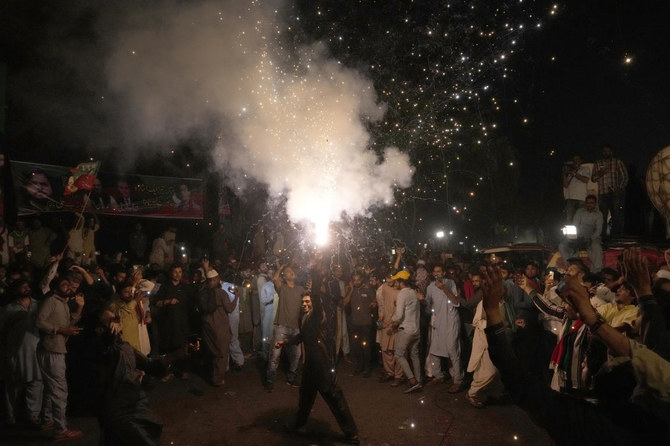
The recent chain of events began Tuesday when Khan was dragged out of a courtroom and arrested in the capital of Islamabad. His detention was met by violent protests by his supporters, who torched cars and buildings, including military installations. Hundreds were arrested in the aftermath.
Khan was released on Friday, but a long list of around 100 court cases, on charges ranging from fomenting violence to corruption, still stands against him. Khan said Friday that authorities only allowed him to travel when he threatened to tell the public he was being held there against his will.
Sharif on Saturday vowed to go after those involved in setting on fire the residence of the military’s corps commander in Lahore.
“The culprits including the planners, abettors and attackers” face trial in anti-terrorism courts, he told officials in Lahore. Sharif ordered the Law Ministry to increase the number of anti-terrorism courts to speed up the trials.
Khan has been in a standoff with the government that replaced him and has alleged the charges against him are politically motivated. Sharif maintains there is a “genuine corruption case” against Khan, “but the judiciary has become a stone wall protecting him.”
On the day of Khan’s arrest, protests were held at several places across the country that also witnessed violence. In Rawalpindi’s garrison city, baton-wielding protesters broke into the main gate of the military’s general headquarters.
Also, in the northwestern city of Peshawar, protesters set on fire the building of national broadcaster Radio Pakistan, which also housed the offices of state-run news wire Associated Press of Pakistan.
Interior Minister Rana Sanaullah on Saturday alleged that armed assailants were involved in the attacks on military installations and government buildings, rejecting a portrayal of the events as spontaneous protests.
Khan has a broad base of support around Pakistan. He presents himself as an outsider victimized by the military and the political dynasties that have long run the country. Opponents, meanwhile, call him a corrupt demagogue stirring his followers into violence.


![]()

Pakistan prime minister says those involved in violence of Khan detention will face terrorism trials
Short Url
https://arab.news/gsqem
Pakistan prime minister says those involved in violence of Khan detention will face terrorism trials
- Shahbaz Sharif's warnings were a sign of further escalation in the long-running showdown between the government and Khan
- The recent chain of events began Tuesday when Khan was dragged out of a courtroom and arrested in the capital of Islamabad


Latest updates


Recommended


© 2026 SAUDI RESEARCH & PUBLISHING COMPANY, All Rights Reserved And subject to Terms of Use Agreement.