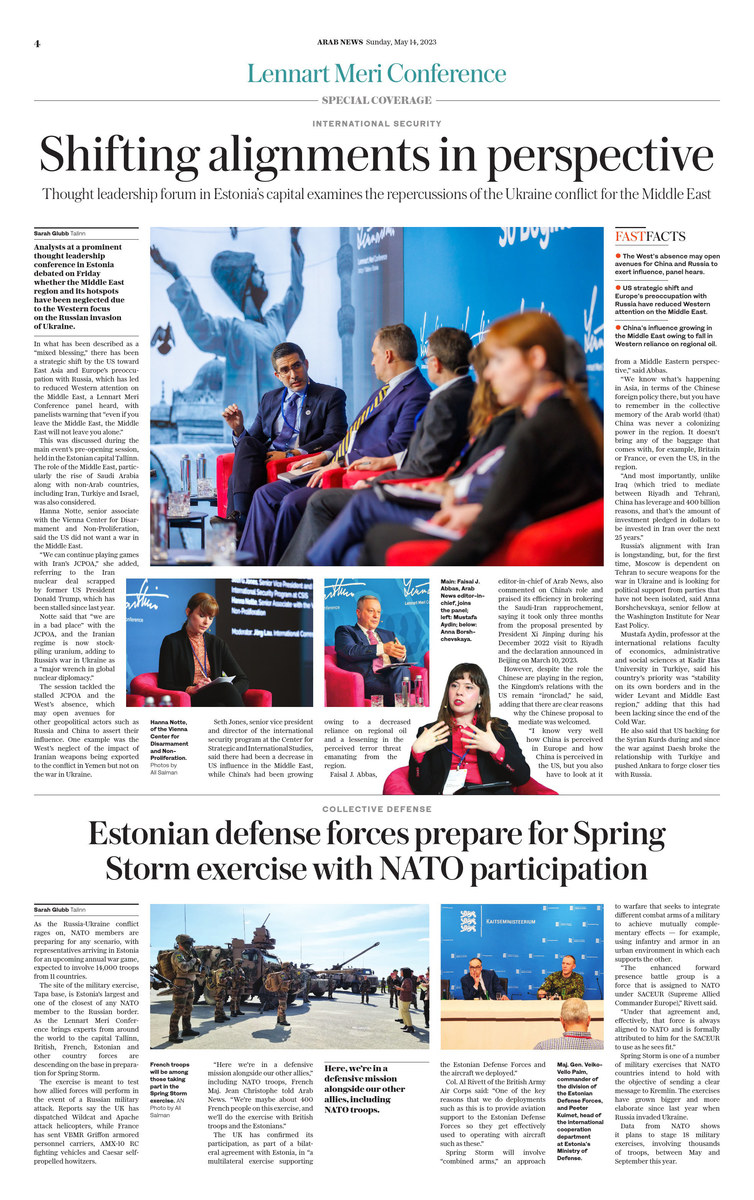
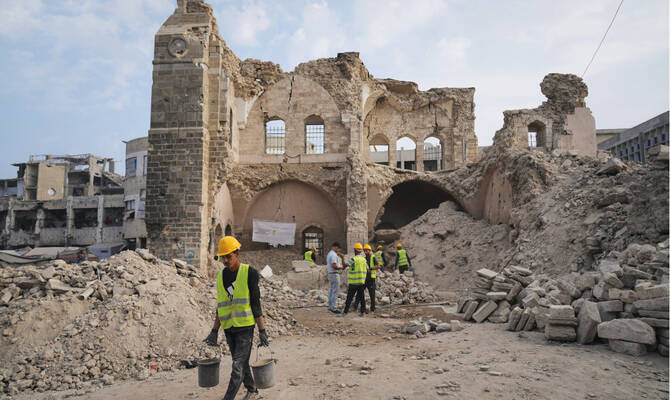
TALLINN: Analysts at a prominent thought leadership conference in Estonia debated on Friday whether the Middle East region and its hotspots have been neglected due to the Western focus on the Russian invasion of Ukraine.
In what has been described as a “mixed blessing,” there has been a strategic shift by the US toward East Asia and Europe’s preoccupation with Russia, which has led to reduced Western attention on the Middle East, a Lennart Meri Conference panel heard. With some panellists warning that “even if you leave the Middle East, the Middle East will not leave you alone.”
This was discussed during the main event’s pre-opening session at the Lennart Meri Conference, in the Estonian capital, Tallinn. The role of the Middle East, rise of Saudi Arabia along with non-Arab countries, including Iran, Turkiye and Israel, was also considered.
Hanna Notte, senior associate with the Vienna Center for Disarmament and Non-Proliferation, said that the US did not want a war in the Middle East. Notte said that “we can continue playing games with Iran’s JCPOA,” referring to the Iran nuclear deal scrapped by former US president, Donald Trump, which has been stalled since last year.
Notte said that “we are in a bad place” with the JCPOA, and the Iranian regime is now stockpiling uranium, adding to Russia’s war in Ukraine as a “major wrench in global nuclear diplomacy.”
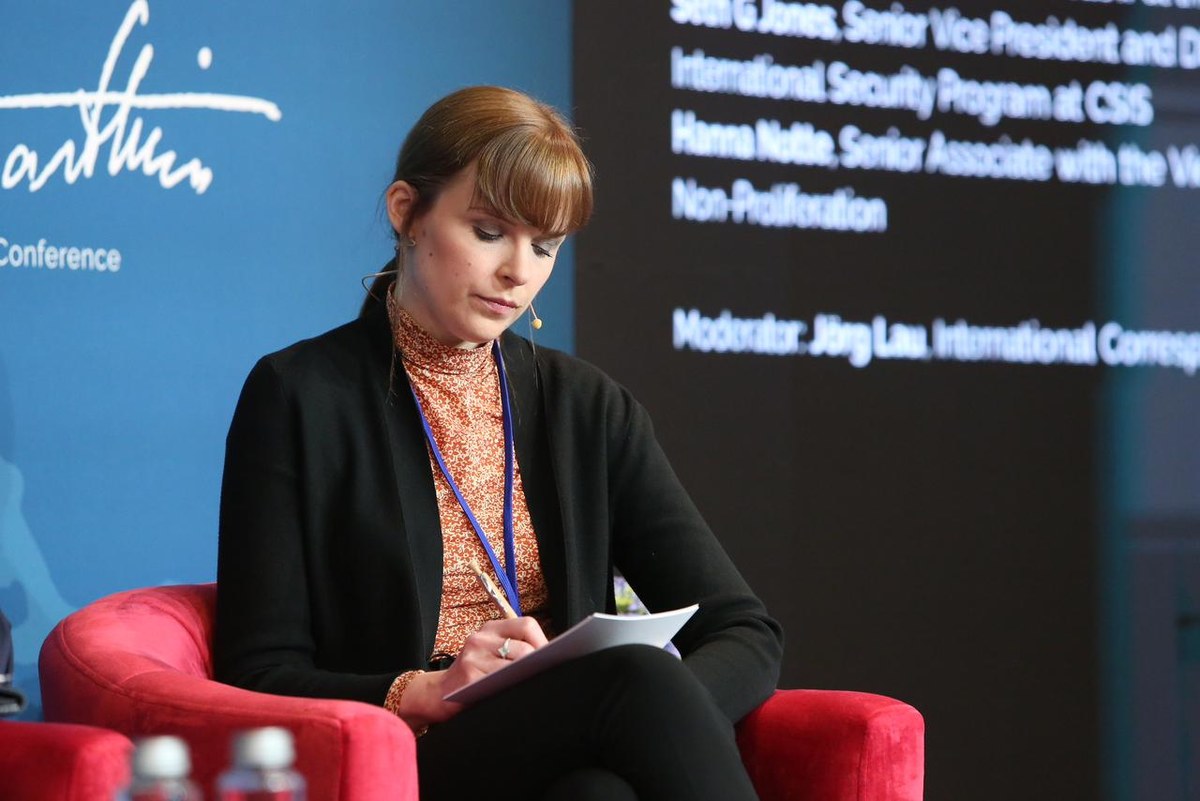
Hanna Notte, senior associate with the Vienna Center for Disarmament and Non-Proliferation
The session tackled the stalled JCPOA deal, and the West’s absence, which may open avenues for other possibly less-benign actors such as Russia and China to assert their influence. An example was their neglect of the impact of Iranian weapons being exported to the conflict in Yemen war but not on the war in Ukraine.
Seth Jones, senior vice president and director of the international security program at the Center for Strategic and International Studies, said that there had been a decrease in US influence, while China’s had been growing in the Middle East due to a decreased reliance on regional oil and a lessening in the perceived terror threat from region.
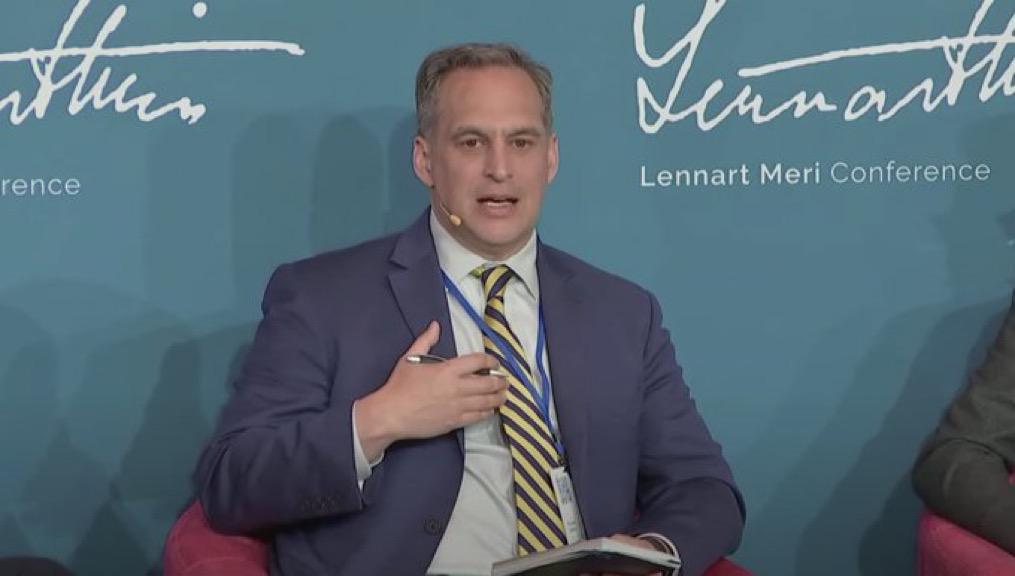
Seth Jones, senior vice president and director of the international security program at the Center for Strategic and International Studies
Editor-in-Chief of Riyadh-based Arab News, Faisal J. Abbas, also commented on China’s role and praised their efficiency in brokering the Saudi-Iran reproachment, saying it took only three months from the proposal presented by President Xi during his December 2022 visit to Riyadh and the declaration announed in Beijing on 10 March 2023.
However, despite the role the Chinese are playing in the region, the kingdom’s relations with the US remain “ironclad” – adding that there are reasons why the Chinese proposal to mediate was welcomed.
“I know very well how China is perceived in Europe and how China is perceived in the US, but you also have to look at it from a Middle Eastern perspective,” Abbas said.
“We know what’s happening in Asia, in terms of the Chinese foreign policy there, but you have to remember in the collective memory of the Arab world (that) China was never a colonizing power in the region,” Abbas said. “It doesn’t bring any of the luggage that comes with, for example, Britain or France, or even the United States in the region.
“And most importantly, unlike Iraq (who tried to mediate between Riyadh and Tehran), China has leverage and 400 billion reasons, and that’s the amount of investment pledged in dollars to be invested in iran over the next 25 years.”
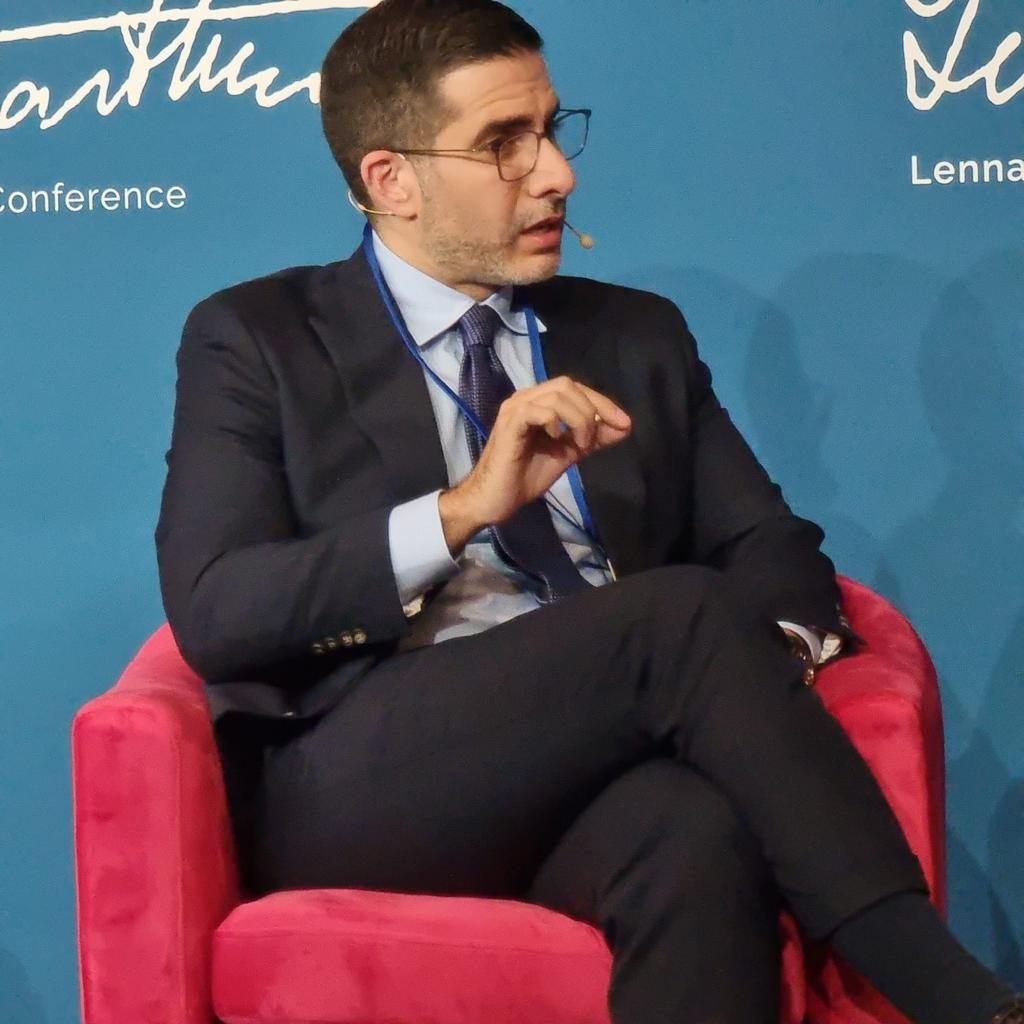
Faisal J. Abbas, editor-in-chief of Riyadh-based Arab News
Russia’s alignment with Iran is long-standing, but for the first time Moscow is dependent on Tehran to secure weapons for the war in Ukraine and is looking for political support from parties that have not been isolated, said Anna Borshchevskaya, senior fellow at the Washington Institute for Near East Policy.
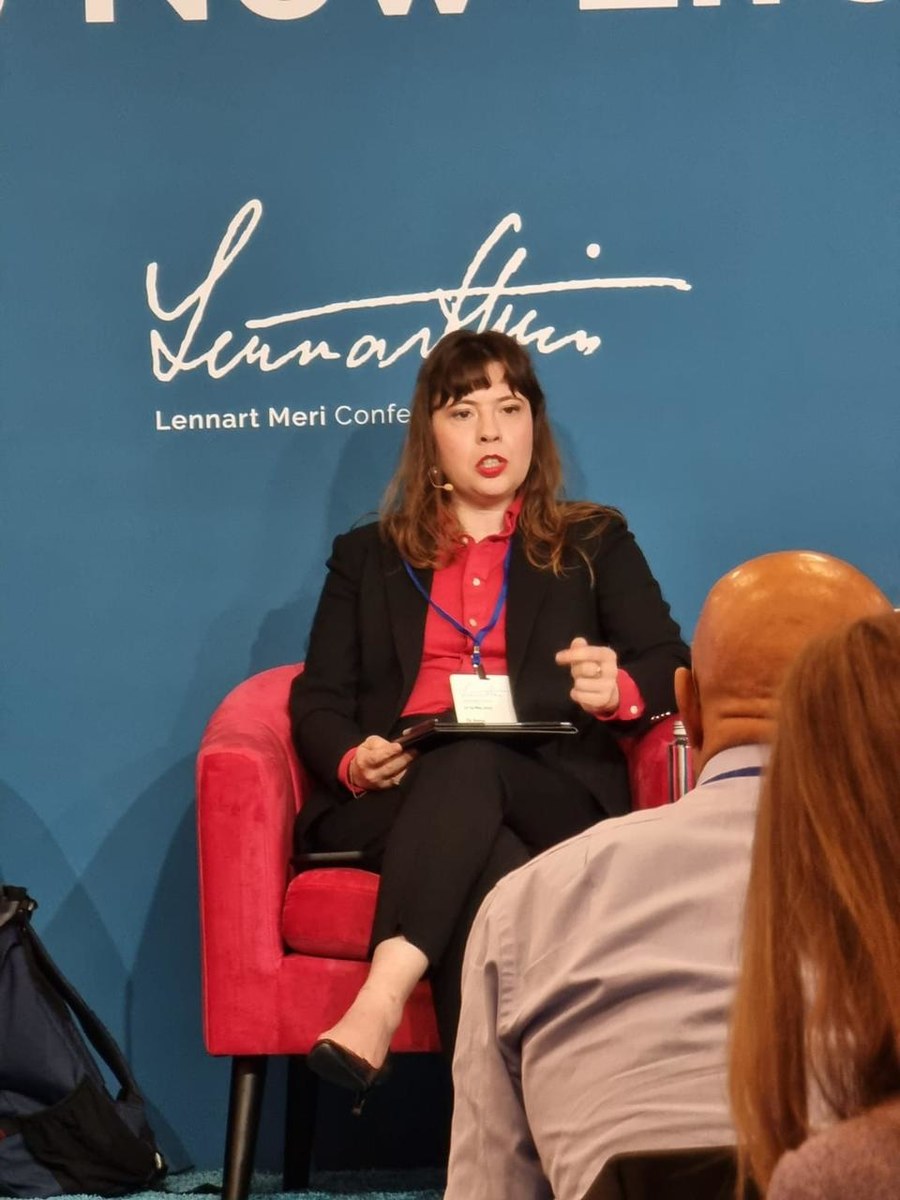
Anna Borshchevskaya, senior fellow at the Washington Institute for Near East Policy
Mustafa Aydin, professor at the international relations faculty of economics, administrative and social sciences at Kadir Has University in Turkiye, said that his country’s priority was “stability on its own borders and in the wider Levant and Middle East region,” adding that this had been lacking since the end of the Cold War.
He also said that the US backing of the Syrian Kurds broke the relationship with Turkiye and pushed Ankara to forge closer ties with Russia.
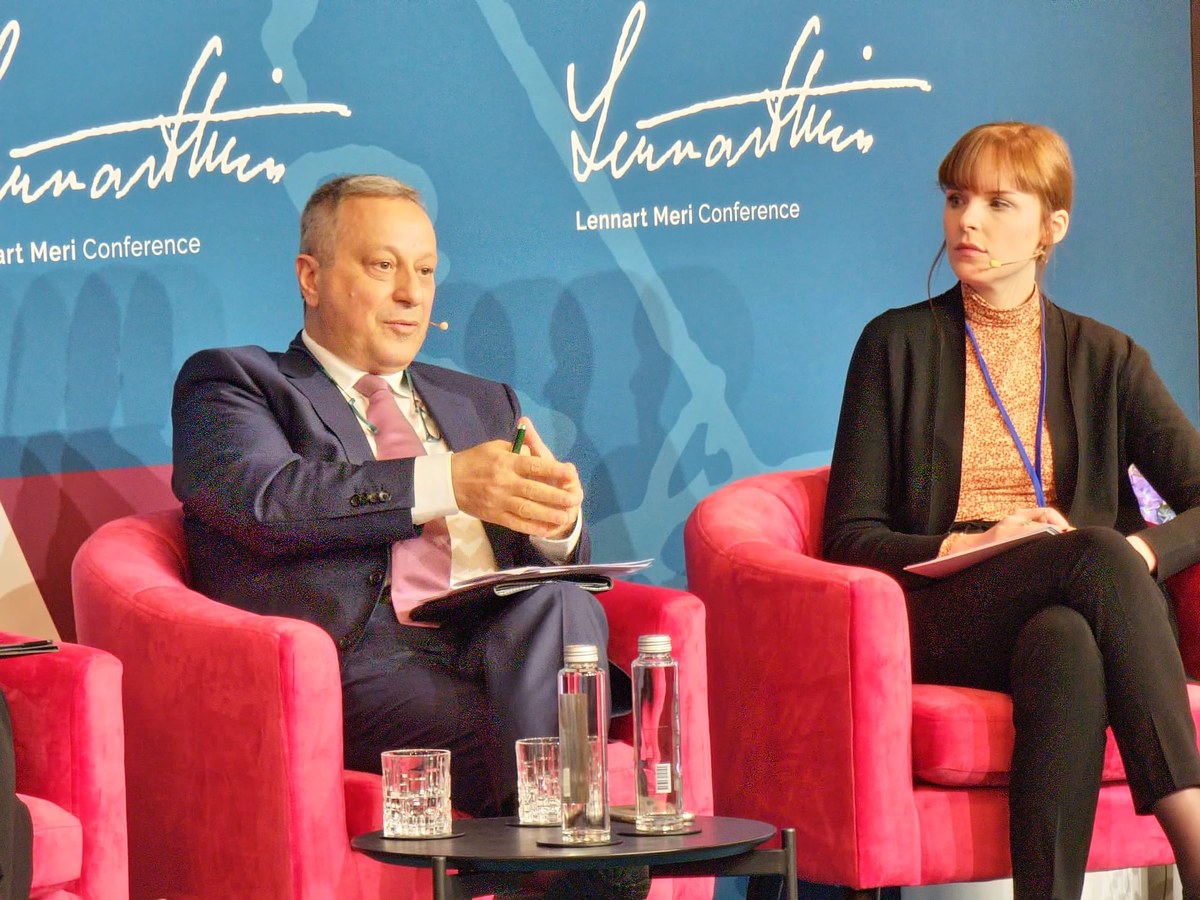
Mustafa Aydin, professor at the international relations faculty of economics