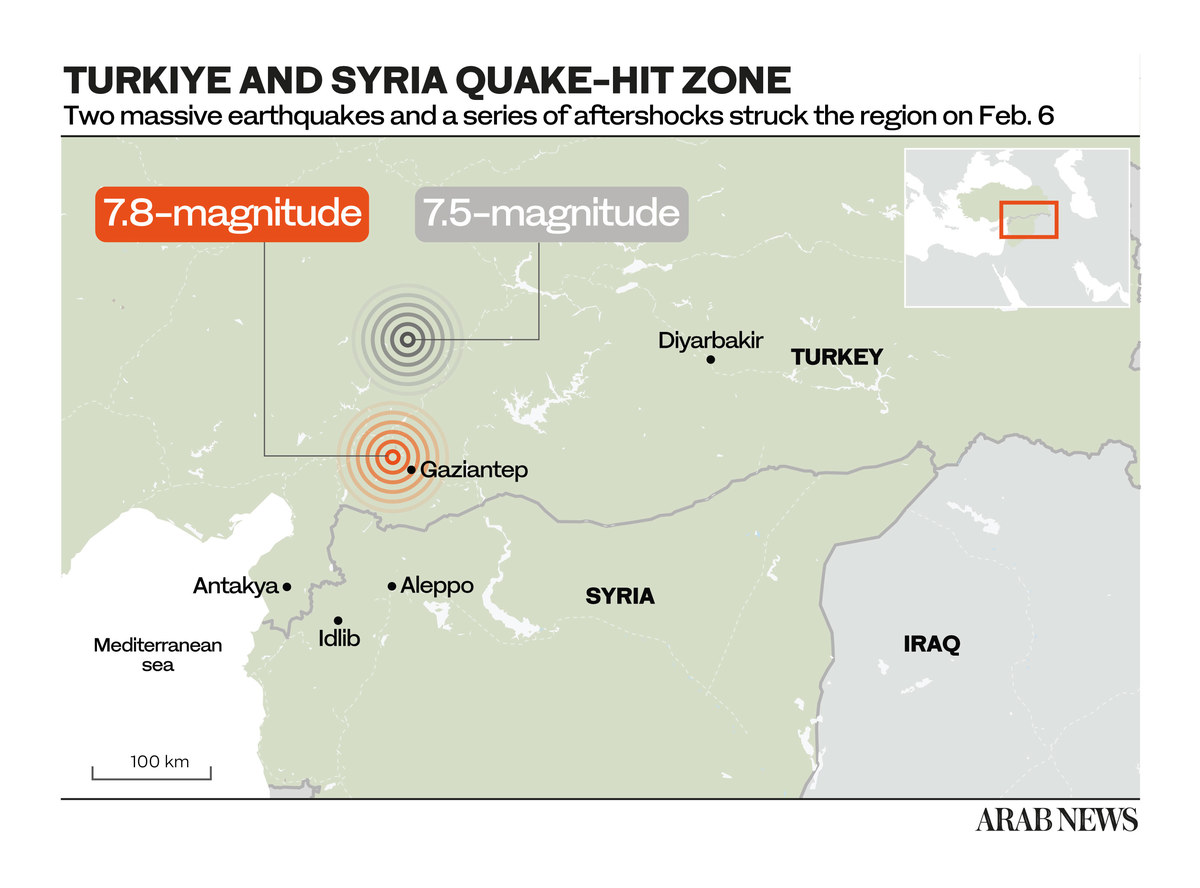
LONDON: Since two devastating earthquakes struck northwest Syria and southern Turkiye on February 6, survivors have been living in temporary shelters and unofficial camps awaiting news of resettlement.
The sheer scale of shortage of accommodation has overwhelmed NGOs and local authorities, keeping families who lost their homes in limbo. Many traumatized survivors of the disaster are still too afraid to return indoors.
When the tremors struck Syria’s western city of Aleppo in the early hours of the fateful day, “people took refuge in parks and cemeteries, reassuring their children it was no more than a prolonged picnic,” Fatima Mardini, who volunteers in the unofficial camps, told Arab News. “So long as nothing but the sky was over their heads.”
The earthquakes compounded an already dire situation in northwest Syria, where 12 years of civil war had reduced many homes and public buildings to rubble, with some households and communities displaced multiple times by the fighting.
The UN Refugee Agency, UNHCR, estimated in February that some 5.37 million people in Syria were in need of shelter assistance in the earthquakes’ aftermath.
About 1,900 buildings were destroyed in the country’s northwest and more than 8,800 others rendered unusable, according to the Global Shelter Cluster, an inter-agency standing committee that coordinates shelter responses.
The earthquakes caused an estimated $5.1 billion in direct physical damage in Syria, according to a World Bank Global Rapid Assessment report published on March 3. Residential buildings accounted for almost half of those damaged.
A recent report by the UK-based NGO Action for Humanity found that 98 percent of people now living in camps had been displaced by the earthquakes.
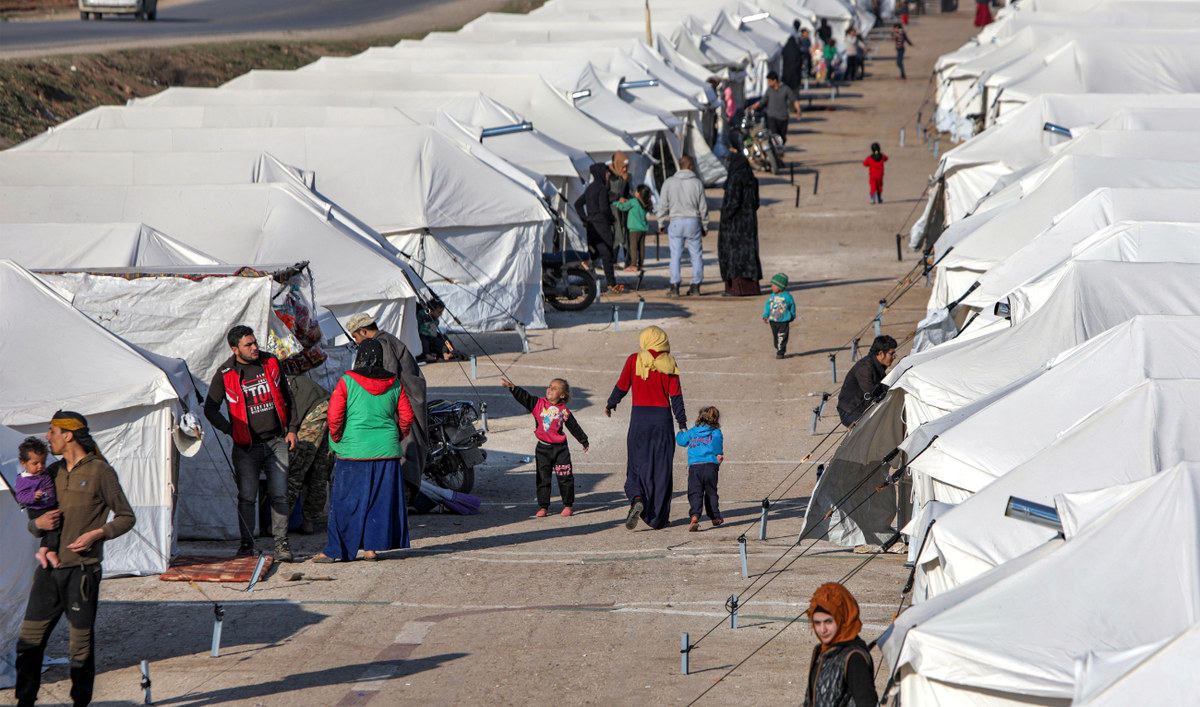
People walk along an alley between tents at a camp for the displaced erected in the aftermath of the February 6 deadly earthquake, in Jindayris, northwestern Syria on February 19, 2023. (AFP)
The report, published in March, revealed that nine out of 10 people in the northwest’s camps “had already been displaced by the conflict at least once when they were displaced by the earthquakes.”
Some 12 percent of these camp residents had been displaced once or twice, 65 percent between three to seven times, and about 23 percent forced to flee their homes eight or more times, the report added.
In rebel-controlled areas of Syria’s northwest, tents have become almost a luxury, with prices ranging from $150 to $300, and sometimes even $500, at a time when the average monthly income is $50 to $75, Yaser Alshhada, country director at SKT Welfare, told Arab News.
Meanwhile, more than four million people in Syria’s northwest continue to depend on humanitarian assistance to meet their most basic needs, according to the UN Office for the Coordination of Humanitarian Affairs, OCHA.
The majority of these temporary shelters are schools, mosques and stadiums, where overcrowding, a lack of access to clean water and a damaged sewage system have increased the risk of disease.
FASTFACTS
- More than 7,000 deaths and 10,400 injuries recorded in Syria from earthquake impact.
- 4.1 million people in northwest Syria were reliant on humanitarian aid.
- UN has distributed more than $16.56m to 500,000 affected Syrians in the northwestern regions since January.
Recently, the World Health Organization and the UN children’s fund, UNICEF, in partnership with other international NGOs and local health authorities, launched a cholera vaccination campaign in the most hard-hit areas for fear of a new outbreak.
Things were perhaps only slightly better in government-controlled areas. Aleppo-based volunteer Mardini told Arab News that she had spoken with young women who had not been able to bathe for a month since the earthquakes.
“One of them proudly told me she showered two days ago. When I asked how, she said that, although she feared another aftershock, she had quickly washed herself in the bathroom of their half-destroyed home before running back to the shelter.”
During the weeks immediately after the earthquakes, shelter conditions were catastrophic, Mohammad Al-Jaddou, a civil activist who founded the Ammerha Foundation to provide emergency response in Jableh, south of Latakia, and Aleppo, told Arab News.
“Large numbers of people were crammed into rooms,” he said, adding that the shelters in both Jableh and Aleppo were not equipped with sufficient facilities.
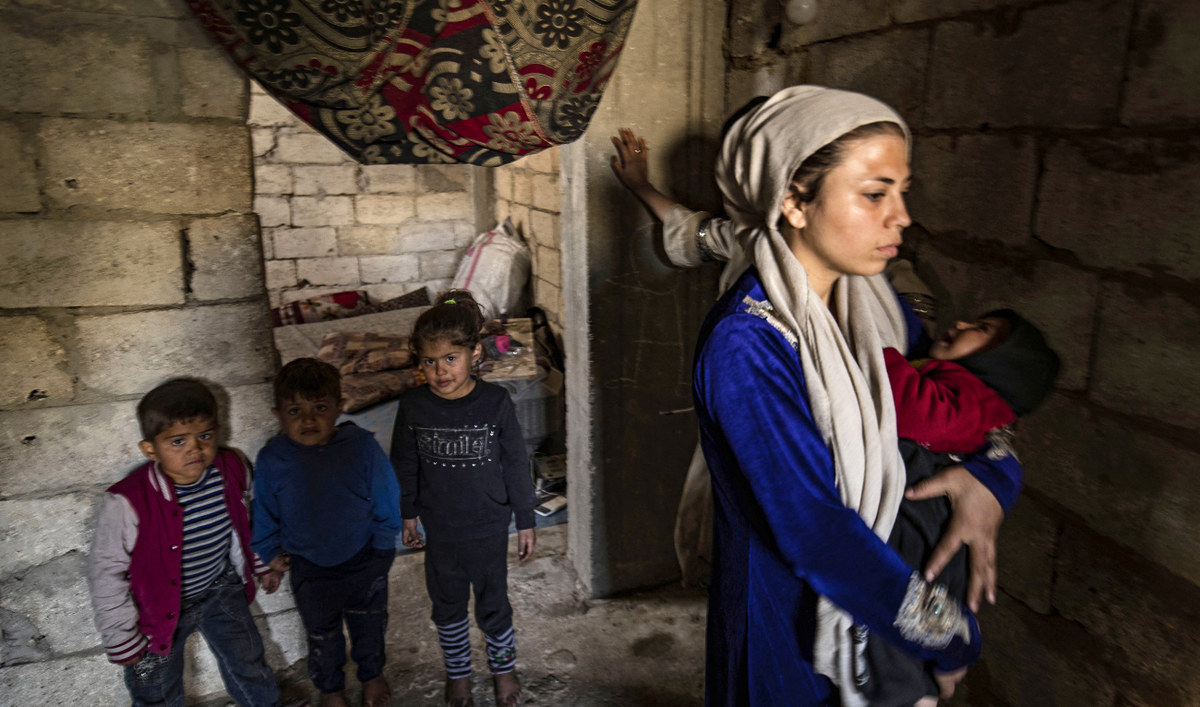
Displaced Syrians living in war-damaged buildings, are pictured in Syria’s northern city of Raqa on March 1, 2023, amid fears that the already fragile dwellings will not withstand an earthquake. (AFP)
In Jableh, Al-Jaddou’s team distributed meals and shelter kits to displaced families, many of whom, fearing aftershocks, were staying in mosques and parks despite the harsh winter weather.
Entire neighborhoods had vacated their homes, even those that were still intact, for weeks after the initial earthquakes because of the absence of utilities and the residual trauma.
“In well-serviced parts of the capital, Damascus, we merely get two hours of power every four hours at best,” Al-Jaddou said. “But things are even worse in quake-hit areas in Jableh and Aleppo.”
Three months after the earthquakes, local associations have managed to rehouse a few families, while others have chosen to move in with relatives.
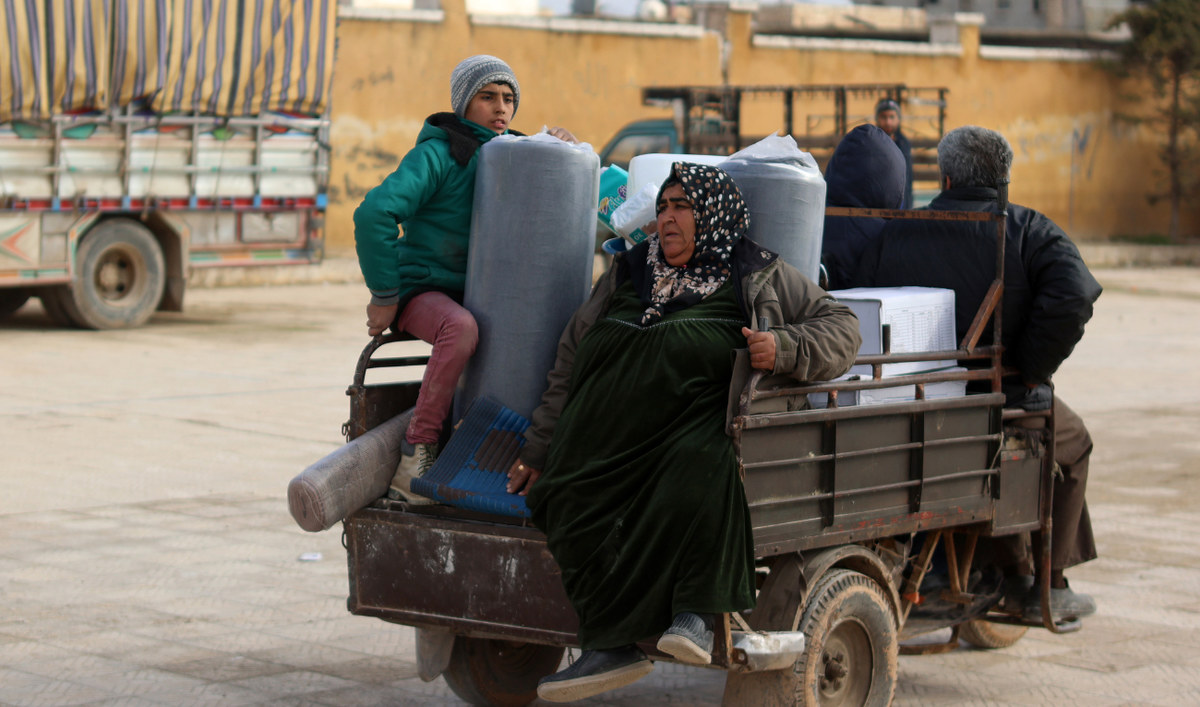
Syrians who were made homeless after the devastating earthquake hit their country, receive humanitarian aid as they settle in a makeshift camp set up in a school in the town of Atareb in the western countryside of Aleppo province, on February 10, 2023. (AFP)
However, these associations are only able to provide housing support for six months. After that, households have to find a way to pay their rent amid tight financial conditions and a collapsed economy. Many people have been left homeless.
Al-Jaddou does not see the housing situation improving in the foreseeable future. “There are buildings that have been destroyed since 2011 with no efforts to restore them,” he said.
According to Aleppo-based volunteer Mardini, in government-controlled parts of the governorate, individual initiatives have managed to rehouse about 100 families, while those who can afford rent have resorted to cheap housing in poorer neighborhoods.
The government has also provided year-long grants to a number of households, while temporarily accommodating others in unfinished apartments, Marwan Alrez, general manager of the Mart Volunteer Team, told Arab News.
However, after an initial flurry of goodwill, state assistance soon dried up. “There used to be many shelters, including schools, to accommodate families,” Alrez said. “There were many tents. This is not the case anymore.
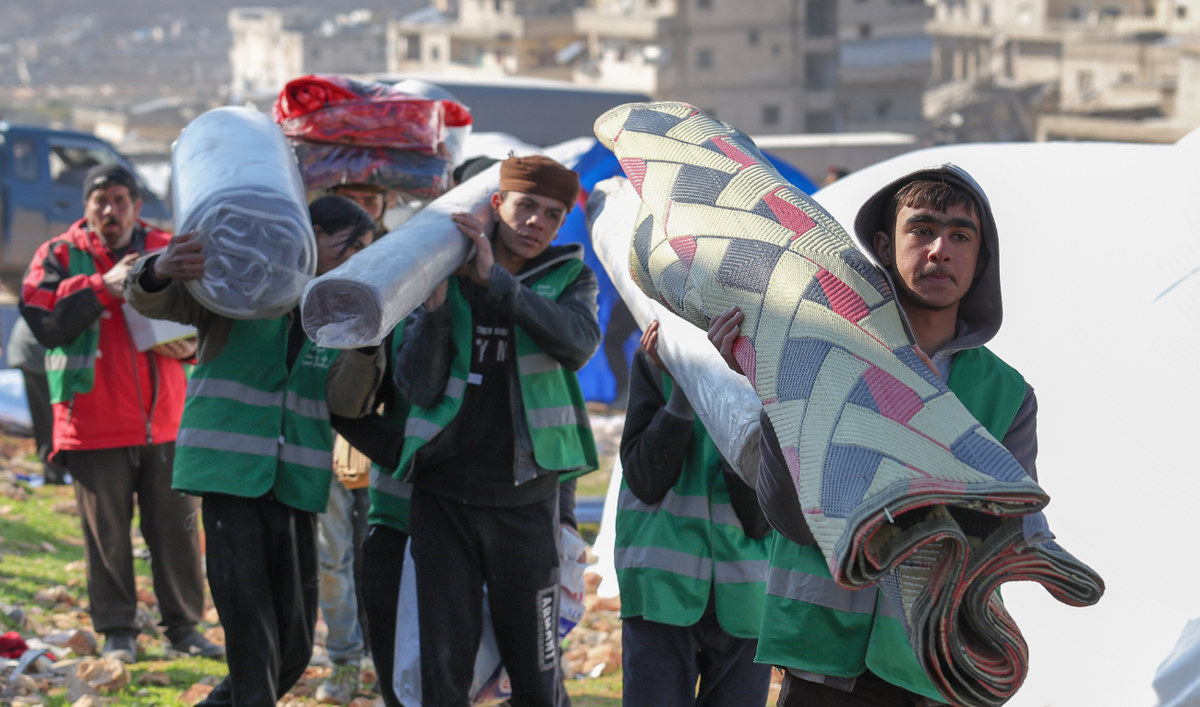
Syrians build a temporary camp, to house families made homeless by the deadly earthquake, in the town of Harim in Syria’s northwestern Idlib province on the border with Turkiye, on February 8, 2023. (AFP)
“Shelters inside Aleppo city have been suspended. There are now only two shelters outside the city in the countryside — in Jibrin and in another town.
“Two days ago, I visited a school on a campaign to support about 150 children, but I have been told that the facility was scheduled to shut soon,” even though many of the families sheltered there are unemployed and have lost everything.
On March 24, Action for Humanity opened the Massa Village in the Al-Bab district of northwest Syria to accommodate 500 displaced families who have been living in tents and informal shelters.
Despite local and international efforts to house people in the wake of the earthquakes, the scale of need remains massive. Yet funding from international donors has fallen far short.
In a statement issued on March 7, a group of 47 Syrian and international NGOs, including Action for Humanity, Hand in Hand and the Danish Refugee Council, said “funding for the humanitarian response in Syria has been lagging.”
The agencies said that the Syria Earthquake Flash Appeal was “only 52 percent pledged, while only a third of the $206 million pledged has been obligated to partners and is available for response.
“Syrian NGOs are disproportionately neglected in funding allocations despite providing the bulk of the response in Syria, whether directly or as partners of the UN and international NGOs.”