


KARACHI/RAWALPINDI: As a two-day international documentary festival concluded in Pakistan on Sunday, its organizer said the aim of the event was to bridge the gap between internationally renowned South Asian filmmakers and Pakistani audiences who rarely get to watch non-fiction films their country produces.
The third edition of ‘Chalta Phirta Doc Festival’ which aims to bring “the best of local and international documentary cinema to audiences across Pakistan” presented 14 documentary films from May 6-7 in Karachi and Rawalpindi simultaneously. The festival brought together documentary works from Pakistani and South Asian filmmakers, followed by question-and-answer sessions.
In Karachi, the event took place over the weekend at Club 432, with film enthusiasts and aspiring filmmakers attending the festival which was organized by the Documentary Association of Pakistan. The association says on its website it provides mentorship, training, and audience opportunities for filmmakers in Pakistan.
“Whether it is films made by Pakistani or South Asian filmmakers, we tell Pakistani stories but they are often consumed by audiences in the West,” Haya Fatima Iqbal, co-founder of the Documentary Association of Pakistan, told Arab News. “As a result, we have started to create a gap between local audiences and our filmmakers.”

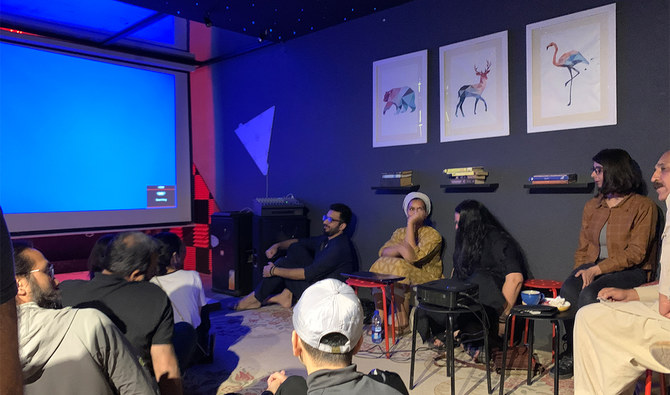
The picture taken on May 6, 2023, shows participants watching a documentary the third edition of the "Chalta Phirta Doc Festival" in Islamabad, Pakistan. (AN photo)
Iqbal is a prominent documentary filmmaker herself who is a two-time Emmy Award-winner and also co-produced ‘A Girl in the River: The Price of Forgiveness’ which also won the 2016 Academy Award in the Short Documentary category and was directed by renowned Pakistani filmmaker Sharmeen Obaid-Chinoy.
“Mainstream media doesn’t provide airtime to documentaries. Our aim was to make sure all the moving, some globally celebrated award-winning documentaries from Pakistan are brought through legal means to Pakistani audiences,” she added.

The picture taken on May 6, 2023, shows participants attending the third edition of the "Chalta Phirta Doc Festival" in Islamabad, Pakistan. (AN photo)
The first edition of the festival took place in 2019, followed by the second one in 2021, which was held online. The lineup is curation-based, according to Iqbal, as the festival organizers haven’t allowed submissions yet.
This year, the documentaries showcased at the festival included the 2023 Oscar-nominated feature documentary ‘All That Breathes’ which is the first film to win both the Sundance Grand Jury Prize (World Cinema) and Cannes’ Documentary Prize awards. Directed by Indian filmmaker Shaunak Sen, the film had its Pakistan premiere at the festival, followed by a virtual question-and-answer session with the filmmaker.
Other documentaries included ‘Home Sweet Home’ by Humad Nisar, ‘A Gregarious Species’ directed by Natasha Raheja, ‘Wraan’ directed by Shahaan Ahmed Shah and ‘Thing I Could Never Tell My Mother’ by Dhaka-based Humaira Bilkis.
The lineup also included the Oscar-shortlisted film ‘As Far As They Can Run’ directed by Iranian-American documentary maker Tanaz Eshaghian.
“Our audiences are curious as to what these filmmakers make and win awards for when the films are not accessible to them,” Iqbal said.
“For over a decade, Pakistani non-fiction media has brought so many laurels to the country. Our own people are deprived of stories our own people tell about them. Documentary films bridge the gap between local filmmakers and local audiences, particularly in Pakistan,” she added.
Documentary Association of Pakistan’s other co-founder, Anam Abbas, told Arab News at the Rawalpindi event that organizers are bringing films to cities that are usually neglected when it comes to arts programming, such as Quetta, Jamshoro, and Hyderabad.
“The films that we were making, there was nowhere to show them. There are no long-standing film festivals in Pakistan, and broadcasters don’t play documentaries. And [most films] get censored at government-run centers,” Abbas added.
Abdullah Farooq, an actor, said the documentaries were moving and that such experiences where people come together to watch influential films that can inspire change in a person.
“I think we really need this, especially in this moment in time as we have little to no art anywhere,” Farooq told Arab News.
Faraz Tallat, the founder of ‘iO The Space’ where the documentaries were screened, lavished praise on Pakistani talent.
“There is outstanding art in Pakistan, but it doesn’t really get the space it needs,” Tallat said. “Some of the films we saw tonight were absolutely brilliant and it pains me that more people are not seeing this kind of art.”


