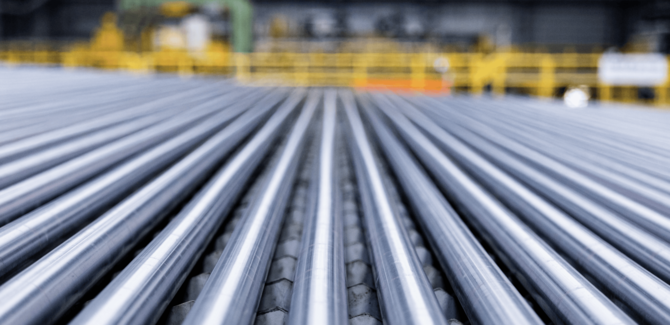

RIYADH: Saudi Steel Pipe Co. reported a net profit of SR192 million ($51.19 million) in 2025, representing a 6.08 percent increase compared to the previous year.
In a Tadawul statement, the company attributed the rise in net profit to land settlement compensation amounting to SR54 million, lower finance charges, and reduced borrowings.
Despite reporting higher net profit, the company’s overall revenue declined by 13.37 percent year on year to SR1.41 billion.
Its earnings before interest, tax, depreciation, and amortization stood at SR340 million in 2025, compared with SR388 million in the previous year.
The performance of Saudi steel companies listed on the Tadawul in 2025 reflected strong demand driven by Vision 2030 gigaprojects, even as broader market conditions remained challenging, with the Basic Materials sector declining about 11 percent over the year, according to Argaam data.
In a statement, SSP stated: “As a result of the profitability recorded and effective working capital management, SSP recorded a positive free cash flow of SR325 million in financial year 2025 (which excludes the aggregate land settlement amount), compared to a negative free cash flow of SR5 million in FY2024.”
The company’s net debt decreased to SR34 million at the end of 2025, compared with SR363 million a year earlier, despite total dividends distributed during the 2025 financial year amounting to SR200 million.
In January, SSP reported that its subsidiary, Global Pipe Co., signed a contract worth SR300 million with Subsea 7 Saudi Arabia for the supply of line pipe for an offshore redevelopment project.
The contract, signed on Jan. 28, is valid for 11 months, according to a Tadawul statement.
SSP added that no related parties are involved in the deal, and the financial impact of the contract is expected to be reflected in the fourth quarter of 2026.
While steel demand remained elevated due to large-scale developments such as Neom and ROSHN, companies across the sector faced margin pressures stemming from raw material price volatility and rising competition, industry analysis by Custom Market Insights showed.
Earlier this month, Al Yamamah Steel Industries Co. reported that its net profit for the quarter ending Dec. 31, 2025 reached SR37.61 million, marking a 719.03 percent increase compared with the same period of the previous financial year.
The company attributed the rise in net profit to higher sales volumes and increased sales value in the renewable energy and power segments.
In September, Molan Steel Co. revealed that its net loss widened to SR2.8 million in the first half of 2025, compared with a loss of SR2.5 million recorded in the same period of 2024.
Riyadh Steel Co., in September, disclosed that its net profit stood at SR2.45 million over the first six months of 2025, representing an annual decline of 3.2 percent.
Despite this, the Saudi pipes market, valued at $3.28 billion in 2024, is poised for robust growth, with a projected compound annual growth rate of 5.50 percent from 2025 to 2034, reaching $5.61 billion by the end of the forecast period, according to Research and Markets.
The growth is primarily driven by increasing demand for insulated and durable pipes, largely due to the expansion of district cooling systems in urban developments, creating opportunities for suppliers of specialized pipe materials and technologies.