

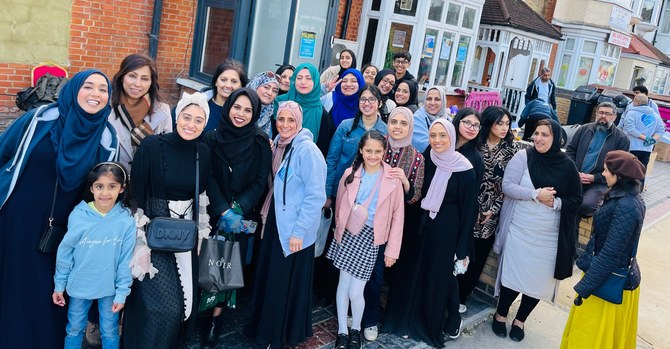

LONDON: A campaign launched by children in the British capital, London, to fundraise while fasting during the Muslim holy month of Ramadan has concluded, raising £34,000 ($42,000), organizers said.
The Ramadan Kids initiative, which was launched three years ago, had chosen this year to raise funds for orphans and children of the devastating Turkiye-Syria earthquakes that struck in February, killing over 59,000 people.
“This year we (did) a sale where all the restaurants that we’ve cooked with for the past two years, they are sponsoring us (and) giving us food to sell for charity,” Zaavier Khan told Arab News recently.
The 12-year-old began the campaign on his own in 2021 in east London to raise $5,000 for food parcels for UK-based charity Human Appeal and create awareness of food poverty in the UK. The following year he was joined by a 15-member squad to raise money for children’s mental health affected by the COVID-19 pandemic.
“Last year, we were going to different restaurants while fasting and cooking to raise money and we had trips and workshops for the children, which provided them with a good fun time,” Khan said.
Nine-year-old Muhammad Zidane said it was his second year participating in the Ramadan Kids campaign and he was eager to help the children and families suffering in Turkiye and Syria.
“I think I’ve made a lot of money because people have given money and then we’ve sold all the sweets, the khujools (dates), and everything. So they’re all gone,” Zidane said.
Aiza Khoda, 8, who was taking part in the campaign for the first time, said she was no stranger to charity work as her family was heavily involved.
“I feel really happy that I’m part of it because when I saw that when we send the money to the orphanages, I think they’ll feel really happy because they’re going to get food and nice things to do,” she said.
“Some kids have lost their parents, and some of them have lost their whole family and some haven’t even got anyone to go to,” Khoda added.
She said that she would like to see more children join the campaign so they can raise more money for what they will be doing next year.
Twelve-year-old Zahra Patel, the eldest in the group, was also taking part for the second year, and said the situation in Turkiye and Syria was “quite sad” and it felt good to raise money to help them.
“I’d like for more people to know about it, for more kids to get involved in helping in the charity, and I’d like for it to be a more famous thing,” she added.
Alayna, Khan’s younger sister, said she enjoyed selling food, sweets, cakes and burgers to raise money for those who lost their parents, grandparents and siblings.
“My brother started this Ramadan campaign when I was like four, and when my mom first took me to (do) charity, I was so surprised because I thought she could never do this much work,” said the 6-year-old. “But then she let me do it too and I started getting used to it.”
The campaign partnered with UK-based mental health and bereavement charity Supporting Humanity and teamed up with Help Yateem, a non-profit international organization dedicated to supporting the orphans.
“We’ve been working with a lot of orphanages throughout the African region, but this will be an opportunity to help Supporting Humanity to deliver their aid in Turkiye and Syria for the kids that have been affected really enormously by the recent earthquake,” said Imtiaz Patel, international project manager at Help Yateem.
He said this was only the starting point, and they would personally go to both countries to deliver the aid to two orphanages, in collaboration with the IHH Humanitarian Relief Foundation, who run them.
“There’s one orphanage, the larger orphanage — one of the largest in the entire world — which accommodates 990 orphans who have been affected by the Syrian war,” he said.
He also praised the enormous show of support from the local community, which demonstrates “how passionate they are and what the orphans actually mean to us.”
Patel’s brother, Idris, who is CEO of Supporting Humanity, said that through this project they are looking to see the different ways that the quakes have impacted the children and orphans mentally and physically.
“It is unbelievable because we’re going to be able to do work with them for mental health issues, could even be clothing or anything,” Idris, who is also Khoda’s uncle, said. “But we try to work in a way where we can try and change their life around, understand the issues and the impacts of either the war or the earthquake or anything else.”
Tahreem Noor, Zaavier and Alayna’s mother, said as usual, the concept was children raising money for children, and this year they are expected to make a difference to over 2,000 children.
“There’s so many children out there who need to become more humanitarian, and more interested in what’s going on in the world and give back — something that a lot of families don’t teach their children from a young age, they start teaching them a little later,” said Noor, who is also head of operations and communications at Supporting Humanity.
“You can see that they’ve become, they’re forming into good charitable humans who I can see in the future moving on to doing great things for the world, for charity and for humanity,” the mother of two added.
She said she believes children are becoming more aware of global issues due to accessibility, changes in social platforms and means of engagement, and more importantly, being able to identify these at a young age makes them more empathetic and compassionate.
Noor said the campaign “takes a different twist or turn every year since its inception and next year would like to propose to wider communities to take part in Ramadan Kids in their areas to contribute to causes.
“I think as long as we have Muslim children who are fasting, Ramadan Kids will go on forever and ever, and there’s no limit to how many children we can have or which city or country they can be based in,” she added.


