- Biden’s administration is seeking to defend mifepristone in the face of mounting abortion bans
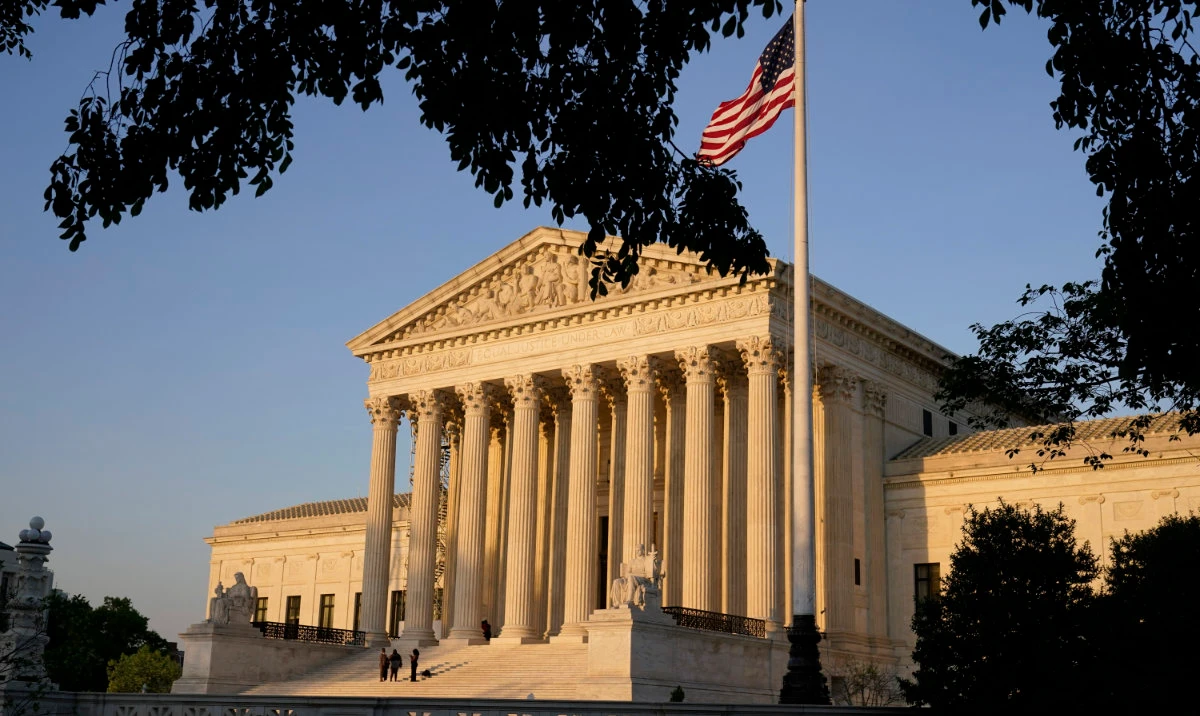
WASHINGTON: The US Supreme Court on Friday blocked new restrictions set by lower courts on a widely used abortion pill, delivering a victory to President Joe Biden’s administration as it defends broad access to the drug in the latest fierce legal battle over reproductive rights in the United States.
The justices, in a brief order, granted emergency requests by the Justice Department and the pill’s manufacturer Danco Laboratories to put on hold an April 7 preliminary injunction issued by US District Judge Matthew Kacsmaryk in Texas. The judge’s order would greatly limit the availability of mifepristone while litigation proceeds in a challenge by anti-abortion groups to its federal regulatory approval.
Biden said in a statement issued by the White House, “As a result of the Supreme Court’s stay, mifepristone remains available and approved for safe and effective use while we continue this fight in the courts.”
“The stakes could not be higher for women across America. I will continue to fight politically driven attacks on women’s health,” Biden added.
Conservative Justices Clarence Thomas and Samuel Alito publicly dissented from the decision. Alito, in a brief opinion, wrote that the administration and Danco “are not entitled to a stay because they have not shown that they are likely to suffer irreparable harm in the interim.”
The Food and Drug Administration (FDA), the US agency that signs off on the safety of food products, drugs and medical devices, approved mifepristone in 2000. The current case could undercut federal regulatory authority over drug safety.
Biden’s administration is seeking to defend mifepristone in the face of mounting abortion bans and restrictions enacted by Republican-led states since the Supreme Court in June 2022 overturned the landmark 1973 Roe v. Wade decision that had legalized the procedure nationwide. Alito authored that ruling.
“I continue to stand by FDA’s evidence-based approval of mifepristone, and my administration will continue to defend FDA’s independent, expert authority to review, approve and regulate a wide range of prescription drugs,” Biden said.
The New Orleans-based 5th US Circuit Court of Appeals on April 12 declined to block the curbs ordered by Kacsmaryk. The 5th Circuit did halt a part of Kacsmaryk’s order that would have suspended the FDA approval of the drug and effectively pull it off the market.
The Supreme Court had faced a self-imposed deadline to act by 11:59 p.m. EDT (0359 GMT on Saturday) before restrictions on access to mifepristone ordered Kacsmaryk would take effect. Alito, who handles emergency matters arising in a group of states including Texas, last week issued a temporary pause of Kacsmaryk’s injunction until Wednesday and then extended it two more days.
Mifepristone is taken with another drug called misoprostol to perform medication abortion, which accounts for more than half of all US abortions. The drug also has other uses, such as the management of miscarriages.
The administration and Danco told the justices in their filings that mifepristone might not be available for months if the restrictions were allowed to take effect.
A CHALLENGE TO THE FDA
Anti-abortion groups led by the recently formed Alliance for Hippocratic Medicine and four anti-abortion doctors sued the FDA in November. The plaintiffs contend that the agency used an unlawful process to approve the drug, which they consider to be dangerous.
The FDA has called mifepristone safe and effective as demonstrated over decades of use by millions of Americans, adding that adverse effects are exceedingly rare.
The restrictions, if they had been allowed to take effect, would have rolled back actions taken by the FDA in recent years to make it easier to access mifepristone after confirming the pill’s safety and efficacy. Those actions include in 2021 allowing it to be distributed by mail, and in 2016 approving its use up to 10 weeks of pregnancy instead of seven weeks, reducing the dosage required and cutting the number of in-person doctor visits from three to one.
Current drug labels for mifepristone would have had to be adjusted to account for the restored limits on its use in what could have been a months-long process, the Justice Department and Danco had said.
The restrictions would also have suspended the approval of the pill’s generic version made by GenBioPro Inc, which accounts for two-thirds of the mifepristone used in the United States for medication abortions. Nevada-based GenBioPro on Wednesday filed a lawsuit seeking to ensure that it can continue selling its pill amid the ongoing legal challenges.
A former Christian legal activist, Kacsmaryk had a long track record of opposing abortion before the US Senate confirmed him in 2019 to a life-tenured position as a federal judge.
Since last year’s Supreme Court decision, 12 US states have put in place outright bans while many others prohibit abortion after a certain length of pregnancy. The latest Republican-led move came in Florida, where Governor Ron DeSantis on April 13 signed a new law that bans most abortions after six weeks of pregnancy.
Kacsmaryk’s decision conflicted with an order also issued on April 7 in a separate case from Washington state directing the FDA to keep mifepristone available in 17 states and the District of Columbia.