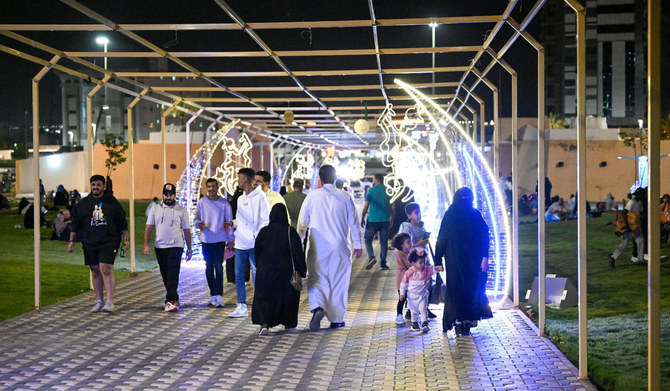

RIYADH: It is Eid afternoon, and the streets of the Kingdom are quiet as Saudis take their Eid nap in an attempt to regulate their sleeping patterns.
During Ramadan, most Muslims’ sleeping patterns change as they break fast at night and sleep after sahoor. Ramadan activities and family gatherings occurring at night also contribute to altered sleeping patterns.
Most likely, Eid celebrations will not alter the Ramadan sleeping cycle for most Saudis. On returning to work, many will experience symptoms including lethargy, mood swings, and headaches, according to Dr. Ahmed Salem Bahammam, a consultant specializing in sleep medicine. It is a fact that irregular sleeping patterns and/or late nights can affect our health.
“The metabolic system, circulatory system, and immune system are all linked with sleeping patterns and biological clocks,” Dr. Bahammam explained. “A poor sleeping pattern results in increased blood pressure, poor heart functions, increased appetite, and weight gain.”
During Ramadan, Saudis sleep less, particularly those going to school or work, as they tend to stay awake all night and sleep after sahoor.
Luckily there are ways to help regulate one’s sleeping patterns during Eid ahead of the return to work, including readjusting the sleeping schedule, and avoiding heavy meals.
Dr. Ahmed Salem Bahammam, Consultant specializing in sleep medicine
“When we did a systematic review of all of the studies published related to delayed sleep time and irregular sleeping patterns, we found that most people lose about an hour of sleep per night, on average, during Ramadan compared to Shaban (the previous month),” said Dr. Bahammam. “And we found there is severe disruption to most people’s biological clock, in the sense that nights become days and days become nights.”
In terms of a person’s weight, he added, the amount of sleep one gets is as important as dieting and exercising.
“Normally the body tries to burn fat to lose weight, and when the biological clock is (disrupted), the burning of fat is disturbed and the body starts to consume more carbohydrates, which increases insulin levels,” said Dr. Bahammam. “Insulin is a building hormone, and it leads to weight gain, fat storage in the body, fat storage in the liver, and an increase in the level of sugar.”
Most Saudis find it easy to delay their sleeping time at the start of Ramadan, but much harder to readjust it at Eid, Dr. Bahammam claimed.
“If you travel west — let’s say from Riyadh to Los Angeles — you will not suffer like you would if you travel from Los Angeles to Riyadh,” he said, explaining that we are less able to sleep earlier than our normal bedtime than we are to delay that time.
Luckily there are ways to help regulate one’s sleeping patterns during Eid ahead of the return to work, he explained, including readjusting the sleeping schedule, avoiding heavy meals, and going outside during the daytime as “natural light can help adjust our biological clock.”
He added: “Photoreceptors in the retina of the eye are responsible for receiving light, and when photoreceptors receive light during the day, (it helps) our bodies differentiate between daytime and nighttime.”