
PESHAWAR: Last week, Salahuddin Khan traveled over 160 kilometers from Lower Dir to Charsadda city to buy a special methai, or sweet, that is one of the most popular Eid treats in northwestern Pakistan: Rajjar Methai.
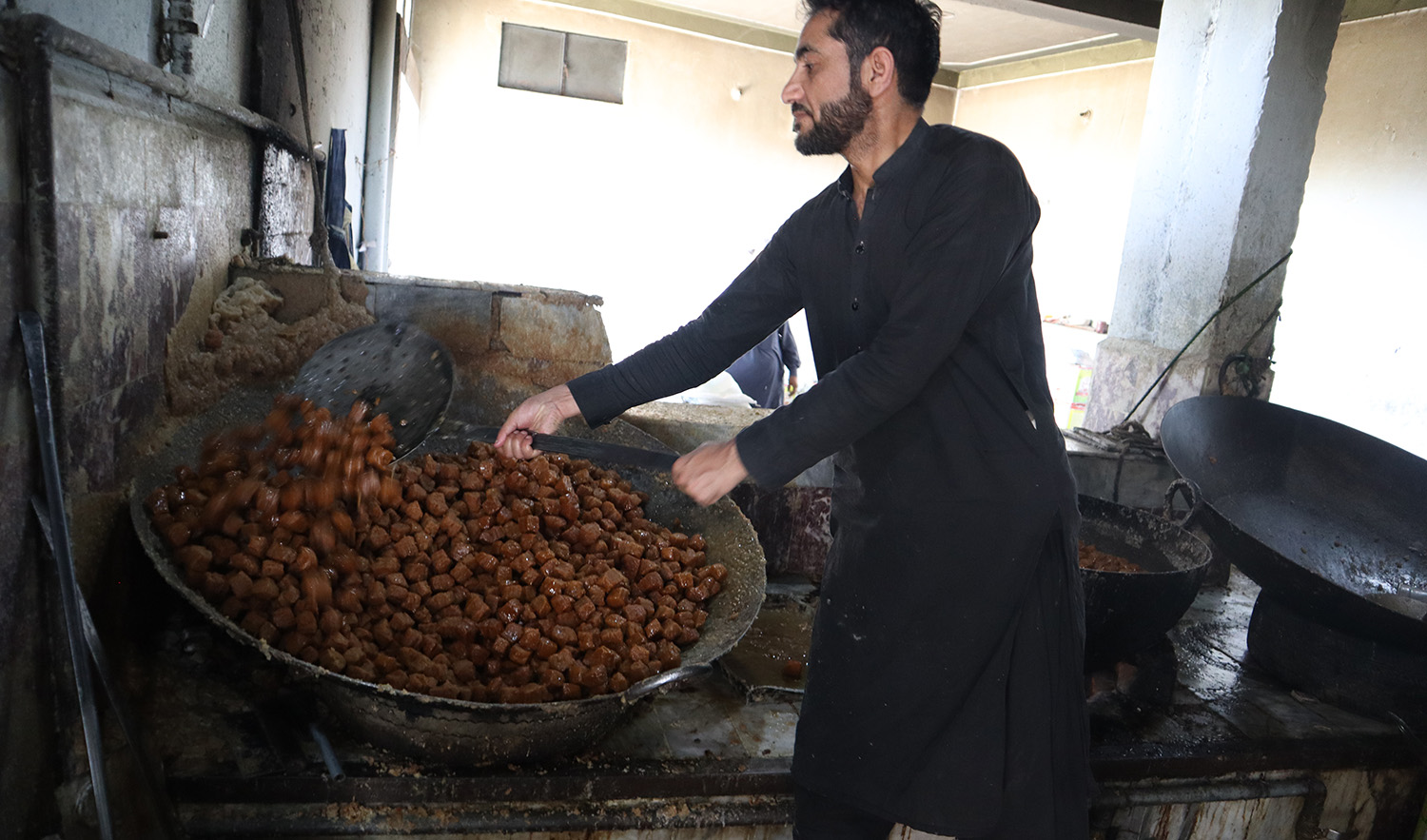
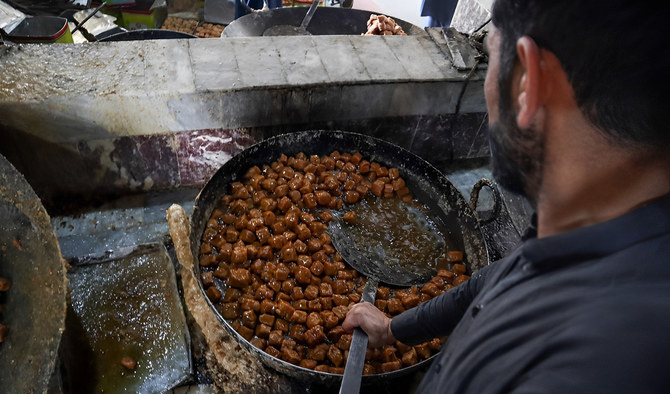
Sohail Khan takes the hot Rajjar Methai mixture and puts in a large pot for it to cool down before sending for packing in Charsadda, Pakistan on April 15, 2023. (AN photo)
The crisp, golden-brown sweetmeat made of jaggery, refined wheat flour and baking soda is named after the historic Rajjar Bazaar, which lies a kilometer north of Charsadda city. The majority of the businesses in the Bazaar, including of sweets, used to be owned by Hindus before the partition of British India, when millions of Hindus migrated to East Punjab.
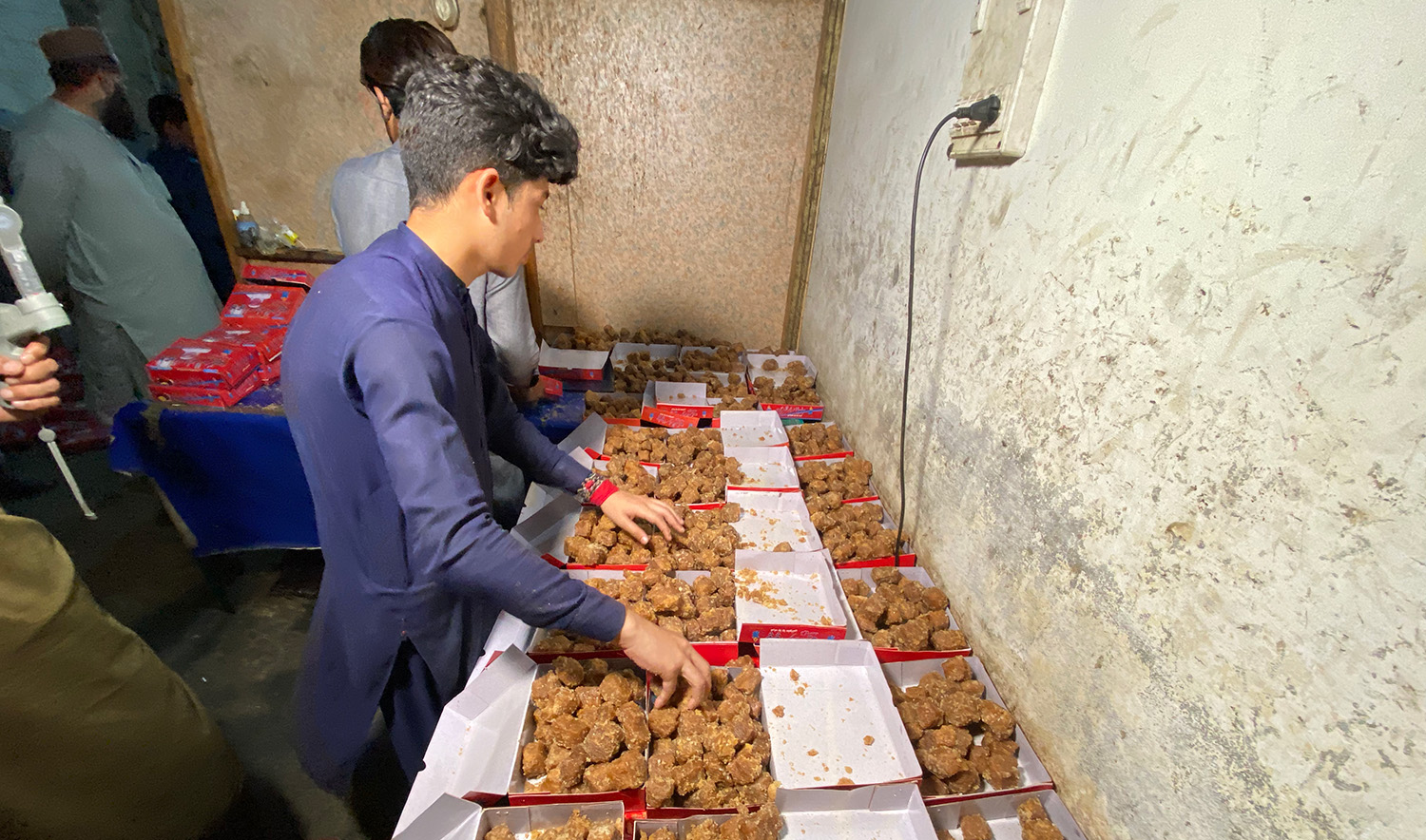
A worker is busy filling boxes with Rajjar Methai in Charsadda, Pakistan on April 15, 2023. (AN photo)
Today, thousands of customers show up to the market in the run up to Eid to buy the traditional sweets for their own celebrations, or to present as gifts to friends and relatives. So popular is the methai in other parts of the northwestern Khyber Pakhtunkhwa province that many travel far and wide to buy it and sell onwards in other cities.
“I have come from Timergara for this methai,” Khan told Arab News outside the "Chacha Israr-ud-Din Mithai" shop,’ the oldest Rajjar Methai shop in the Bazaar, established in 1930 and affectionately referred to as the "asli," or original, sweet shop in the market.
“We come every year. We give them an order of around 300 to 400 kilograms of methai 2-3 days before we are coming to pick it up.”
“We take it to sell onwards. We also take orders from friends,” he added. “We take it because it doesn’t go bad for 10 to 15 days. It remains the same as it is when carried from here.”

Sohail Khan soaks Rajjar Methai dough in sugar syrup at his shop in Charsadda, Pakistan on April 15, 2023. (AN photo)
A special baking process gives the methai its unique flavor and longevity.
The first step involves kneading a mixture of refined wheat flour, baking soda, ghee and water. The dough, divided into small, irregular shapes that resemble jaggery, is left to dry and then baked. The final product is soaked in sugar syrup.
"We add baking soda and water while preparing the dough and no chemicals are added," said Sharaf-ud-Din, 62, the owner of 'Asli Methai Wala.’ "The more ghee that we add in the kneading process, the more ghee is absorbed in the backing process. Due to this [process], our methai is soft and cooked from inside and outside.”
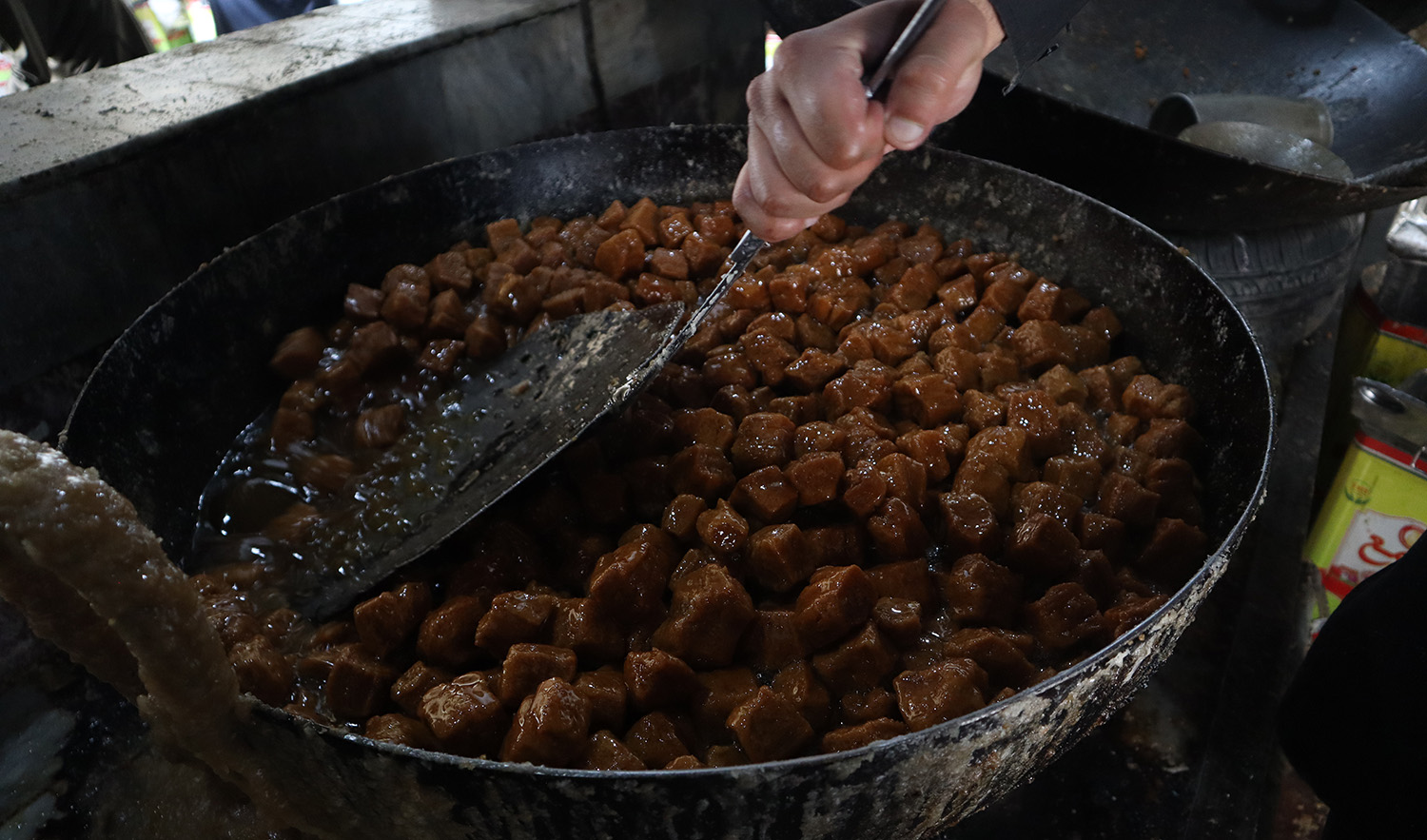
The traditional sweet is put into sugar syrup in Rajjar Bazar in Charsadda, Pakistan on April 15, 2023. (AN photo)
The process lends tenderness to the sweetmeat on the inside and slight crispness on the outside, said the shop owner whose father learnt the recipe from a Hindu confectioner who migrated to India after the partition of India in 1947.
Din’s father, Israr-ud-Din, established the shop in 1930 and the business has been run by the family since.
"In 1974, I took the business into my own hand," Din said as he supervised his staff. "You see all these workers, they all are my nephews. They all come from the [same] family."
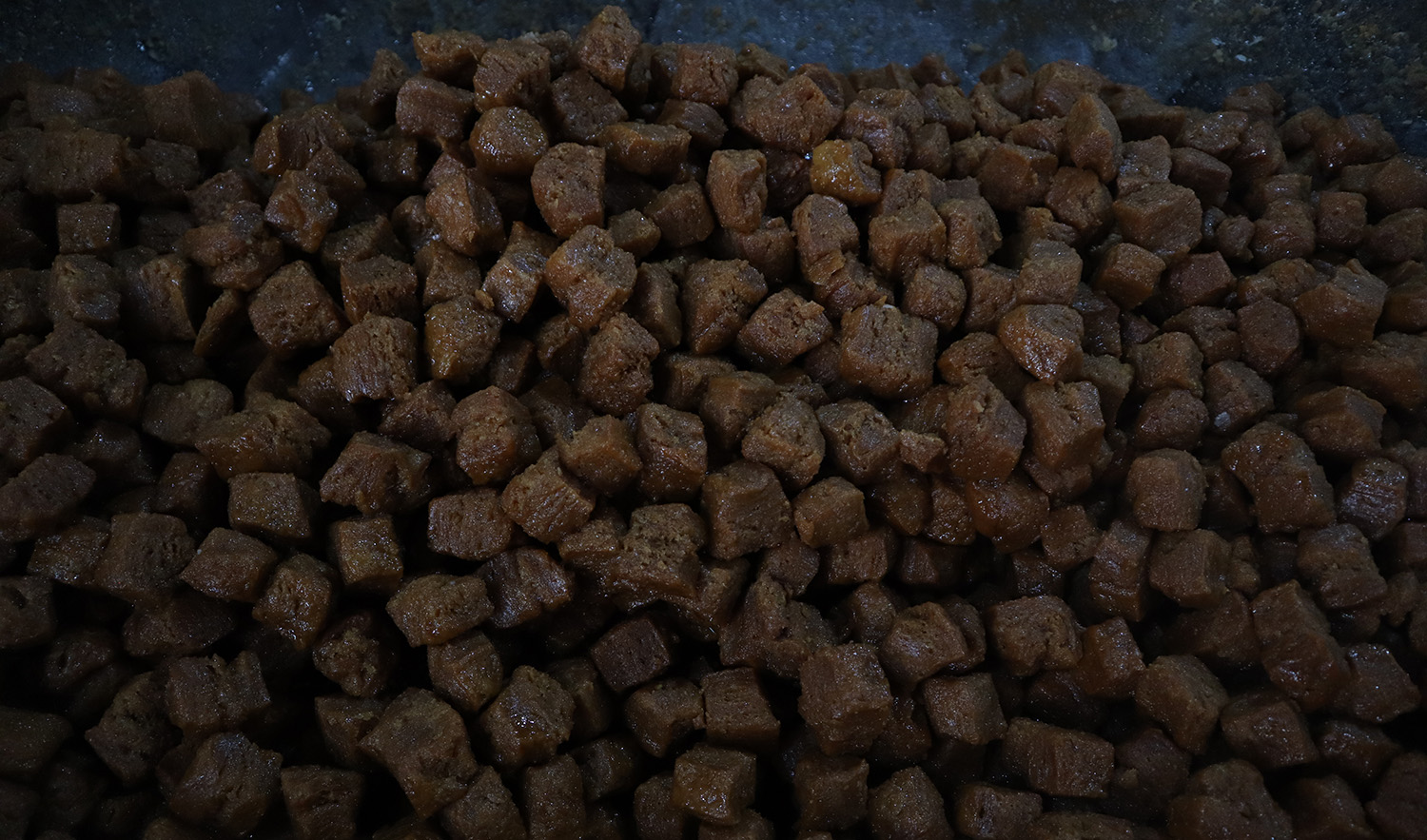
The Rajjar Methai is ready to be packed and delivered to customers waiting for it in Charsadda, Pakistan on April 15, 2023. (AN photo)
Din said methai sales spiked ahead of the three-day Eid holiday, so much so that he had to start taking orders 10 days ahead of Eid to prepare the huge orders in time for the festival that marks the end of Ramadan.
A kilogram of the traditional delicacy costs Rs450 ($1.5) but the price varies according to the variety. The type made with additional desi ghee costs up to Rs800 ($2.8) a kilogram.
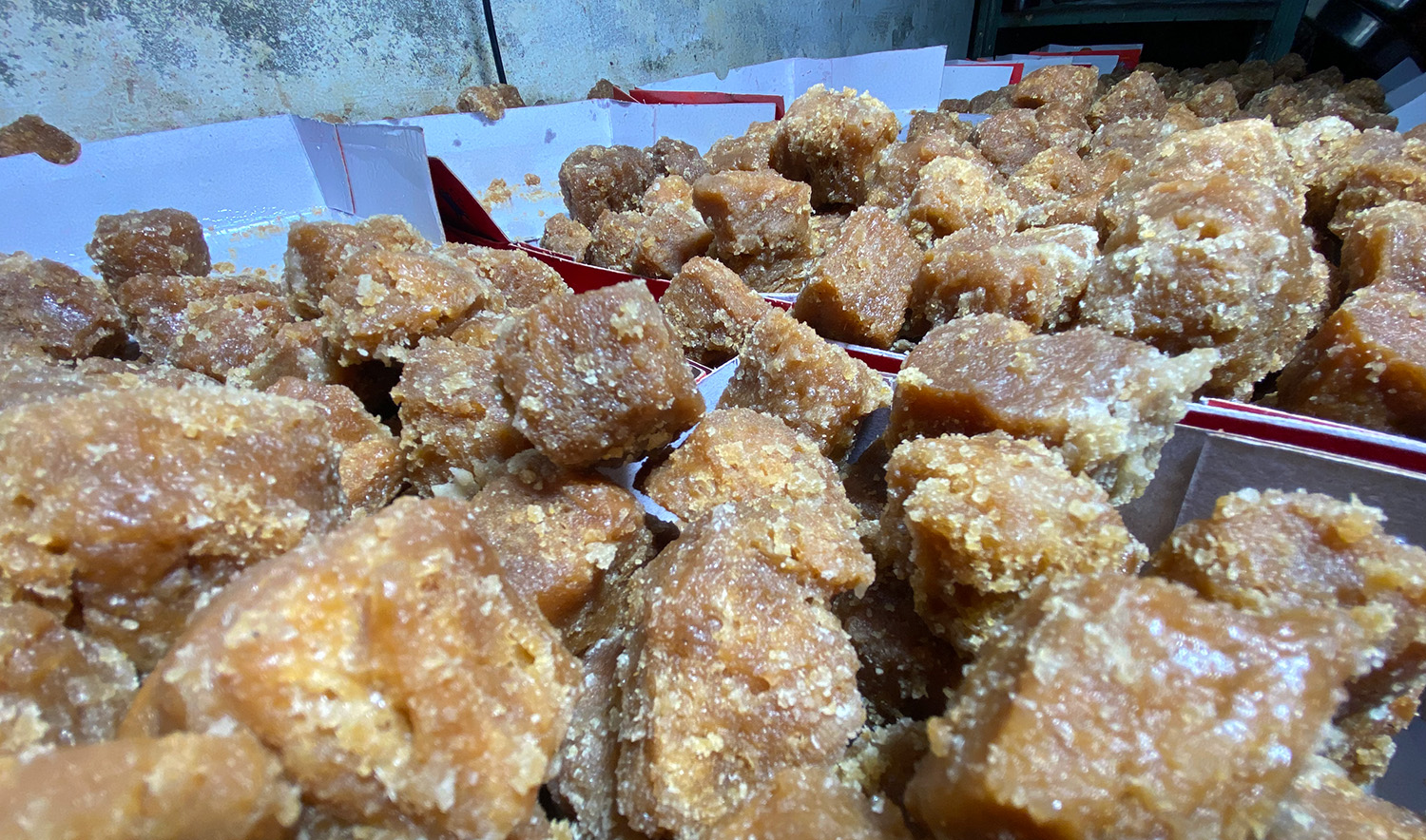
The Rajjar Methai is ready to be packed and delivered to customers waiting for it in Charsadda, Pakistan on April 15, 2023. (AN photo)
Din's business remains open round the year, but sales increased in Ramadan, he said, with orders coming from around Pakistan and as well as other countries like Saudi Arabia, where a large Pakistani expat community lives.
“In Pakistan, with God's blessing, it is eaten across Khyber Pakhtunkhwa [province],” he told Arab News. "It is supplied to Punjab and Balochistan [provinces] too."