


This time it's for real.
Many of Twitter’s high-profile users are losing the blue checks that helped verify their identity and distinguish them from impostors on the Elon Musk-owned social media platform.
After several false starts, Twitter began making good on its promise Thursday to remove the blue checks from accounts that don't pay a monthly fee to keep them. Twitter had about 300,000 verified users under the original blue-check system — many of them journalists, athletes and public figures. The checks — which used to mean the account was verified by Twitter to be who it says it is — began disappearing from these users' profiles late morning Pacific Time.
High-profile users who lost their blue checks Thursday included Beyoncé, Pope Francis, Oprah Winfrey and former President Donald Trump.
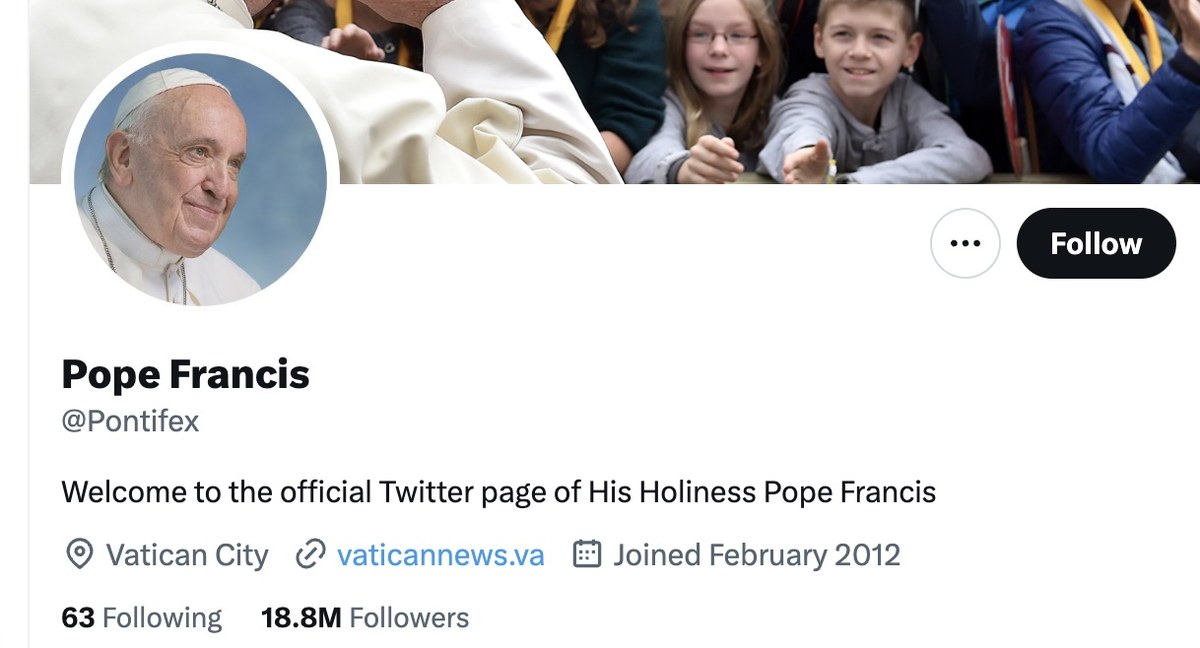
The Twitter account of Pope Francis no longer has the blue check mark.
The costs of keeping the marks range from $8 a month for individual web users to a starting price of $1,000 monthly to verify an organization, plus $50 monthly for each affiliate or employee account. Twitter does not verify the individual accounts, as was the case with the previous blue check doled out during the platform’s pre-Musk administration.
Celebrity users, from basketball star LeBron James to author Stephen King and Star Trek’s William Shatner, have balked at joining — although on Thursday, all three had blue checks indicating that the account paid for verification. It was not immediately clear whether that was the case or if Twitter made an exception for them.
King, for one, said he hadn't paid.
“My Twitter account says I’ve subscribed to Twitter Blue. I haven’t. My Twitter account says I’ve given a phone number. I haven’t,” King tweeted Thursday. “Just so you know.”
Singer Dionne Warwick tweeted earlier in the week that the site's verification system “is an absolute mess.”
“The way Twitter is going anyone could be me now," Warwick said. She had earlier vowed not to pay for Twitter Blue, saying the monthly fee “could (and will) be going toward my extra hot lattes.”
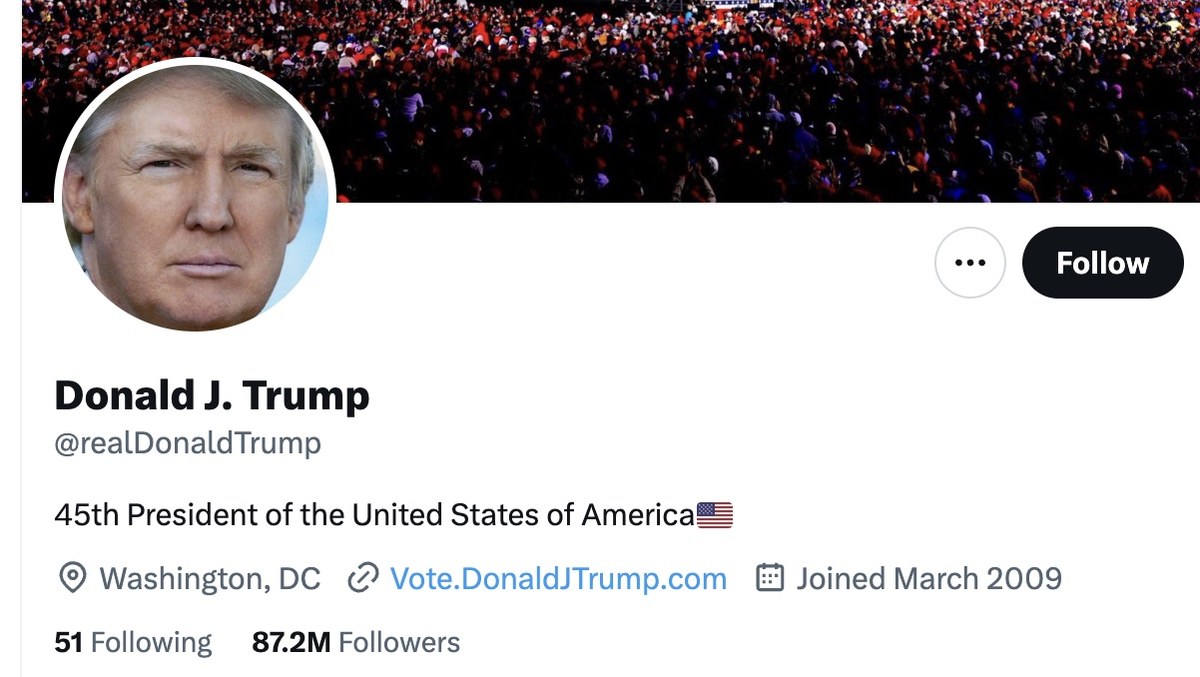
Donald Trump's account on Twitter after Elon Musk's crackdown.
On Thursday, Warwick lost her blue check (which is actually a white check mark in a blue background).
For users who still had a blue check Thursday, a popup message indicated that the account “is verified because they are subscribed to Twitter Blue and verified their phone number.” Verifying a phone number simply means that the person has a phone number and they verified that they have access to it — it does not confirm the person's identity.
Fewer than 5% of legacy verified accounts appear to have paid to join Twitter Blue as of Thursday, according to an analysis by Travis Brown, a Berlin-based developer of software for tracking social media.
Musk’s move has riled up some high-profile users and pleased some right-wing figures and Musk fans who thought the marks were unfair. But it is not an obvious money-maker for the social media platform that has long relied on advertising for most of its revenue.
Digital intelligence platform Similarweb analyzed how many people signed up for Twitter Blue on their desktop computers and only detected 116,000 confirmed sign-ups last month, which at $8 or $11 per month does not represent a major revenue stream. The analysis did not count accounts bought via mobile apps.
After buying Twitter for $44 billion in October, Musk has been trying to boost the struggling platform’s revenue by pushing more people to pay for a premium subscription. But his move also reflects his assertion that the blue verification marks have become an undeserved or “corrupt” status symbol for elite personalities, news reporters and others granted verification for free by Twitter’s previous leadership.
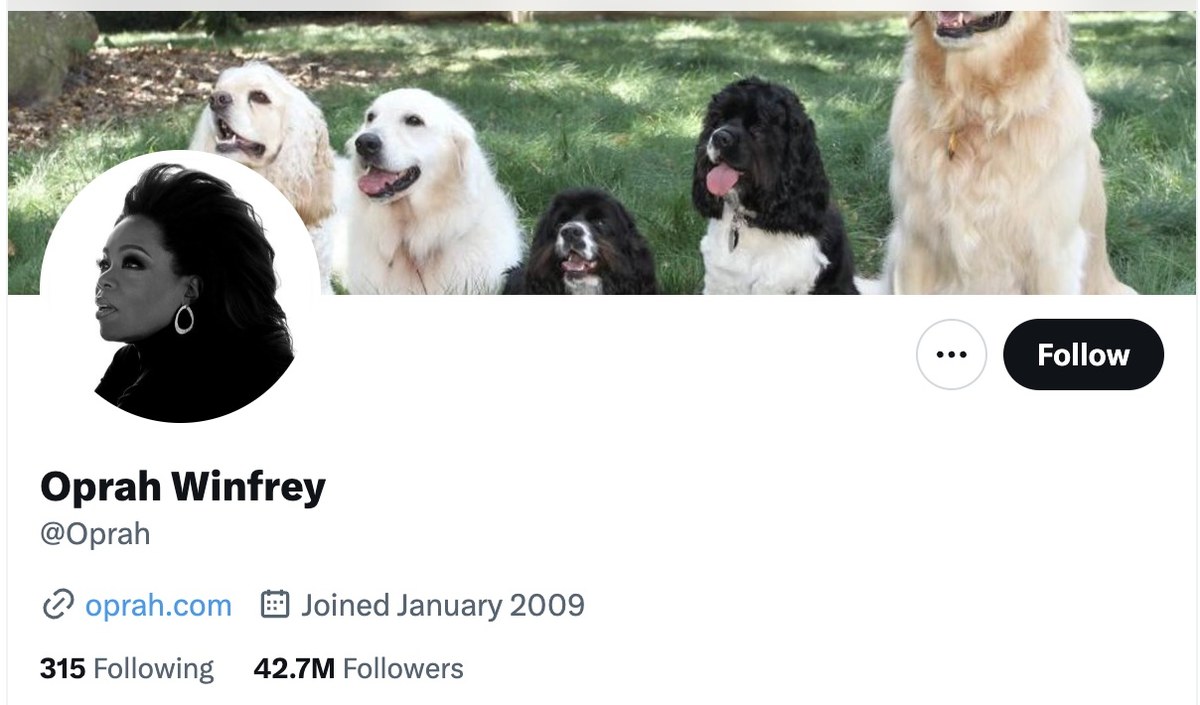
Oprah WInfrey's Twitter account without the legacy blue check.
Twitter began tagging profiles with a blue check mark starting about 14 years ago. Along with shielding celebrities from impersonators, one of the main reasons was to provide an extra tool to curb misinformation coming from accounts impersonating people. Most “legacy blue checks,” including the accounts of politicians, activists and people who suddenly find themselves in the news, as well as little-known journalists at small publications around the globe, are not household names.
One of Musk’s first product moves after taking over Twitter was to launch a service granting blue checks to anyone willing to pay $8 a month. But it was quickly inundated by impostor accounts, including those impersonating Nintendo, pharmaceutical company Eli Lilly and Musk’s businesses Tesla and SpaceX, so Twitter had to temporarily suspend the service days after its launch.
The relaunched service costs $8 a month for web users and $11 a month for users of its iPhone or Android apps. Subscribers are supposed to see fewer ads, be able to post longer videos and have their tweets featured more prominently.


