

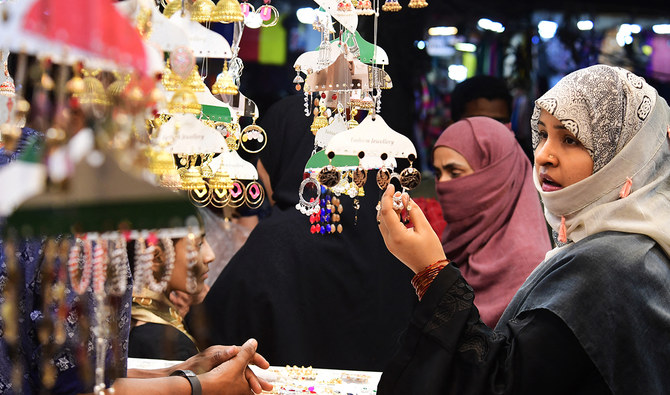

KARACHI: The festive shopping mood ahead of the Muslim holiday of Eid Al-Fitr in Pakistan has dampened due to record high inflation and a major economic downturn, with traders complaining the situation has led to a drastic drop in sales by over 40 percent this year.
Eid is usually the most inclusive holiday celebration in the country during which friends and families get together in their new attire and exchange gifts. As the festival approaches, markets are typically crowded since people like to buy a range of products, including jewelry, clothes, and shoes.
However, buyers and sellers have been experiencing a challenging season in Pakistan this year, as the country is currently undergoing an economic turmoil and experienced 35.4 percent inflation last month which was more than double on year-on-year basis.
“At the minimum, Eid sales have dropped by 40 percent this time as compared to the Eid season last year,” Kashif Chaudhry, president of Markazi Tanzeem-e-Tajran Pakistan, or Central Organization of Pakistani Traders, told Arab News on Wednesday.
“High inflation is discouraging buyers to make their purchases while maintaining stocks has also become an issue this year since many manufacturers have been unable to honor their commitments and deliver orders on time due to import restrictions,” he added.
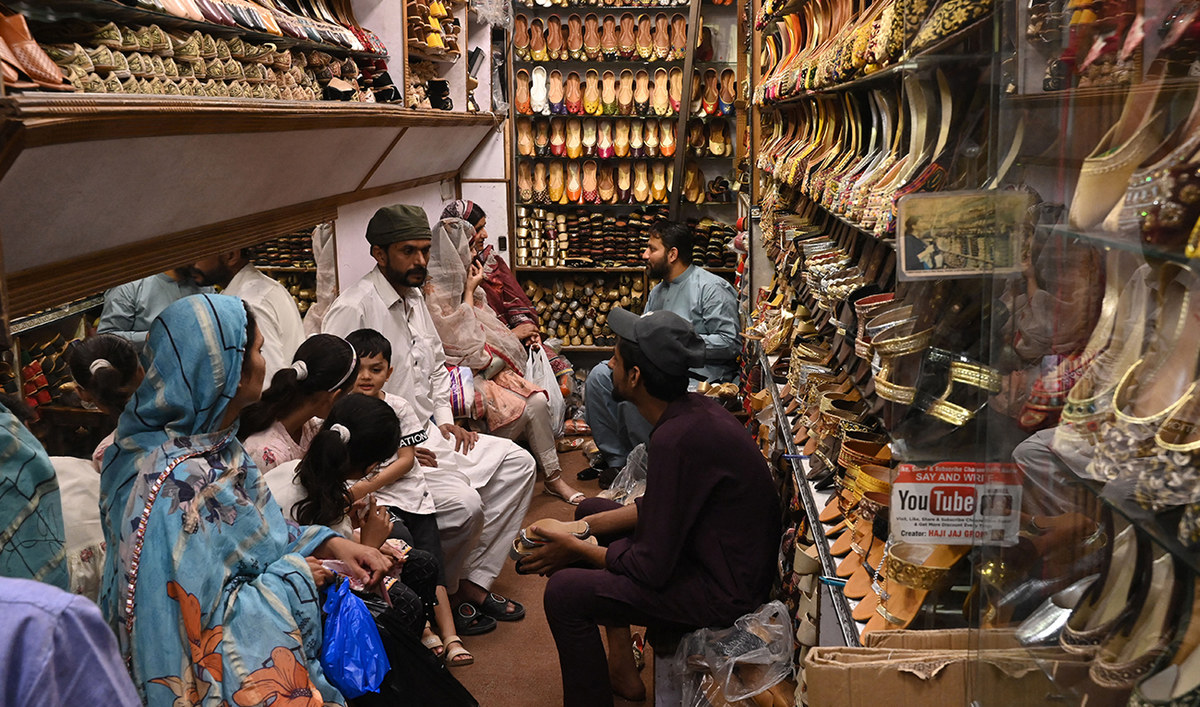
In this picture taken on April 16, 2023, people buy footwear at a store during shopping ahead of the upcoming festival of Eid al-Fitr in Lahore. (AFP/FILE)
Pakistan has restricted imports to prevent the outflow of US dollars amid depleting foreign exchange reserves that currently stand at $4 billion. The restriction has created shortage of raw materials for industrial products.
The ongoing war in Ukraine along with last year’s devastating floods and a stalled $7 billion International Monetary Fund bailout program have also exacerbated the economic crisis in the country.
Chaudhry said the people facing difficult economic circumstances were even struggling to meet their basic needs, such as food expenses and payment of utility bills, adding most of them were prioritizing purchasing of essential goods over clothing and other Eid-related items.
Atiq Mir, chairman of All Karachi Tajir Ittehad (AKTI), an umbrella organization of major business centers in the port city, agreed with Chaudhry.
“Sales are not satisfactory since the beginning of the season and the situation is extremely complex, confusing, and difficult to understand,” he told Arab News.
“Traders in major shopping centers in areas like Defense Society, Saddar, Hydery Market, and Tariq Road are complaining that their sales have dropped by more than 40 percent,” he added.
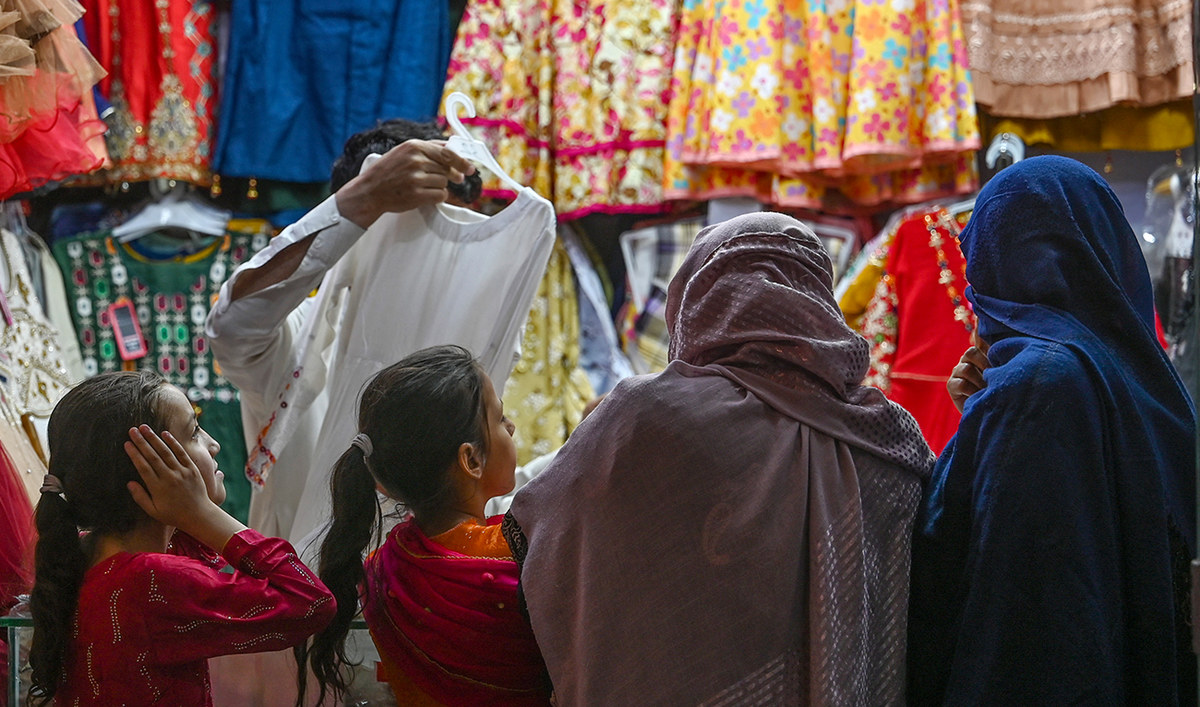
Women and children shop clothes ahead of the Eid al-Fitr, which marks the end of the holy month of Ramadan, at a market in Peshawar on April 19, 2023. (AFP)
He acknowledged that markets in Karachi were still crowded, though he maintained this was because most people were taking a leisurely trip instead of actively seeking to buy products.
“They are not genuine buyers,” Mir said. “They are window shoppers who are on entertainment or pleasure-seeking trip. For every single buyer, about four or five people can be seen roaming around the city’s markets for fun.”
Most of the people are after cheap products with the price tag of about Rs2,500, he added.
The AKTI chief estimated that in Karachi alone the value of the overall shopping would be around Rs20 billion which was lower than previous year’s Rs25 billion.
“Around 50 percent of Eid stock is still unsold,” he said, adding: “I have talked to traders and they say they are in huge trouble and worried about making payments to their workers.”
Pakistani traders said most buyers this year were young people rather than elderly males who preferred to stay away from shopping.
“Men have been sacrificing their desires in the past, but this year they are having to forgo much more due to their family priorities,” Rana Tariq Mehboob, chairman of the Chainstore Association of Pakistan (CAP), a representative body of the country’s over 200 brands sold in more than 20,000 outlets in different cities, told Arab News.
“Most of them have been making purchases for their children and families, though there has also been a decline in the shopping by women belonging to low-income brackets since the prices of goods have spiked and the disposal income is fixed or has shrunk in real terms.”
The CAP chief said the member chain stores were also facing a tough situation with 25 to 30 percent decline in their sales this season as compared to the one last year.
“There is negative growth in the sales of casual wear for men and kids since the beginning of the current fiscal year in July 2022,” Mehboob said. “The current economic crisis is the main reason because the current situation is severely hurting the buying power of most households.”
Most shopkeepers said they were facing an awkward situation amid depressed sales and were “fed up with people making rounds to enquire about prices of different products.”
“People come in large numbers to ask about the prices and then leave,” Amir Aleem, a salesperson, said. “This is the kind of routine every day as we hardly find genuine buyers.”
However, most shoppers said they preferred to remain passive because of the uncertain economic situation and were trying to save for any future emergency.
“I have to keep in mind the future expenditures as the economic situation remains uncertain and more inflation is expected obviously due to the rising dollar-rupee disparity,” said Ali Mehmood, an office worker, who was visiting a market with his family.
Another buyer, Muhammad Aslam, worried about high electricity and other utility bills, saying he was cutting down on Eid shopping for himself and would only buy for children.


