

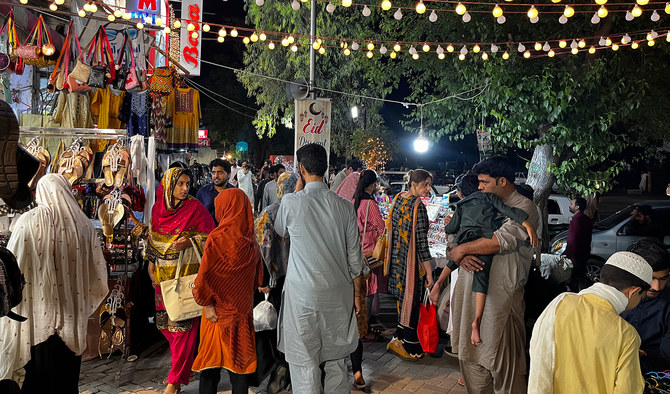

ISLAMABAD: This year’s Eid Al-Fitr holiday will not be the same for Asma Noor and her family.
Soaring prices in Pakistan have pushed her to tighten her purse strings this festive season, one of the toughest in years as households struggle to contend with soaring energy and food bills.
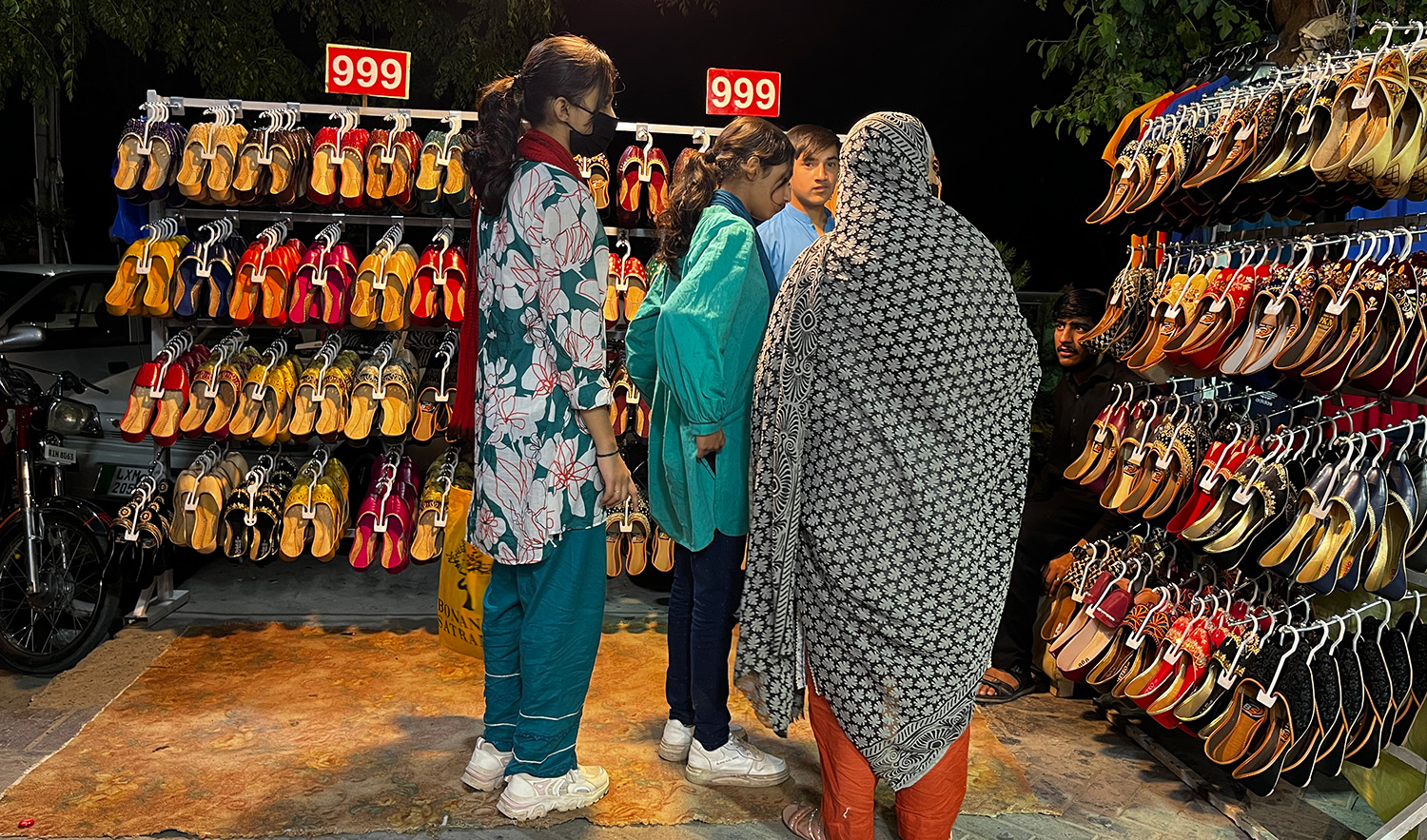
A mother and her daughters look at traditional shoes in Islamabad's Aabpara market on April 14, 2023. (AN photo by Fatimah Amjad)
Muslim majority Pakistan, home to more than 230 million people, is facing one of its worst economic crises in recent history. The South Asian nation has less than a month's worth of foreign exchange reserves and is awaiting a bailout package of $1.1 billion from the IMF that has been delayed since November over issues related to fiscal policy adjustments.
Consumer price inflation in Pakistan jumped to a record 35.37% in March from a year earlier, with at least 16 people killed in stampedes for food aid during Ramadan.
“This year, prices [of Eid-related items] have skyrocketed as compared to the last year,” Noor, a 34-year-old fashion designer, told Arab News at an upscale market in Islamabad, where she was hunting for Eid dresses for herself and her children.
“Our shopping has reduced by one third compared to last year. For example, if we used to buy five or six dresses and make dresses for kids as well, now we have cut it down to one or two dresses.”
“It’s not the same,” she added. “If people like me, who belong to the middle class, are suffering, then I can’t imagine the condition of the poor and how they are managing things these days, it just shocks me.”
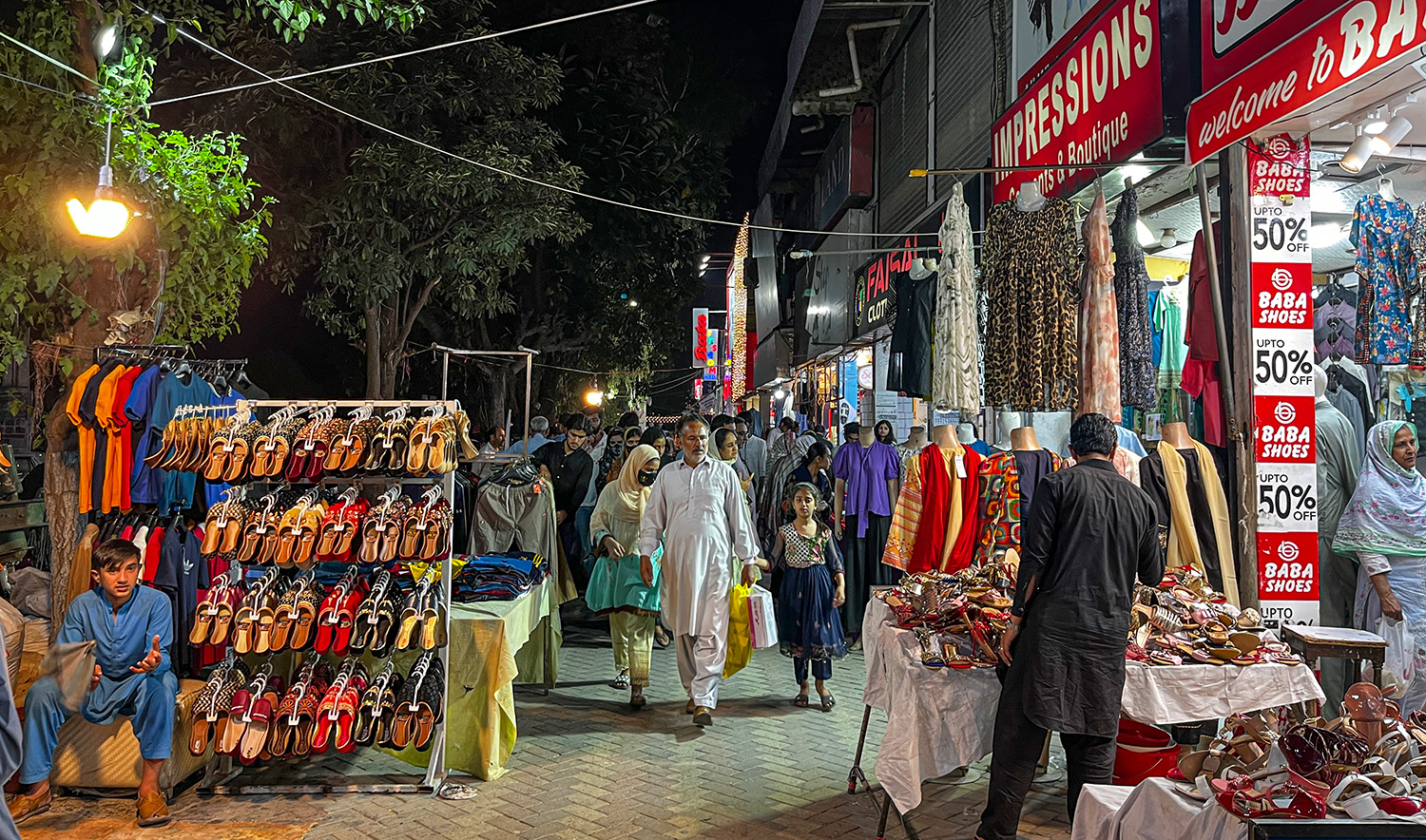
A family passes through a market ahead of the upcoming festival of Eid Al-Fitr in Islamabad, Pakistan on April 14, 2023. (AN photo by Fatimah Amjad)
Noor was among dozens of Islamabad residents Arab News spoke to earlier this month as they shopped for Eid in the capital city’s many markets. Most said soaring inflation had eroded their purchasing power and the inability to afford new clothes, shoes and other items had put a damper on their Eid celebrations.
Traditionally, Pakistanis celebrate the Eid festival by buying new clothes, shoes and jewelry and preparing sumptuous feasts for gatherings with friends and family where they exchange sweets and distribute cash, known as 'Eidi' in Urdu, among children.
This Eid is decidedly different.
“Whatever is available has an exorbitant price tag attached to it, which we cannot buy,” sixty-two-year-old Parween Bibi, a widow and mother of four, told Arab News at Islamabad’s Aabpara Market.
“Earlier, we used to buy silk, used to buy good clothes, but now, we are buying lawn clothes or whatever we can find that is less expensive.”
Small business owners are also feeling the sting of inflation this Eid.
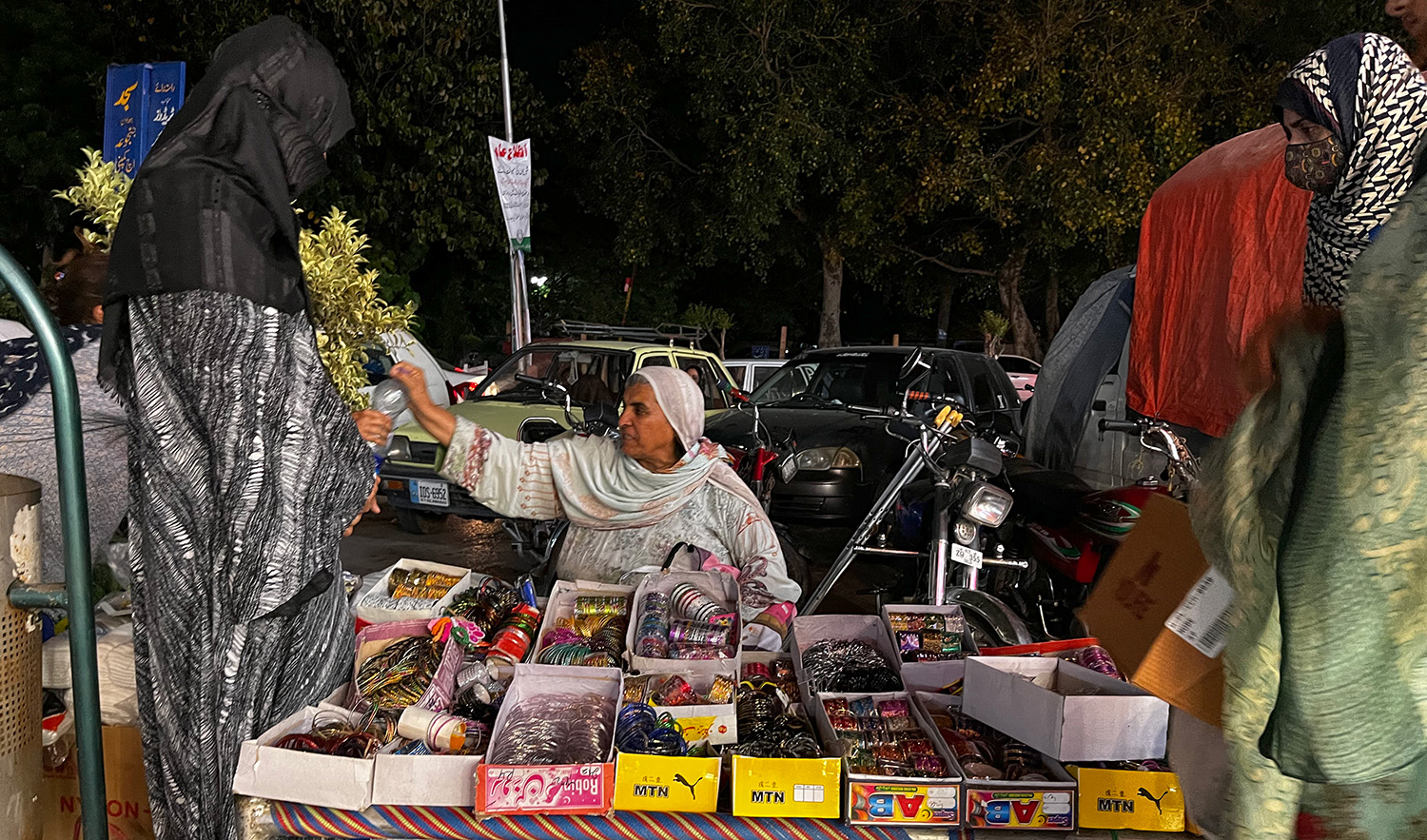
A woman is selling bangles ahead of the upcoming festival of Eid Al-Fitr in Islamabad, Pakistan on April 14, 2023. (AN photo by Fatimah Amjad)
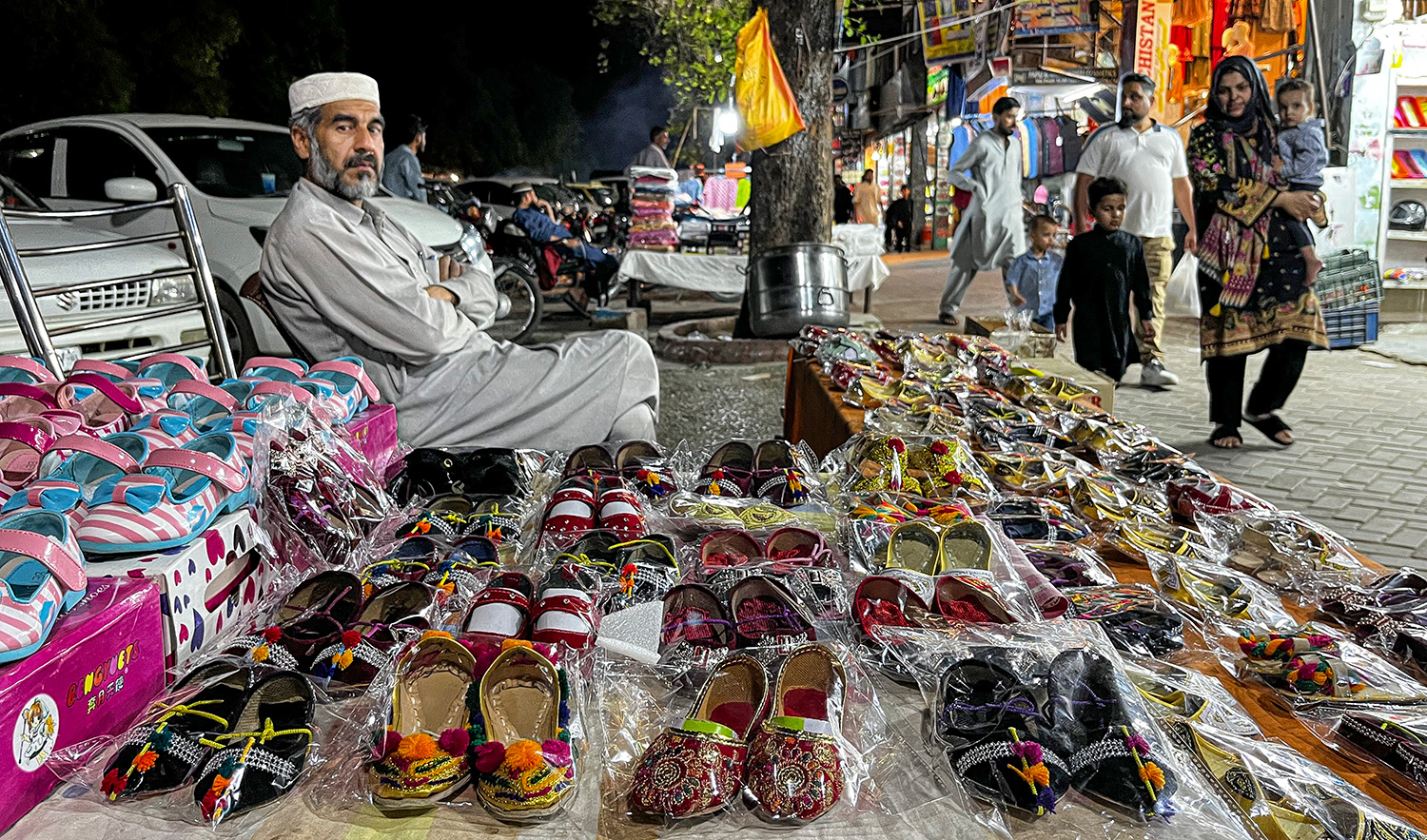
A man is selling traditional shoes for children in Islamabad's Aabpara market on April 14, 2023. (AN photo by Fatimah Amjad)
Faheem Khan, a kiosk-owner who sells bangles, henna, and costume jewelry, said rising prices had reduced his profit margins.
“We used to buy a box [of bangles] for about Rs700 ($2.50) last year, this year it costs around Rs1,300 ($4.65),” Khan said. “Inflation has increased by 50%. Customers are facing difficulty in buying things, but what can they do? It’s Eid, they have to buy.”
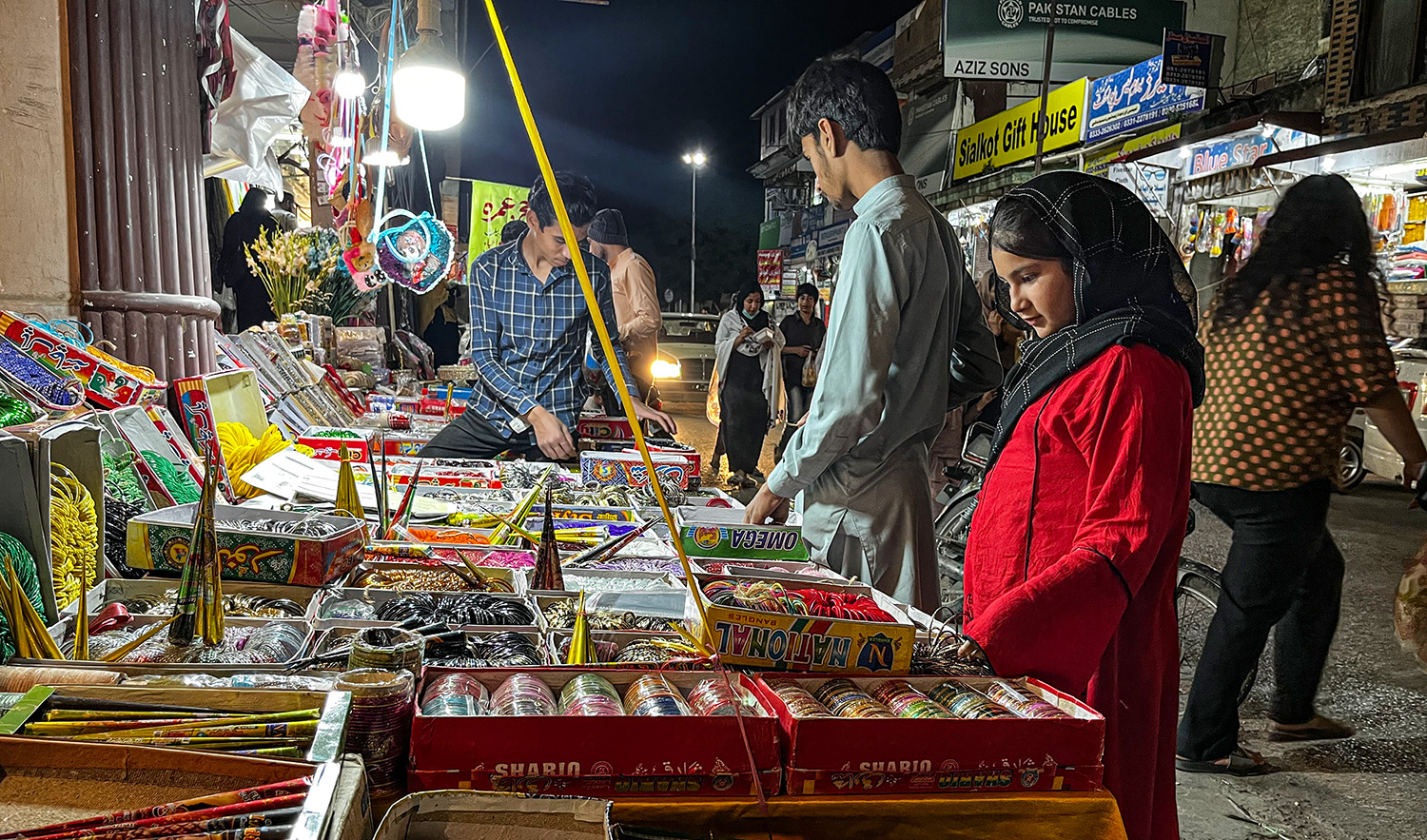
A girl stands beside a bangle stall ahead of the upcoming festival of Eid Al-Fitr in Islamabad, Pakistan on April 14, 2023. (AN photo by Fatimah Amjad)
Eid parties are also not expected to be the same this season, as March inflation numbers eclipsed February's 31.5%, and food, beverage and transport prices surged up to 50% year-on-year.
“We used to send iftar snacks to the entire neighborhood in the previous years as it is our culture in Pakistan during the holy month of Ramadan, but this year, we could only manage to send it to a few houses because prices of fruits and vegetables have soared to very high levels,” Afshan Arif, a housewife, and mother of six children, told Arab News.
During the first three days of Eid, Arif said, her family used to host lunch and dinner parties for up to 30 people.
“But this year,” Arif said, “I cannot afford to feed this many people because we are struggling to make ends meet ourselves.”


