

Dubai’s non-oil business conditions rebound in March: S&P Global 

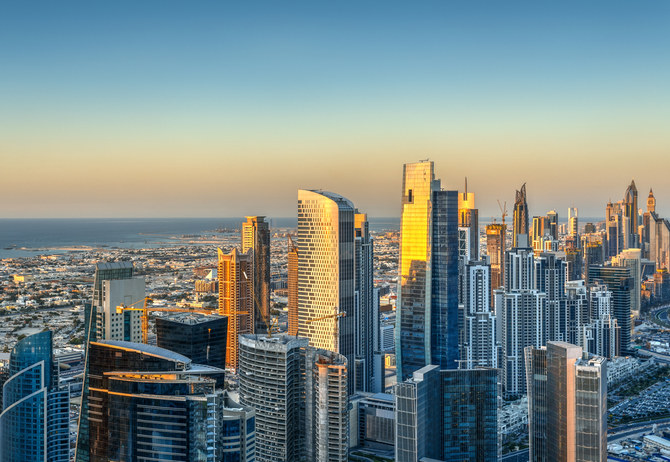
The global rating agency noted that this sharp improvement in non-oil business conditions was supported by stronger growth in output, employment and stocks of purchases. (Shutterstock)
Short Url
Updated 11 April 2023
Follow

Dubai’s non-oil business conditions rebound in March: S&P Global 

RIYADH: Dubai’s non-oil private sector grew at its fastest rate since September 2022, as the Emirate’s Purchasing Managers’ Index hit 55.5 in March, according to S&P Global. 

In its latest Purchasing Managers’ Index report for Dubai, the global rating agency noted that this sharp improvement in non-oil business conditions was supported by stronger growth in output, employment and stocks of purchases. 

According to the index, PMI readings above the 50-mark show non-oil private sector growth, while those below 50 signal contraction. 

In February, the PMI of Dubai stood at 54.1, while it was 54.5 and 55.2 in January and December 2022 respectively.  

“The Dubai PMI picked up for the first time in three months in March, rising to 55.5 from a 12-month low of 54.1 in February, as companies reported greater efforts to build supply-side strength in light of a further rapid expansion in activity levels,” said David Owen, a senior economist at S&P Global Market Intelligence.  

He added: “The subsequent increases in staffing levels and inventories of materials and components were the sharpest seen in around five years, allowing firms to increase their output to the greatest extent for six months.”  

The report, however, added that wholesale and retail growth reached a 14-month low in March, as that sector, along with the travel and tourism industry, lost momentum from their post-COVID peaks in 2022.  

“A further slowdown in new business growth shows that demand growth is continuing to weaken from its post-COVID peak, with notable slippage seen in the wholesale and retail and travel & tourism sectors,” said Owen.  

He said this suggests that rapid activity growth may not be sustained, which was reflected in a slight drop in future output expectations 

According to the report, construction firms in Dubai witnessed a strong output expansion in March, the largest since September, with new orders rising sharply, along with accelerating employment growth.  

The report added that the level of positivity among business owners was down slightly in March compared to February, with only 10 percent of survey panelists projecting growth of output over the next 12 months. 


Emerging markets should depend less on external funding, says Nigeria finance minister

Updated 10 February 2026
Follow

Emerging markets should depend less on external funding, says Nigeria finance minister

RIYADH: Developing economies must rely less on external financing as high global interest rates and geopolitical tensions continue to strain public finances, Nigeria’s finance minister told Al-Eqtisadiah.

Asked how Nigeria is responding to rising global interest rates and conflicts between major powers such as the US and China, Wale Edun said that current conditions require developing countries to rethink traditional financing models.

“I think what it means for countries like Nigeria, other African countries, and even other developing countries is that we have to rely less on others and more on our own resources, on our own devices,” he said on the sidelines of the AlUla Conference for Emerging Market Economies.

He added: “We have to trade more with each other, we have to cooperate and invest in each other.” 

Edun emphasized the importance of mobilizing domestic resources, particularly savings, to support investment and long-term economic development.

According to Edun, rising debt servicing costs are placing an increasing burden on developing economies, limiting their ability to fund growth and social programs.

“In an environment where developing countries as a whole — what we are paying in debt service, what we are paying in terms of interest costs and repayments of our debt — is more than we are receiving in what we call overseas development assistance, and it is more than even investments by wealthy countries in our economies,” he said.

Edun added that countries in the Global South are increasingly recognizing the need for deeper regional integration.

His comments reflect growing concern among developing nations that elevated borrowing costs and global instability are reshaping development finance, accelerating a shift toward domestic resource mobilization and stronger economic ties among emerging markets.