



RIYADH: The Naila Art Gallery promises an unforgettable experience for visitors during its latest exhibition “Qur’aniyat (Qur’anic),” which is on show alongside the Ramadan Season in Riyadh until April 12.
The exhibition features 19 calligraphers and participating artists, showcasing a total of 37 artworks, in an integrated conversation between matter and spirit.
The gallery’s exhibition manager, Ameera Al-Zabin, told Arab News: “During Ramadan, people engage in spiritual reflection, prayer, and come together in a spirit of community . . . the aim of this exhibition is to capture these profound themes and provide a source of inspiration and contemplation for those observing the holy month.
The ‘Qur’aniyat (Qur’anic)’ exhibition at Naila Art Gallery in Riyadh is on show until April 12. (AN photos by Nada Alturki)
“Having an art exhibition during Ramadan can provide an opportunity to celebrate and showcase the rich artistic tradition of Islam. Islamic art has a long and diverse history, encompassing a wide range of styles and mediums, and it has made significant contributions to the global artistic canon.”
On entering the two-story space, the audience is met with 20 works by some of the most prominent calligraphy artists in the Kingdom.
HIGHLIGHT
The ‘Qur’aniyat (Qur’anic)’ exhibition features 19 calligraphers and participating artists, showcasing a total of 37 artworks, in an integrated conversation between matter and spirit.
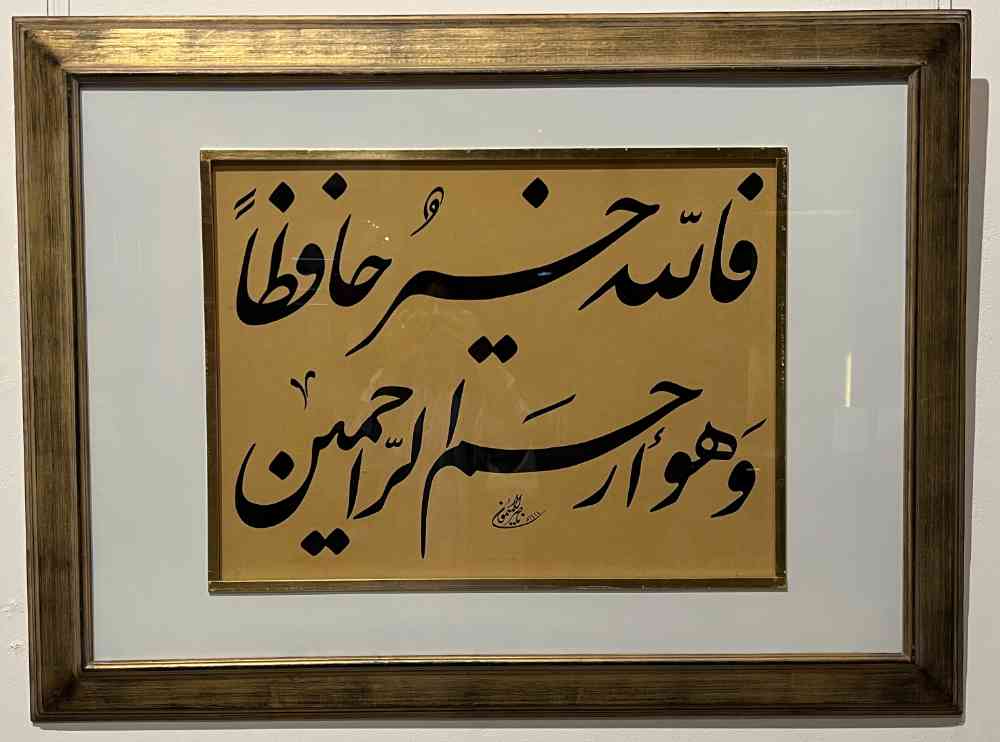
Nasser Al-Maimon showcases the verse in Surat Yousef, “Allah is the Best of guardians, and He is the Most Merciful of the Merciful,” in Nasta’liq font. Majed AlYoussef entrusts the audience to decipher the words “there is no treasure greater than knowledge,” written in a stylistic variation of the Arabic Thuluth font.
The ‘Qur’aniyat (Qur’anic)’ exhibition at Naila Art Gallery in Riyadh is on show until April 12. (AN photos by Nada Alturki)
Other featured calligraphers include Youssef Yahya and Walid Al-Marhoum.
On the second floor is a collection of artworks on display, from mixed media to sculptures and canvases, exploring the intersection of art and spirituality.
Each artwork showcases the beauty and depth of either the Arabic language or the Islamic culture built around it, conveying a sense of tranquility, pleasure and peace.
The ‘Qur’aniyat (Qur’anic)’ exhibition at Naila Art Gallery in Riyadh is on show until April 12. (AN photos by Nada Alturki)
Al-Zabin said: “We aspire to create a memorable and thought-provoking experience that leaves a lasting impact on the visitors, fostering a deeper understanding and appreciation for Islamic art and calligraphy.”
Salama Hassan, a self-taught artist specialized in the fine arts, pushes the boundaries of Arabic calligraphy to the point where her work transcends a mere font and becomes conceptual.
“Art is an ocean,” the artist told Arab News.
The ‘Qur’aniyat (Qur’anic)’ exhibition at Naila Art Gallery in Riyadh is on show until April 12. (AN photos by Nada Alturki)
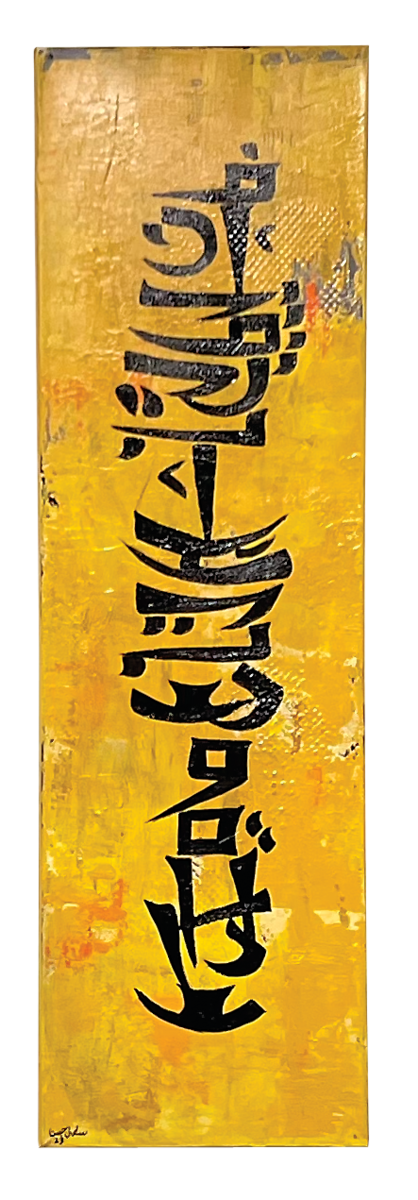
Using Chinese typography characteristics to shape various verses in the Qur’an, Hassan prompts the audience to contemplate the language and verses at hand. The artwork becomes a puzzle, demanding us to look deeper into the meaning and placement of each letter.
Hassan told Arab News: I’m a fan of Arabic calligraphy. About a year ago I decided to venture out of the box. I love Eastern cultures like Japanese and Chinese and their calligraphy, as well as Arabic. I wanted to prove that the Arabic letter is valid in any time and space. I’m trying to create more awareness around it.”
She traces the Qur’anic verses vertically and each line holds one or two letters, calling the viewer to enunciate each letter and word. The method of language-bridging has also proved an insightful opportunity for cultural exchange.
Hassan said: “The interest in these types of arts is beautiful. I’ve met with Chinese and Japanese families who were amazed. They thought, ‘Oh, that’s our language!’ It is at a first glance, but it’s truly the Arabic language.”
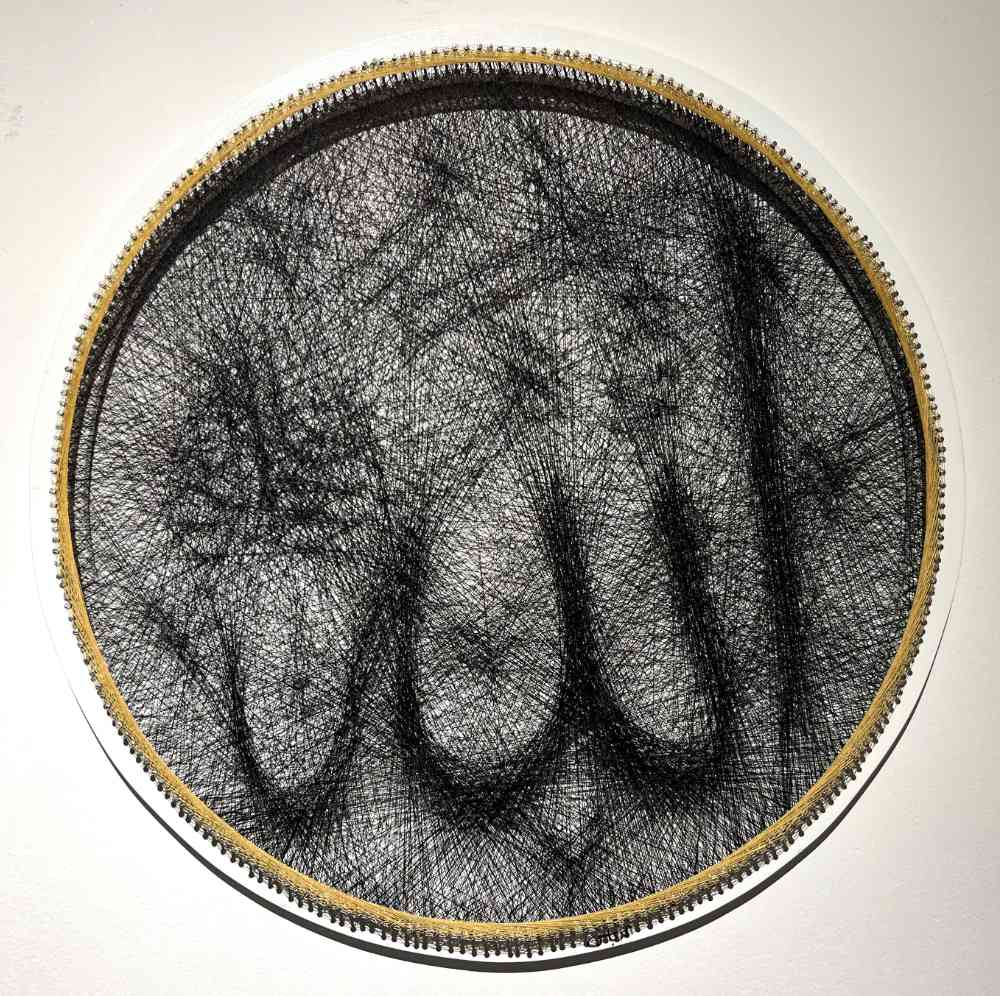
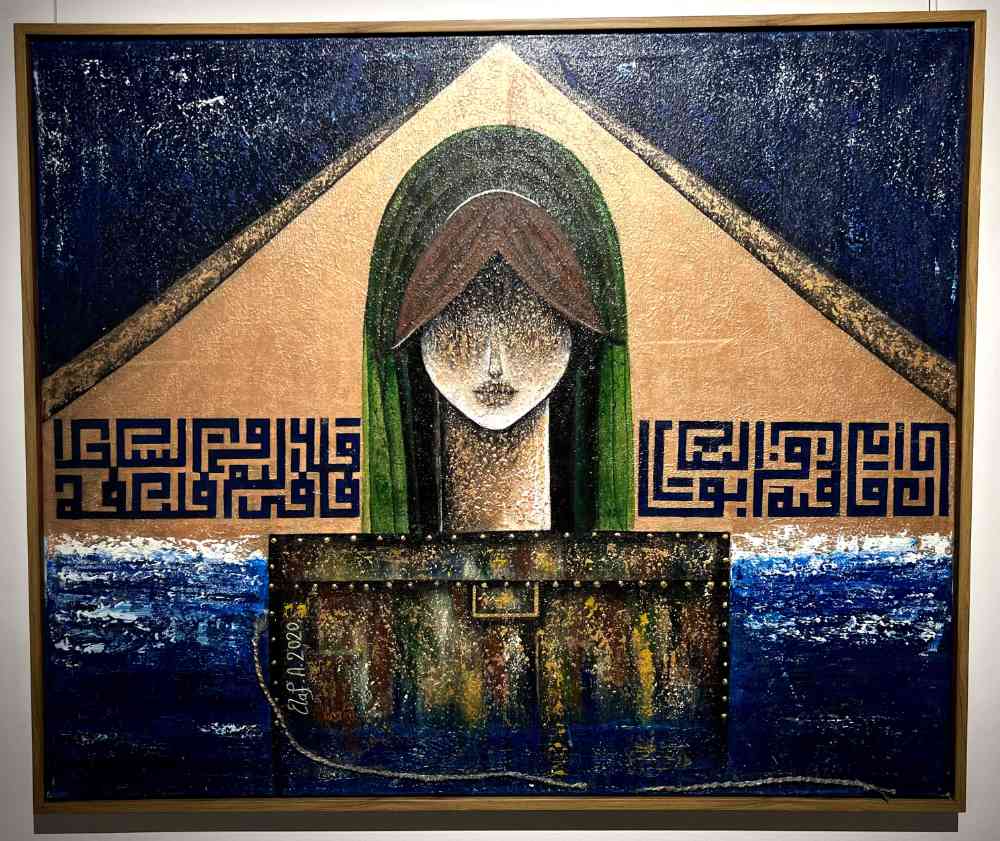
Another artist Rashid Al-Dabas intersects wool yarn within a circular frame. The thread overlaps intricately to form the word “Allah.” Rasha Siddig puts acrylic to canvas, commemorating the contemplative and inspiring atmosphere of the two holy mosques: the Grand Mosque in Makkah and the Prophet’s Mosque in Madinah.
Other featured artists include Nahar Marzoq, Ibrahim Al-Hoshan, Elaf Alousi, Khoula Al-Ghafili, Samia bin Zina, Abdullah Al-Anzi, Aliah Hilal, Mohammed Al-Thaqafi, Mohammed Al-Shaie, Maha Khokir, Nora Al-Andis and Haya Al-Fassam.
During the holy month of Ramadan, the gallery hopes to create a conversation around the duality of art and religion, connecting the soul and the divine.
Al-Zabin said: “(The exhibition) aims to evoke a sense of spirituality, tranquility and peace in the audiences. We hope that the audience and visitors will respond to these bodies of work with a sense of awe, appreciation and contemplation, and that the exhibition will provide a meaningful and enriching artistic experience for all who attend.”


