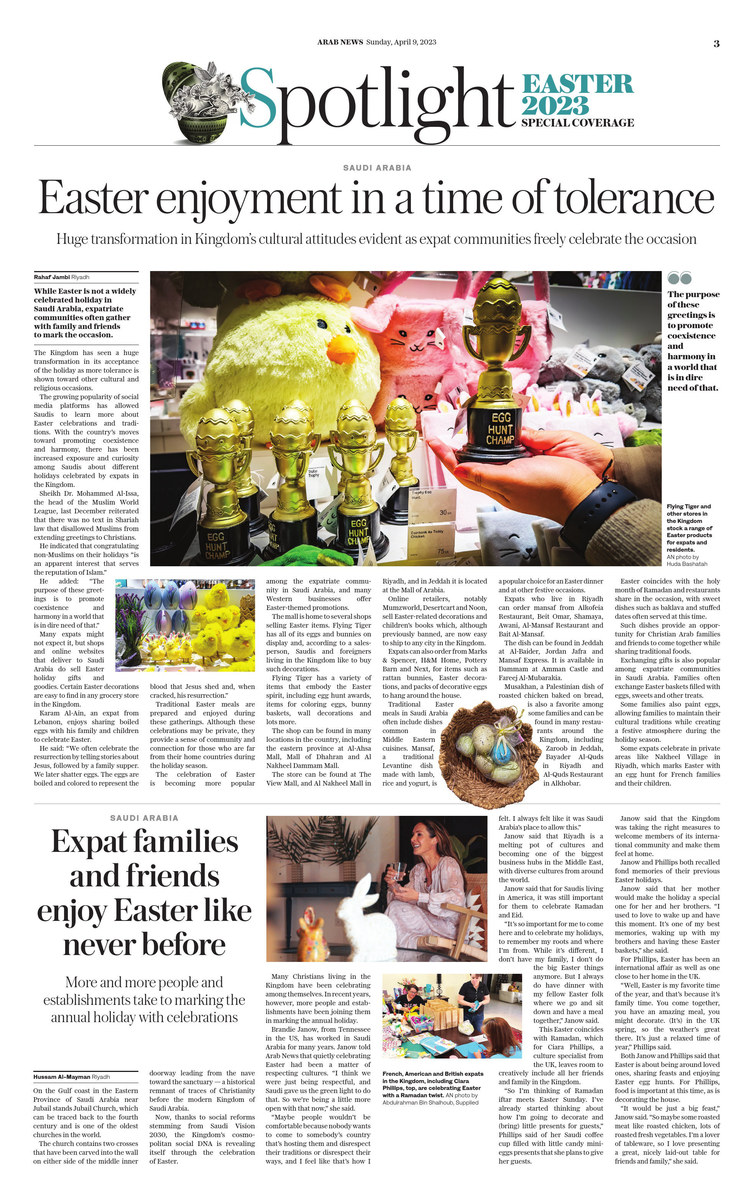
RIYADH: On the Gulf coast in the Eastern Province of Saudi Arabia near Jubail stands Jubail Church, which can be traced back to the 4th century and is one of the oldest churches in the world.
The church contains two crosses that have been carved into the wall on either side of the middle inner doorway leading from the nave toward the sanctuary — a historical remnant of traces of Christianity before the modern Kingdom of Saudi Arabia.
Now, thanks to social reforms stemming from Saudi Vision 2030, the Kingdom’s cosmopolitan social DNA is revealing itself through the celebration of Easter.
Many Christians living in the Kingdom have been celebrating among themselves. In recent years, however, more people and establishments have been joining them in marking the annual holiday.
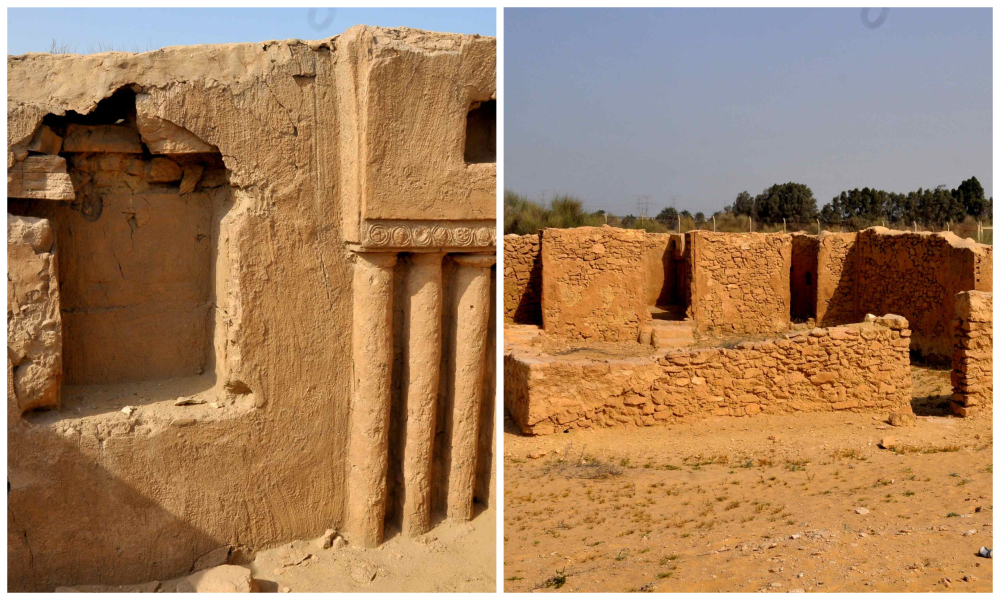
Jubail Church in Saudi Arabia can be traced back to the 4th century and is one of the oldest churches in the world. (Supplied)
Brandie Janow, from Tennessee in the US, has worked in Saudi Arabia for many years. Janow told Arab News that quietly celebrating Easter had been a matter of respecting cultures. “I think we were just being respectful, and Saudi gave us the green light to do that. So we’re being a little more open with that now,” she said.
“Maybe people wouldn’t be comfortable because nobody wants to come to somebody’s country that’s hosting them and disrespect their traditions or disrespect their ways, and I feel like that’s how I felt. I always felt like it was Saudi Arabia’s place to allow this.”
Janow said that Riyadh is a melting pot of cultures and becoming one of the biggest business hubs in the Middle East, with diverse cultures from around the world.
“So whenever you open up something like that as a melting pot, you have to realize that there’s people that are going to come in with different cultures and different religions, obviously,” she said.
Janow said that for Saudis living in America, it was still important for them to celebrate Ramadan and Eid.
“It’s so important for me to come here and to celebrate my holidays, to remember my roots and where I’m from. While it’s different, I don’t have my family, I don’t do the big Easter things anymore. But I always do have dinner with my fellow Easter folk where we go and sit down and have a meal together,” Janow said.
This Easter coincides with Ramadan, which for Ciara Phillips, a culture specialist from the UK, leaves room to creatively include all her friends and family in the Kingdom.
“Well, what’s amazing is that it coincides with Ramadan. So I’m thinking kind of Ramadan iftar meets Easter Sunday. I’ve already started thinking about how I’m going to decorate and (bring) little presents for guests,” Phillips said of her Saudi coffee cup filled with little candy mini-eggs presents that she plans to give her guests.
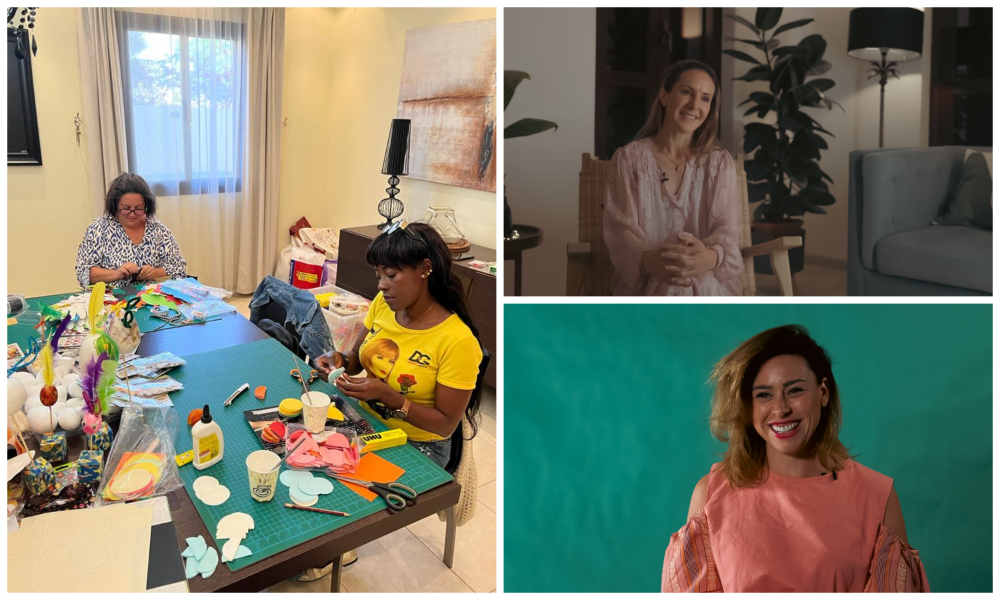
Clockwise from left: French families are gathered together to prepare decorations for the annual Easter Egg Hunt; Ciara Phillips, a culture specialist from UK living in Saudi Arabia; Brandie Janow, an American designer living in the Kingdom. (Supplied/AN Photos/Abdulrahman Shalhoub)
Recently, holidays such as Christmas, Halloween and Easter have seen a shift in public acceptance to the extent that Riyadh Season 2022 allowed free entry to the Boulevard to anyone wearing a costume and celebrating Halloween; malls have also had Christmas themes for the holiday season.
Janow said that the Kingdom was taking the right measures to welcome members of its international community and make them feel at home.
As far as shopping for festive supplies goes, Phillips said: “I think you just have to get a bit creative.”
“I found things in the wadi, so you’ll see here some of the little palm fronds, I use recycled ribbon,” she said. “So there’s so much that you can use, which may not be an Easter decoration, and you may not have that kind of access to that. But we can do so much more, and of course I ship things here.”
Janow said that Easter was a distinct event. “It’s very different from Halloween or Christmas even. It’s something very short. Like, for example, Halloween is a season. Christmas is a season; Easter is not so much a season. It’s more of a highly religious weekend. Good Friday and Easter Sunday. It’s more about family.”
“So, it’s not really something as big as the other holidays. I don’t decorate here, just because it’s something really small, but I do try to make it a point, to have a dinner and to remember my roots,” she said.
Janow said that she has many friends who decorate their homes and they have not had difficulty finding sufficient decorations at shops.
Janow and Phillips both recalled fond memories of their previous Easter holidays.
For Janow, Easter celebrations in the southern parts of America were different than the rest of the country due to particular social traditions.
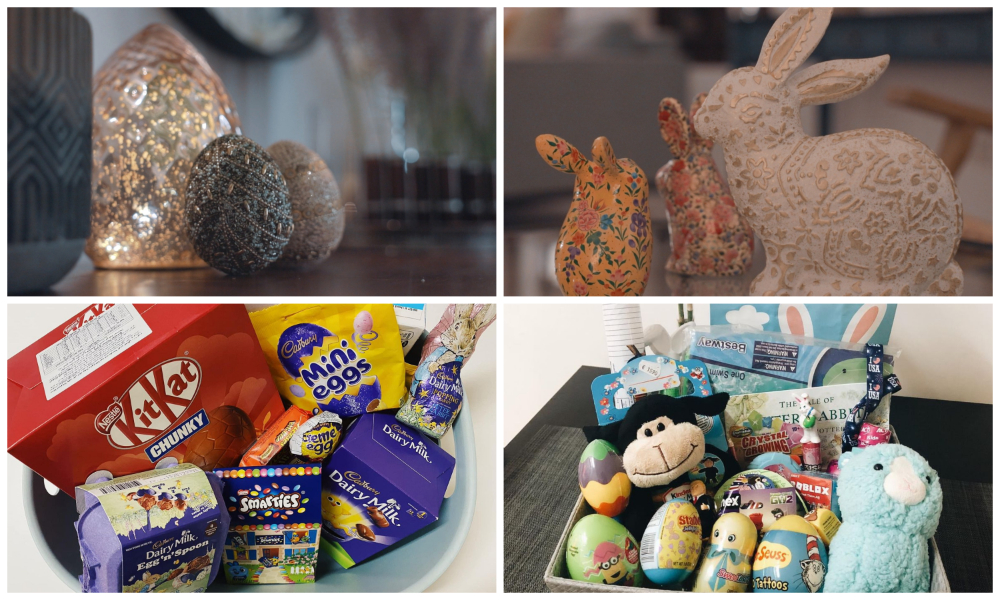
Many Christians living in the Kingdom have been celebrating among themselves. In recent years, however, more people and establishments have been joining them in marking the annual holiday. (Supplied/AN Photo/Abdulrahman Shalhoub)
“So, Easter was a very special time for me growing up. My mom always went all out. I am the only daughter, and I have two brothers. So every morning, we would wake up on Easter Sunday and have a surprise on the table. We would all three have an Easter basket. It would be filled with colored eggs, Cadbury eggs,” she said.
Janow said that her mother would make the holiday a special one for her and her brothers. “I used to love to wake up and have this moment. It’s one of my best memories, waking up with my brothers and having these Easter baskets,” she said.
For Phillips, Easter has been an international affair as well as one close to her home in the UK.
“Well, Easter is my favorite time of the year, and that’s because it’s family time. You come together, you have an amazing meal, you might decorate. (It's) in the UK spring, so the weather’s great there. it’s just a relaxed time of year,” Phillips said.
She said that the Easter period was refreshing compared to Christmas. “We’re rushing around, we’re buying presents and things, it’s just a break from all of that, and it’s just a good meal — family with maybe some friends.”
Both Janow and Phillips said that Easter is about being around loved ones, sharing feasts and enjoying Easter egg hunts. For Phillips, food is important at this time, as is decorating the house.
“It would be just a big feast,” Janow said. “So maybe some roasted meat like roasted chicken, lots of roasted fresh vegetables. I’m a lover of tableware, so I love presenting a great, nicely laid-out table for friends and family,” she said.